Archives

#2024GOAL – Reading Through The Bible Chronologically, day 116

    Day 116—We have been reading the Bible daily for a third of the year.   What have you learned about God? About yourself?
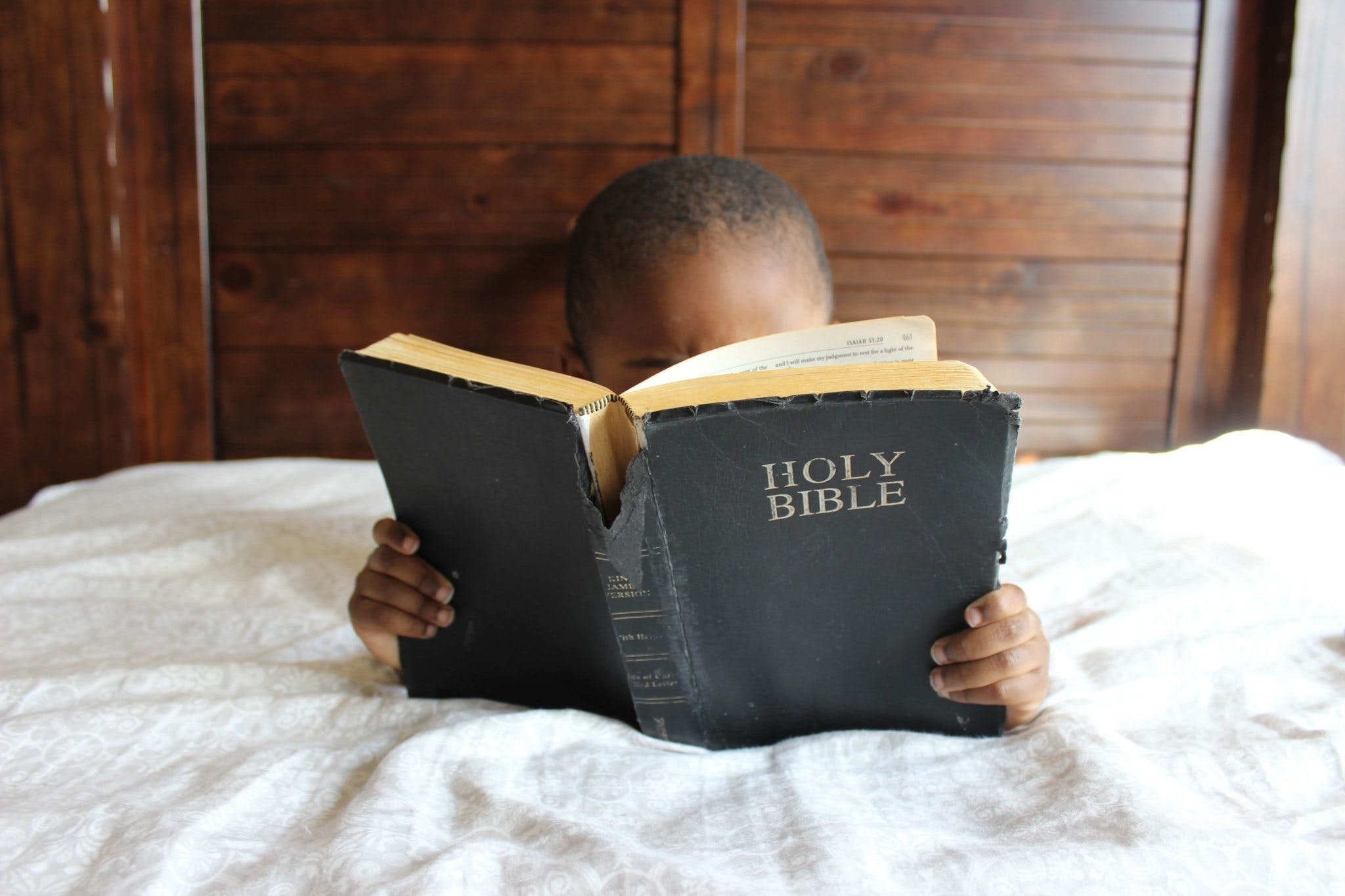
Day 116 – Psalms 73, 77, 78. (Psalms of Asaph)

Psalm 73 – Asaph begins by acknowledging that God is truly good to Israel, to all who are pure in heart. But then he admits that in his own heart there is envy for the prosperity of the wicked. But when his heart turns to God, his attitude changes.

“Whom have I in heaven but you? And there is nothing on earth that I desire besides You.  My flesh and my heart may fail, but God is the strength of my heart and my portion forever.”

Psalm 77 – Asaph again begins writing about the day of his trouble, how he prays and weeps all night, but there is no comfort. But again his attitude changes when his thoughts turn to God.

“Then my spirit made a diligent search: Will the LORD spurn forever, and never again be favorable?  Has his steadfast love forever ceased?  Are His promises at an end for all time?”  “I will remember the deeds of the LORD; yes I will remember Your wonders of old. I will ponder all Your work and meditate on Your mighty deeds. Your way, O God, is holy. What god is great like our God?”

Psalm 78 has 72 verses and describes God’s wonderful love and care for Israel and what Israel should tell the coming generations about Him.

“I will utter puzzling sayings from of old, things that we have heard and known, that our fathers have told us. We will not hide them from their children but tell to the coming generation the glorious deeds of the LORD and His might and the wonders that He has done…. that the next generation might know them, the children yet unborn, and arise and tell them to their children, so that they should set their hope in God and not forget the works of God, but keep His commandments.”

Then, Asaph writes about the glorious (and horrible) history of God and Israel. He tells how God gloriously rescued and provided for Israel repeatedly, how Israel sinned, doubted, complained, tested, and rebelled, provoking God’s righteous judgments on them. Over and over Israel spurned the Holy God.

“Yet He, being compassionate atoned for their iniquity and did not destroy them; He restrained His anger often and did not stir up all His wrath. He remembered that they were but flesh.”

Asaph tells about God rejecting Israel during the turbulent times of the Judges when they looked to pagan idols and their enemies battled with them continuously.  And he tells of God choosing Judah and setting His presence in Zion.

“He chose David, his servant, and took him from the sheepfolds; for following the nursing ewes He brought him to shepherd Jacob His people, Israel his inheritance. With an upright heart he shepherded them and guided them with his skillful hand.“

(Oh for leaders like that today!)
#2024GOAL – Reading Through The Bible Chronologically, day 115

    Day 115—We have been reading the Bible daily for a third of the year.   What have you learned about God? About yourself?

Day 115 – 1 Chronicles 3 – 5. (Genealogies in David’s line, Judah, Simeon, Reuben, Gad, and Manasseh.)

1 Chronicles 3 chronicles King David’s line until the Babylonian captivity. We see the sons and the daughter whose actions will cause David severe problems. Solomon, David’s tenth son, is mentioned as well.

1 Chronicles 4 chronicles the line of Judah, the Messianic line, and the diminishing tribe of Simeon, which is eventually swallowed up in Judah’s territory.

1 Chronicles 5 chronicles the line of Reuben, Israel’s firstborn who forfeited the birthright. The double-portion birthright then passed to the firstborn of Israel’s other wife, Rachael, Joseph. This chapter also gives the lineage of the Gadites and the 1/2 tribe of Manasseh which settled east of the Jordan River.

In both chapters 4 and 5, we see God answering prayer. In 4:9-10, Jabez “called upon the God of Israel, asking for more land, blessings, and safety for himself. And “God granted what he asked.”

In 5:18-20, the East Jordan tribes waged war against several pagan nations. Even though there were less than half the enemy’s number, when they “cried out to God in the battle, He granted their urgent plea, because they trusted Him.”

#2024GOAL – Reading Through The Bible Chronologically, day 114

    Day 114—We have been reading the Bible daily for a third of the year.   What have you learned about God? About yourself?

Day 114 – Psalms 43, 44, 45, 49, 84, 85, 87. (Psalms of David, prayers for help and praises.)

Psalm 43 – “Why are you cast down, O  my soul, and why are you in turmoil within me?  Hope in God; for I shall again praise Him, my salvation and my God!”

Psalm 44 – “You are my King, O God; ordain salvation for Jacob! Through You we push down our foes; through Your name we tread down those who rise up against us. For not in my bow do I trust, nor can my sword save me. But You have saved us from our foes and have put to shame those who hate us! In God we have boasted continually, and we will give thanks to your name forever.”

Psalm 45 – “Your throne, O God, is forever and ever, the scepter of your kingdom is a scepter of uprightness, You have loved righteousness and hated wickedness.”

Psalm 49 – “Truly no man can ransom another, or give to God the price of his life, for the ransom of their life is costly and can never suffice, that he should live on forever and never see the pit.”    “But God will ransom my soul from the power of Sheol, for he will receive me.”

Psalm 84 – “My soul longs, yes, faints for the courts of the LORD; my heart and flesh sing for joy to the living God.”    “For a day in your courts is better than a thousand elsewhere. I would rather be a doorkeeper in the house of my God than dwell in the tents of wickedness.”    “O LORD of hosts, blessed is the one who trusts in you!”

Psalm 85 – “You forgave the iniquity of your people; you covered all their sin. You withdrew all your wrath; and turned from your hot anger. Restore us again, O God of our salvation, and put away your indignation toward us!”

Psalm 87 – “On the holy mount stands the city He founded; the LORD loves the gates of Zion more than all the dwelling places of Jacob. Glorious things of you are spoken, O city of God.  Among those who know me, I mention RAHAB and BABYLON; behold, PHILISTIA and TYRE, with CUSH — ‘This one was born there,” they say. And of Zion it shall be said, ‘This one and that one were born in her;’ for the Most High himself will establish her.  The LORD records as He registers the PEOPLES, ‘This one was born there.’

#2024GOAL – Reading Through The Bible Chronologically, day 112 & 113

    Day 112 & 113—We have been reading the Bible daily for a third of the year and have begun reading the 12th book. What have you learned about God? About yourself?

(Note: SUNDAY’s and MONDAY’s readings are combined.)

Day 112 – Psalms 6, 8, 9, 10, 14, 16, 19, 21. (Psalms of David)

Psalm 6 – “O LORD, rebuke me not in your anger, nor discipline me in your wrath. Be gracious to me, O LORD, for I am languishing; heal me, O LORD, for my bones are troubled.”   “The LORD heard my plea; the LORD accepts my prayer.”

Psalm 8 – “O LORD, our Lord, how majestic is your name in all the earth! You have set your glory above the heavens.”    “When I look at your heavens, the work of your fingers, the moon and the stars, which you have set in place, what is man that you are mindful of him, and the son of man that You care for him?”

Psalm 9 – “I will give thanks to the LORD with my whole heart; I will recount all of your wonderful deeds. I will be glad and exult to you; I will sing praise to your name, O Most High.”    “The LORD is a stronghold for the oppressed, a stronghold in times of trouble. And those who know your name put their trust in you, for you, O LORD, have not forsaken those who seek you.”

Psalm 10 – “Why O LORD, do you stand far away? Why do you hide yourself in times of trouble?”    “Arise, O LORD; O God, lift up your hand; forget not the afflicted.”

Psalm 14 –  “Why O LORD, do you stand far away? Why do you hide yourself in times of trouble?”    “In the pride of his face the wicked does not seek Him; all his thoughts are, ‘There is no God.'”    “Arise, O LORD; O God, lift up your hand; forget not the afflicted.”

Psalm 16 – “I say to the LORD, ‘You are my Lord; I have no good apart from you.'”    “I bless the LORD who gives me counsel; in the night also my heart instructs me.”    “I have set the LORD always before me; because he is at my right hand, I shall not be shaken. Therefore my heart is glad, and my whole being rejoices; my flesh also dwells secure.”    “You make know to me the path of life; in your presence there is fulness of joy; at your right hand are pleasures for evermore.”

Psalm 19 – “The heavens declare the glory of God, and the sky above proclaims his handiwork.”    “The law of the Lord is Perfect, reviving the soul; the testimony of the LORD is sure, making wise the simple; the precepts of the LORD are right, rejoicing the heart; the commandment of the LORD is pure, enlightening the eyes, the fear of the LORD is clean, enduring forever; the rules of the LORD are pure and righteous altogether.  MORE to be desired are they than gold, even much fine gold; sweeter also than honey and drippings of the honeycomb.”     “Let the words of my mouth and the meditation of my heart be acceptable in your sight, O LORD, my rock and my redeemer.”

Psalm 2 – “O LORD, in your strength the king rejoices, and in your salvation how greatly he exults!  You have given him his heart’s desire and have not withheld the request of his lips.”    “Be exalted, O LORD, in your strength! We will sing and praise your power.

“

Day 113 – 1 Chronicles 1-2 (Genealogies in the kingly line & others)

1 Chronicles 1 tells the genealogy of the Jewish people (with sidelines included) from Adam to Abraham’s grandson, Jacob/Israel.

1 Chronicles 2 gives the genealogy of Israel’s twelve sons (tribes) to David who would become king, along with a lists of his relatives., who would become king, along with a list

#2024GOAL – Reading Through The Bible Chronologically, day 111

    Day 111—Today we begin the eleventh book in the reading plan. We have been reading the Bible daily for a third of the year. What have you learned about God and yourself?

   Day 111 – 2 Samuel 1 – 4 (David as king, ending Saul’s dynasty)

1 Samuel ends with the death of Saul in a battle with the Philistines. Saul is fatally wounded and ends his own life. Three of his sons also die in battle, including Jonathan.

Meanwhile, David battles the Amalekites and has a resounding victory.

In 2 Samuel 1, a warrior comes to David with the news that King Saul and Jonathan are dead. Thinking he will garner some favor with David, he claims that HE killed them. David inquires who the man is and finds he is an Amalekite.  David mourns the death of Saul and Jonathan and has this man killed for what he thinks is his part in the death of “the LORD’s anointed.”  David then laments Saul and Jonathan with a beautiful song eulogizing them.

In 2 Samuel 2, David asks, and the LORD tells him to go to Hebron, where the tribe of Judah anoints him their king.  Meanwhile, Saul’s son Ish-bosheth is proclaimed king in Israel by Saul’s commander, Abner. (Where was Abner in the battle that killed his king?)  Then Abner, with the servants of Ish-bosheth, meets Joab with the servants of David and they face off. They decide that 12 from each group will fight. They do and kill each other. Then they all fight and Abner’s group is defeated and runs.  Joab’s men chase them, with Joab’s brother Asahel personally chasing Abner. Twice, Abner warns him away, but Asahel persists, so Abner turns around and kills him. (Oops. Not good!)

Joab’s men keep after Abner until a group of Benjaminites (Saul’s tribe) stand with him to fight.  They call a truce, and Joab and crew return home.

2 Samuel 3 tells us that there was a long war between the house of Saul and the house of David, with David growing stronger. Abner attempts a coup by sleeping with Saul’s concubine, and Ish-bosheth calls him on it. Abner then vows to take all of Israel to David and sends this message to David.  Judah’s king agrees to meet Abner but requires him to bring David’s first wife, Michal, whom Saul gave to another man. Abner grabs her and goes south, with the grieving husband following behind, crying.  David is pleased to get Michal back and sends Abner away in peace.

Joab is horrified that David made peace with the man who killed his brother and follows him. He beckons Saul to a private conversation by the wall, where he kills him.  David becomes angry with Joab and curses him and his family.  Then David makes them all mourn for Abner and bury him in Hebron, and so lets the people know it was not HIS fault that Abner is dead.

(Even though David does not punish his commander for going behind his back, his last word to his son Solomon before he died was to KILL JOAB.)

2 Samuel 4 tells how Ish-bosheth is murdered by two of his own men. These men took Ish-bosheth’s head to David, and much like the Amalekite, claimed they killed David’s last enemy.  And, like before, David has THEM killed for assassinating the young man in his own bed, and buries the head.

#2024GOAL – Reading Through The Bible Chronologically, day 110

    Day 110 —  We have been reading the Bible daily for almost a third of the year. What have you learned about God? About yourself?

   Day 110 – Psalms 121, 123, 124, 125, 128, 129, 130. (More psalms by David, mostly praising God)

Psalm 121 “I will life up my eyes to the hills. From where does my help come? My help comes from the LORD who made heaven and earth.” (Plus more praising God for all He is and does.)

Psalm 123 “To You I lift up my eyes, O You who are enthroned in the heavens!”

Psalm 124 “Our help is in the name of the LORD who made heaven and earth.”

Psalm 125 “As the mountains surround Jerusalem, so the LORD surrounds His people, from this time forth and forevermore.”

Psalm 128 “Blessed is everyone who fears the LORD, who walks in His ways!” “The LORD bless you from Zion! May you see the prosperity of Jerusalem all the days of your life! May you see your children’s children! Peace be upon Israel.”

Psalm 129 “The blessing of the LORD be upon you! We bless you in the name of the LORD!”

Psalm 130 “If You, O LORD, should mark iniquities, O LORD, who could stand? But with You there is forgiveness, that You may be feared. I wait for the LORD, my soul waits, and in His Word I hope; my soul waits for the Lord, more than watchmen (wait) for the morning. O Israel, hope in the LORD! For with the LORD, there is steadfast love, and with Him is plentiful redemption. And He will redeem Israel from all his iniquities.

#2024GOAL – Reading Through The Bible Chronologically, day 107

    Day 107 —  We have been reading the Bible daily for almost a third of the year. What have you learned about God? About yourself?

Day 107 – 1 Samuel 25 – 27 (Samuel dies, Nabal/Abigail, David/Saul, David/Philistines)

Away from those lovely Psalms and back to history.

The first thing we read in Chapter 25, is that the prophet, Samuel dies and is mourned.  It’s another end of an era, where Israel will have kings alone to lead them. (Yes, there will be prophets, but not a prophet/priest like Samuel.)

David is still running from Saul, hiding wherever he and his 600 men can find. In this story, they protect a very wealthy man’s livestock for a season. No animal or human predator had harmed a single one of them. So when the thousand sheep are brought in to be sheered, David sends men to Nabal to collect food for his men as payment for their service.

But the “foolish” Nabal, holds tight to his pennies and refuses to give a single fig. Angered by his refusal to compensate, David gathers 400 of his men to pay back the ingrate. (Kill every last one of them.) But Abigail, Nabal’s wise wife, hears and immediately remedies the situation by loading multiple donkeys with enough food to feed David and his army. Plus, she runs ahead and bows before the kingly commander and begs his forgiveness.  David admires her for her peacemaking, accepts the loot, and praises God for using her to keep him from sin.  And… after her husband, the fool, dies, David takes Abigail as his wife. Whoa! Fairy tale story!

A short note at the end of the chapter tells us that David took a third wife, Ahinoam.  and that his first wife, Saul’s daughter, Michal, had been taken from him (while he was on the run) and given to another man.

Chapter 26 shows David again running from the mad King Saul (and 3,000 of his men) after the people of Ziph tattle about his whereabouts. David again spares Saul’s life when he could easily have taken it. While the king and his soldiers slept a “deep sleep from the LORD,” David crept down to within a foot of where Saul snored.  He took his spear and water bottle and left.

Then, on a hill with a “great deal of space” between him and Saul, David calls out and chides Abner, his captain for not protecting his lord. When Abner and the groggy king see David waving the spear and water bottle, they recognize that God kept David from killing him. Saul apologizes, packs up, and goes home, with even a blessing for David.

Chapter 27 shows that Saul’s change of heart doesn’t last and that he soon pursues David again. And David AGAIN escapes to the land of the Philistines. Achish, the king of Gath, allows him to stay, believing wrongly that David and his men are warring against their own people. In reality, David is attacking smaller Gershurites, Girzites, and Amalekites towns, killing all so there are no witnesses, and bringing the loot back to Achish.

While God commanded Israel to do this when they first conquered the land, David’s deception was wrong.  However, the king of Gath was happy and even gave David and his men the town of Ziklag, which became David’s official “fort.”

#2024GOAL – Reading Through The Bible Chronologically, day 105 & 106

    Day 105 & 106 —  We have been reading the Bible daily for almost a third of the year. What have you learned about God? About yourself? (Note: SUNDAY’s and MONDAY’s readings are combined.)

Day 105 – Psalms 7, 27, 31, 34, & 52 (Psalms of David as he flees and hides from Saul)

These are wonderful Psalms in themselves, but they are even more understandable in the context of David’s life. As you read these portions, think of yesterday’s reading of King Saul relentlessly pursuing David, David hiding in caves and strongholds, and David sinning but confessing.

Psalm 7:1, 3-5: “O, LORD my God, in you do I take refuge; save me from all my pursuers and deliver me…” “O LORD my God, if I have done this, if there is wrong in my hands, if I have repaid my friend with evil or plundered my enemy without cause, let the enemy pursue my soul and overtake it…”

Psalm 27:1-3 “The LORD is my light and my salvation; whom shall I fear? The LORD is the stronghold of my life; of whom shall I be afraid? When evildoers assail me to eat up my flesh, my adversaries and foes, it is they who stumble and fall. Though an army encamp against me, my heart shall not fear; though war arise against me, yea I will be confident.”

Psalm 31:3-4, 14-15, 21 “For you are my rock and my fortress; and for your name’s sake you lead me and guide me; and you take me out of the net they have hidden for me; for you are my refuge.” “But I trust in you, O LORD; I say,’ You are my God.’ My times are in your hand; rescue me from the hand of my enemies and from my persecutors?” “Blessed be the LORD, for He has wondrously shown his steadfast love to me when I was in a besieged city.”

Psalm 34 (Read all of it!) This psalm is about when David changed his behavior (acted insane) before the Philistine king, Abimelech, so he drove David off and he went away.

Psalm 52:2-5 This Psalm is about Doeg, the Edomite when he told Saul about David & the priest Ahimelech. (bread and the sword) “Your tongue plots destruction, like a sharp razor, you worker of deceit. You love evil more than good, and lying more than speaking what is right. You love all words that devour, O deceitful tongue. But God will break you down forever, He will snatch and tear you from your tent; He will uproot you from the land of the living.”

#

Day 106 – Psalms 56, 120, 140-142 (Psalms of David as he )

Psalm 56 is written after David is seized by the Philistines in Gath. He laments, then affirms his faith in God with these words in verses 9a-11. “This I know, that God is for me. In God, whose word I praise, in the LORD, whose word I praise, in God, I trust; I shall not be afraid. What can man do to me?

In Psalm 120:2, David again calls to the LORD in his distress. “Deliver me, O LORD, from lying lips, from a deceitful tongue.”

Psalm 140:4 says, “Guard me, O LORD, from the hands of the wicked; preserve me from violent men, who have planned to trip my feet.

Psalm 141: 3-5 shows David also praying for himself. “Set a guard, O LORD, over my mouth; keep watch over the door of my lips. Do not let my heart incline to any evil, to busy myself with wicked deeds;” And he ends with a very practical prayer — “Let the wicked fall into their own nets, while I pass by safely.” Vs. 9.

Psalm 142 was written when David was hiding in a cave. In verses 6-7, he pleads: “Attend to my cry, for I am brought very low! Deliver me from my persecutors, for they are too strong for me! Bring me out of (this) prison, that I may give thanks to your name.”

In these lamenting prayers, it’s good to remember that David is God’s next chosen King. He is the ancestor of the Messiah, Jesus. He is a “man after God’s own heart.” Severe trials and testing do NOT prove that God has forgotten or is angry with us. Often, they are training grounds for what He has planned for us.

#2024GOAL – Reading Through The Bible Chronologically, day 102

    Day 102 —  We have been reading the Bible daily for over a quarter of the year. Praise God! What have you learned about God? About yourself?

   Day 102 – 1 Samuel 15 – 17 (Saul, sin, & Samuel)

In Chapter 15, Samuel gives King Saul some very clear instructions. He is to strike the nation of Amalek and destroy all of them, and everything living thing they have.

(The Amalekites were the people who attacked Israel as they came out of Egypt, when they were a bunch of slaves and could not fight. God at that time foretold their doom. Let none be left alive.

So, Saul musters an army of 200K men of Judah. They go to Amalek and defeat them, killed all the people except King Agag (a trophy?) and all but the very best of the sheep, oxen, fatted calves and lambs. Did he obey the instructions of the LORD?  It seems “partial” obedience is not obedience, and when Samuel comes, he is furious with Saul.

“I saved the best animals for sacrifice!” Saul says. (Yeah, right.).

“Obedience is better than sacrifice,” Samuel says. “And because you have rejected the word of the LORD, He has also rejected you from being king.” Then Samuel hacks King Agag to pieces. (!!!)

“I’ve sinned,” says Saul. I was afraid of the people, so I obeyed their voice. Please pardon my sin. Please go back with me.”

When Samuel says no, Saul grabs his robe and it tears. (Oops!) Samuel whirls around, “As you’ve torn this, God has torn the kingdom of Israel from you.  He has in mind, a man “after His own heart, who is better than you.”

Samuel sees Saul no more after this incident, but he grieves for the “would-be” king. The LORD also grieved that He had made Saul king over Israel.

In Chapter 16, God shakes Samuel out of his grief for Saul and sends him to anoint that “man after His own heart.”  God tells him to anoint a son of Jesse whom he will point out. (Jesse is the grandson of Ruth & Boaz.) Samuel obey and immediately thinks it must be Jesse’s firstborn son, Eliab, another tall, strong man. But God tells him NOT to look on appearance or height, but on the heart. Jesse brings all six of his sons who are present before Samuel. Samuel looks to God who shakes His head.  “Don’t you have another son?” Samuel asks Jesse, thinking that maybe he didn’t hear God’s words accurately.

“Only the youngest, a shepherd boy out with the sheep,” was the dismissive comment.

But God, through Samuel, calls for the boy, and when he arrives, God says, “THAT one!” Samuel anoints David and the Spirit of the LORD “rushed” upon him.

However, the Spirit of the LORD departed from Saul, and a harmful spirit from the LORD tormented him. (Reminds me a little of the “thorn in the flesh” that God sent to keep another Saul (the Apostle Paul) humble.

No, “it just so happens” that Saul’s servants said that maybe, if a harpist were to come and play for Saul, he would get well. Saul thought it a good idea and inquired of them. They recommended none other than David, the shepherd boy who composed psalms to the LORD with his lyre as he watched his sheep.”  And so, David was brought into the court of King Saul now and then when the evil spirit tormented him. And Saul was “refreshed and well.” (Our Sovereign God orchestrates things so beautifully.)

Chapter 17 tells the well-known story of David and Goliath.  The young man came one day to Israel’s camp with some food for his brothers. While there, he heard the boastful words of the giant Philistine, Goliath of Gath, defying the army of Israel.

“Why doesn’t someone shut that guy up?” he basically says.  His brothers deride him, so he goes to King Saul and volunteers to fight the giant.  “Who is this uncircumcised Philistine, that he should defy the armies of the living God?”

The cowardly King Saul (who is head and shoulders – at least 18 inches – taller than any other Israelite) sends a boy to fight a giant. But that boy is on the side of the LORD God.

“Am I a dog that you come to me with sticks?” Goliath roars. “I curse you in the name of Dagon!”

“I come to you in the name of the LORD of hosts, the God of the armies of Israel, whom you have defied,” answers David, “that all the earth may KNOW that there is a God in Israel and that all this assembly may KNOW that the LORD saves not with sword and spear. For the battle IS THE LORD’S and He will give you into our hand.”

And with a single stone from a sling, the LORD-empowered shepherd boy kills the 9.5-foot champion of Gath. Then he runs to him, draws out that huge sword, and cuts off his head. So there!

King Saul, duly impressed, asks his commander, Abner, who that boy is.   Abner doesn’t know but says he will inquire. When David comes back, swinging the head of Goliath, Abner grabs him and brings him to Saul. David tells him he’s the son of Jesse, from Bethlehem.  (Did Saul not remember how David sometimes plays the lyre for him? But, maybe Saul is out of his mind at those times.)

#2024GOAL – Reading Through The Bible Chronologically, day 101

    Day 101 —  We have been reading the Bible daily for over a quarter of the year. Praise God! What have you learned about God? About yourself?

   Day 101 – 1 Samuel 13 – 14 (Saul, Samuel, Jonathon)

Chapter 13  reveals the first years of Saul’s reign and “leading Israel into battle” (as they wanted of a king). Both the king and his son Jonathan were successful against the Philistines. But the mighty Philistines refused to take that for very long and mustered a hoard against Israel, including 30K iron chariots.

Freaking out at the sight, the men of Israel ran for cover, into caves, holes, rocks, tombs, and cisterns. Some fled across the Jordan River. Saul waited seven days for Samuel to come (which he had said), but then panicked. The king called for the burnt offering and did it himself. (A big no-no in God’s law.)  It was his big, history-altering mistake, for it caused the end of his dynasty. When Samuel arrived, the smoke of the offering was still in the air, and he told Saul that his kingdom was doomed and that the LORD had chosen another, a “man after His own heart,” to be a prince.

Saul still led the armies, but that proclamation would dwell on his mind until he was crazy.

Meanwhile, in Chapter 14, Prince Jonathan and his armor-bearer took on a pack of Philistines themselves, after asking God for a sign. His victory and bravery inspired Israel and they followed suit. “And the LORD saved Israel that day.”

However, unbeknownst to Jonathan, Saul foolishly vowed that no man should eat until the battle was done. Stupid, for they would have been stronger if they’d eaten, and they also would not have slaughtered the spoil right there on the battlefield out of desperate hunger, and eaten raw meat with the blood.  A really big breach of God’s law. (Leviticus 17:10-14) Also, Jonathan found a bit of honey and ate it, which invigorated him immediately.

When Jonathan heard of his father’s vow, he was ready to die, but the people resisted and ransomed him.

There continued to be hard fighting against the Philistines throughout Saul’s reign, and Saul found and gathered any strong or valiant men into his personal force. (David would become one of these.)