Archives

2024GOAL – Reading Through The Bible Chronologically, day 199

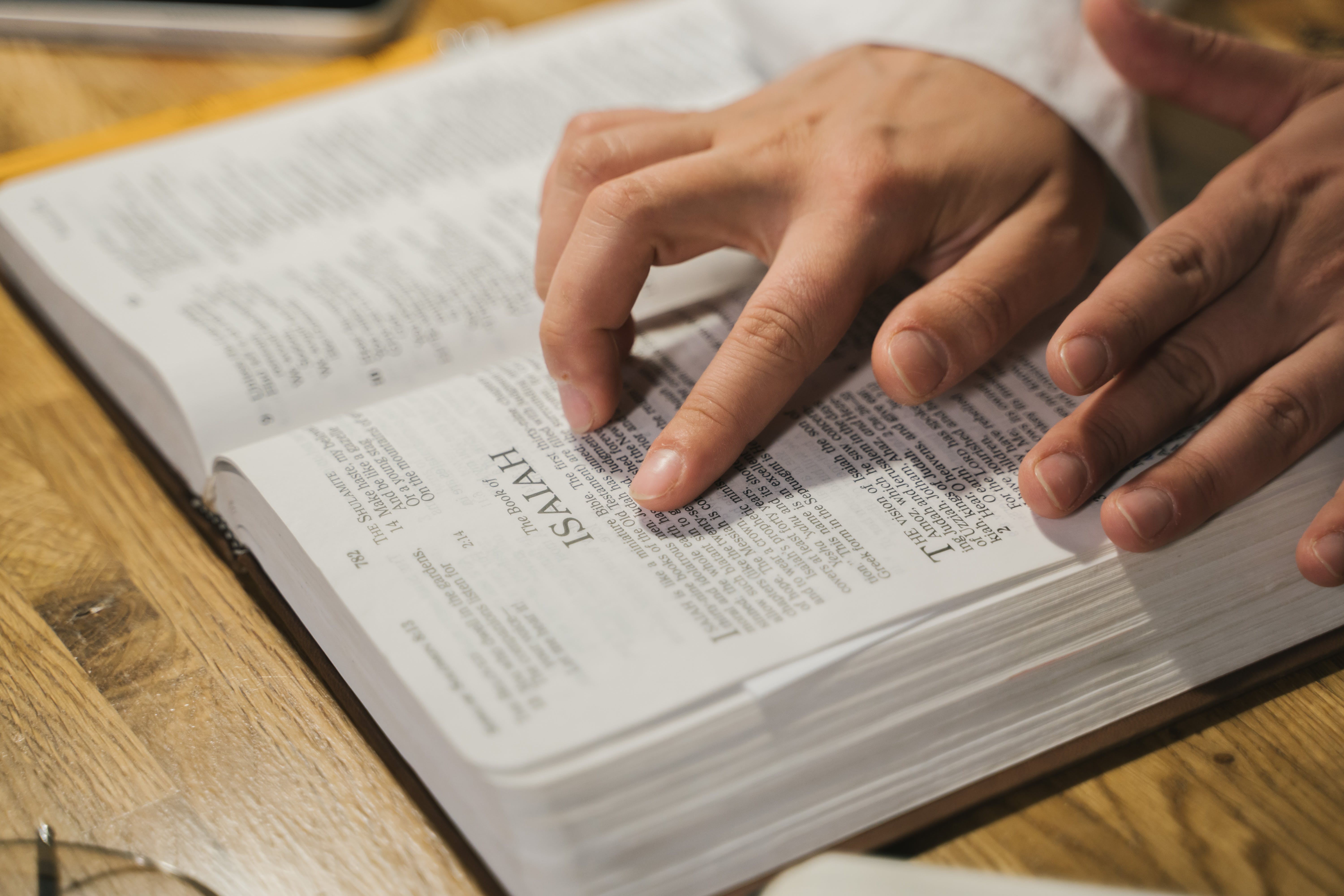
    Day 199—We are in the seventh month of Bible reading and are continuing in Isaiah.

    Day 199 – Isaiah 23 – 27. (severe judgment, the Day of the Lord, and HOPE for God’s people)

Chapter 23 is the oracle of judgment on Tyre and Sidon. They are the traders of the world, and now the port cities are amazed at the judgment on them. Verses 8 & 9: “Who has purposed this against Tyre….”   “The LORD of hosts has purposed it, to defile the pompous pride of all glory, to dishonor all the honored of the earth.”

.

Chapter 24 describes the judgment on THE WHOLE EARTH!  “Behold, the LORD will empty the earth and make it desolate, and he will twist its surface and scatter its inhabitants.”   “The earth shall be utterly empty   plundered, for the LORD has spoken this word.” 

“The earth lies defiled under its inhabitants, for they have transgressed the laws, violated the statutes, broken the EVERLASTING COVENANT.  Therefore, a curse devours the earth, and its inhabitants suffer for their GUILT; therefore, the inhabitants of the earth are scorched, and few men are left.  (Maybe see Genesis 9:5-16.)

.

Chapter 25 speaks of home in that God will end death.  “He will swallow up death forever, and the Lord GOD will wipe away tears from all faces, and the reproach of His people He will take away from all the earth, for the LORD has spoken.”

“It will be said on that day, ‘Behold, this is our God, we have waited for Him, that He might save us. This is the LORD; we have waited for Him; let us be glad and rejoice in His salvation.”

.

Chapter 26 continues with a song that will be sung in the land of Judah. “You keep him in perfect peace whose mind is stayed on you because he trusts in you. Trust in the LORD forever, for the LORD GOD is an everlasting rock.”

“Come, my people, enter your chambers and shut your doors behind you; hide yourselves for a little while until the fury has passed. For behold, the LORD is coming out from His place to punish the inhabitants of the earth for their iniquity, and the earth will disclose the blood shed on it, and will no more cover up the murdered.”

.

Chapter 27. Israel will be redeemed. “In the days to come, Jacob shall take root, Israel shall blossom, and put forth shoots and fill the whole world with fruit.”   

“In that day, from the river Euphrates to the Brook of Egypt, the LORD will thresh out the grain, and YOU will be gleaned one by one, O people of Israel.  And in that day, a great trumpet will be blown, and those who were lost in the land of Assyria and those who were driven out to the land of Egypt will come and worship the LORD on the holy mountain of Jerusalem.”

2024GOAL – Reading Through The Bible Chronologically, days 196 & 197

    Day 196 & 197—We are in the SEVENTH month of Bible reading, continuing in Israel’s history and Isaiah.

(Note: SUNDAY’s and MONDAY’s readings are combined.)

    Day 196 – 2 Chronicles 28, 2 Kings 16 – 17. (The evil, sin, and final exile of the northern kingdom of Israel)

2 Chronicles 28 describes the reign of Ahaz in Judah, who walked in the ways of the kings of Israel, worshiping false gods and even burning his sons as offerings to them. 

King Ahaz battled the Syrians and lost a significant number of people who were taken captive to Damascus.  Ahaz also battled King Pekah of Israel and lost 120K men of valor to him IN ONE DAY. 

It’s interesting that when the King of Israel took 200K captives of the people of Judah, God, through the prophet Oded, made him feed them, give them back their things, and send them home. Israel was NOT ALLOWED to take captive any of God’s own people.

King Ahaz of Judah also sent to Tiglath-Pilezer, king of Assyria, for help in fighting against Edom, who had invaded them from the southeast and taken captives. The Philistines had also invaded them from the west.  Desperate, King Ahaz took treasure from the Temple and palace to give to the Assyrian king, but it did not help him.

.Ahaz desperately sacrificed to all the gods he knew, “but they were the ruin of him and all Israel.”  He died but was not buried in the tombs of the kings of Israel.  And Hezekiah, his son, reigned in his place.” 

WHEW!

.

2 Kings 17 describes the final demise of the northern kingdom.  Hoshea was the last king in Israel and reigned nine years.  Shalmaneser, king of Assyria, fought with him and won, making him pay tribute. After a couple years, King Hoshea stopped paying, so the Assyrian king came to Samaria and besieged it for three years.  Then, he captured Hoshea and carried the Israelites away to Assyria. 

As an epitaph, this chapter lists the reason for Israel’s end.  They had sinned against the LORD their God and feared other gods, and walked in the customs of the pagan nations. They built high places, set up idols to worship, and provoked the LORD to anger.  The LORD warred against them by every prophet and seer, saying, “Turn from your evil ways and keep my commandments and statutes.”  But they would not listen.

They despised his statutes and covenant. They went after false idols. They abandoned all the commandments of the LORD their God. They made metal images and Asherah and worshiped the host of heaven. They burned their sons and daughters as offerings. They used divination and omens. They sold themselves to do evil in the sight of the LORD.

THEREFORE, THE LORD WAS VERY ANGRY WITH ISRAEL AND REMOVED THEM FROM HIS SIGHT. None was left but the tribe of Judah only.  So, Israel was exiled from their own land to Assyria to this day. 

Then, the king of Assyria brought people from all over his empire and settled them in the cities of Samaria. They took possession of the cities and lived there. The Assyrian king sent back a false priest to teach them “the ways of the LORD,” but those ways had long been corrupted. 

This was the beginning of the “Samaritans,” whom the Jews hated in the New Testament. 

.

    Day 197 -Isaiah 13 – 17. (Oracles, or prophecies against five surrounding nations)

Babylon is first on the list of nations with predictions 100 years in the future. God not only judges his own people, but He judges the nations because of their rebellion. “i will punish the world for its evil, and the wicked for their iniquity; I will put an end to the pomp of the arrogant, and lay low the pompous pride of the ruthless.” 13:11,  and And Babylon, the glory of kingdoms, the splendor and pomp of the Chaldeans, will be like Sodom and Gomorrah when God overthrew them.” 13:19

Then, a promise of hope for exiled Israel.  “For the LORD will have compassion on Jacob and will again choose Israel and will set them in their own land.”   “When the LORD has given you rest from your pain and turmoil and the hard service with which you were made to serve, you will take up this taunt against the king of Babylon….” 14:1 and 3. 

Assyria next gets a message from the oracle. “…I will break the Assyrian in my land, and on my mountain trample him underfoot, and his yoke shall depart from them, and his burden from their shoulder.” 14:25

Philistia follows. “Rejoice not, O Philistia, all of you, that the rod that struck you is broken, for from the serpent’s root will come forth an adder, and its fruit will be a flying fiery serpent.” 14:29

Moab gets two chapters from an oracle. Harshness, with bits of mercy because of Israel’s distant relation to Moab. “But now the LORD has spoken, saying, ‘In three years, like the years of a hired worker, the glory of Moab will be brought into contempt, despite all his multitude, and those who remain will be very few and feeble.” 16:13.

Damascus is last in this section. “Behold, Damascus will cease to be a city and become a heap of ruins.”   “Gleanings will be left in it, as when an olive tree is beaten – two or three berries in the top of the highest bough, four or five on the branches of a fruit tree, declares the LORD God of Israel.” 17:1,6.

2024GOAL – Reading Through The Bible Chronologically, day 195

    Day 195—We’ve been reading for over half the year. Praise God! Today, we’re read in another of the “minor prophets.”

    Day 195 – Micah 1 – 7. (Prophesies mainly to the southern kingdom of Judah about social injustices and religious corruption, 3 cycles of doom then hope)

Micah is from a town south of Jerusalem and speaks mainly to Judah, although he alludes to Samaria’s fall to the Assyrians in 1:6-11.

“Woe to those who devise wickedness and work evil on their beds! When the morning dawns, they perform it because it is in the power of their hand.  They covet….  They oppress….. They lie….  They don’t know justice… They hate good and love evil…. They take bribes for religious favors….   And so, it will be night to them, without vision or prophet, and Zion will be plowed as a field; Jerusalem shall become a heap of ruins.” (Chapters 1-3.)

But, in the latter days (Chapter 4), others will come to the house of God in Zion and say, “Come, let us go up to the mountain of the LORD, to the house of the God of Jacob, that He may teach us His ways and that we may walk in His paths. For out of Zion shall go for the law, and the word of the Lord from Jerusalem.”  And the Lord will reign over them in Mount Zion… forevermore.

Chapter 5 gives the promise of the future Ruler and Shepherd of Judah. “But you, O Bethlehem…. from you shall come forth for me one who is to be ruler in Israel, whose coming forth is from of old, from ancient days..”   “And He shall stand and shepherd his flock in the strength of the LORD, in the majesty of the name of the LORD his God. And they shall dwell secure… And He shall be their peace.”

Chapter 6 returns to the Indictment of the LORD against his people. “O my people, what have I done to you? How have I wearied you? Answer me!”

When asked if God’s people should come to Him, bowing, with burnt offerings of calves, with 10K rams, or rivers of oil, or bring their firstborn to be sacrificed for their transgressions?????? 

“He has told you, O man, what is good;

and what does the LORD require of you

but to do justice, and to love mercy,

and to walk humbly with your God?

But…. (God says) Can I forget any longer the treasures of wickedness in the house of the wicked?  Therefore I strike you with a grievous blow, making you desolate because of your sins. 

Chapter 7. “The godly has perished from the earth, and there is no one upright among mankind; they all lie in wait for blood, each hunts the other with a net.”    “The day of your watchmen, of your punishment, has come; now their confusion is at hand.”

BUT… “Who is a God like You, pardoning iniquity and passing over transgression for the remnant of His inheritance. He does not retain His anger forever because He delights in mercy.”

Micah’s message. Doom and retribution.  Hope and the promise of restoration.


2024GOAL – Reading Through The Bible Chronologically, day 191

    Day 191—We are in the SEVENTH month of Bible reading. Praise God!

    Day 191 – Isaiah 5-8. (lots of familiar word pictures in these chapters)

Chapter 5 begins with an allegory comparing Israel with a vineyard God has lovingly planted. (I’ve heard this made into a poignant song as well.)

God has done all to make “His beloved” a fruitful vine – planting them in the goodly land, protecting them, watering and cultivating them, getting a vat ready for the sweet wine of joy He expected – but, when he came to find the grapes… only sour ones hung there.  And so, He will let them go, remove the hedge, stop the rain, allow “beasts” to trample them.

“He looked for justice, but behold bloodshed; for righteousness, but behold an outcry!” 

The chapter finishes with six “woes” that show what God has “against” the people. The first one could be leveled against our modern cities. “Woe to those who join house to house, who add field to field, until there is no more room.”  Greed is pictured.

Woe to those who rise early in the morning to run after strong drink and tarry late as the wine inflames them!  Drunkenness and revelry are pictured, along with neglect of the poor.

Woe to those who draw iniquity with cords of falsehood. “Let the counsel of the Holy One of Israel draw near, and let it come that we man know it.” The ridicule of God’s prophets is pictured.

Woe to those who call evil good and good evil.  Confused morality is pictured.

Woe to those who are wise in their own eyes.  Arrogance and pride are pictured.

Woe to those who are “heroes” at drinking wine…. who acquit the guilty for a bribe and deprive the innocent of his right.  Injustice by drunk and bribed judges is pictured.

.

Chapter six is Isaiah’s glorious vision of God Almighty on His throne.  What a privilege to see it!!

“I saw the Lord sitting upon a throne, high and lifted up; and the train of his robe (glory) filled the temple.  Above Him stood seraphim. Each had six wings: with two, he covered his face; with two, he covered his feet; and with two, he flew. And one called to another and said:

Holy, holy, holy is the LORD of hosts;

the whole earth is full of His glory!

And the foundations of the thresholds shook at the voice of Him who called, and the house was filled with smoke. And I said, ‘Woe is me! For I am lost; for I am a man of unclean lips, and I dwell in the midst of a people of unclean lips, for my eyes have seen the King, the LORD of hosts!”

After a seraph “cleansed” his mouth with a lump of burning coal, and Isaiah eagerly said, “Here am I. Send me!” the LORD commissioned him to “Go to my people” with a message of destruction and exile. God also told him the people would not hear it. The last verse gives Isaiah hope for a remnant in Israel who WILL hear and believe.

.

Chapter seven inserts some history. King Uzziah is dead, as is his son, King Jotham. Now Uzziah’s grandson, Ahaz reigns, and both Syria AND Israel (the northern tribe) are coming to Jerusalem to make war. Ahaz is scared, as are the people. 

The LORD sends Isaiah to help the king. “Be careful, be quiet, do not fear, and do not let your heart be faint because of these two smoldering stumps of firebrands.”    “It shall not stand, and it shall not come to pass.”

Then the LORD, through Isaiah, tells King Ahaz to ask a sign of the LORD, be it as deep as the grave or as high as heaven.  This sounds strange, but the LORD did give signs to leaders in those days.  However, King Ahaz did not ask. (smart or defiant?) 

In any case, God gave HIM a sign.  “Therefore, the Lord himself will give you a sign. Behold the virgin shall conceive and bear a son and shall call his name Immanuel.”  “Before the boy knows how to refuse the evil and choose the good, the land whose two kings you DREAD will be deserted.”

We’re familiar with the first part of that prophecy, which the angel Gabriel used when he told Joseph it was okay to marry the pregnant virgin Mary because she was “with child of the Holy Spirit.” The boy would be “God with us” (Immanuel). 

The prophecy in King Ahaz’s time told him that before a child could be conceived and grow to the age where he could tell good from evil, both Syria and the northern kingdom of Israel would be gone.

BUT… the LORD was also going to bring on Judah and its people, “such days as have not come since the day that Ephraim (northern kingdom) departed from Judah. Not Syria…… but the king of Assyria was coming!” 

.

Chapter 8 describes the king of Assyria and all his glory as a great river overflowing its banks and sweeping into Judah, reaching to the neck of the people, and filling their land. But an eventual triumph of the faithful remnant of Israel would come, “for God is with us (Immanuel).”

Isaiah was accused of conspiracy by the people, but he was determined to honor the LORD of Hosts. He would let HIM be his fear and his dread. Then the LORD would become both a sanctuary to Isaiah, and a stone of offense and a rock of stumbling to both houses of Israel, and a trap and a snare to Jerusalem.

When the people inquired of mediums and necromancers, Isaiah was to ask them, “Should not the people inquire of their God? Should they inquire of the dead on behalf of the living?”  

“And they will look to the earth, but behold distress and darkness, the gloom of anguish. And they will be thrust into thick darkness.” 

The next chapter will go on about, “The people who walked in darkness have seen a great light….”


2024GOAL – Reading Through The Bible Chronologically, days 189 & 190

    Day 189 & 190—We are in the seventh month of Bible reading. And today, we begin the book of Isaiah.

(Note: SUNDAY’s and MONDAY’s readings are combined.)

    Day 189 – 2 Kings 15, 2 Chronicles 26. (Azariah/Uzziah – same guy – reigns in Judah, while Israel has FIVE kings)

Uzziah became king in Judah at age 16 and reigned 52 years. He did what was right in the sight of the LORD. A prophet, Zechariah (not the author of the Bible book), instructed him in the fear of God, and as long as he sought the LORD, God made him prosper.

And indeed, he prospered in war against the Philistines, Ammonites, and others. He outfitted all his army with shields, spears, helmets, coats of mail, bows, and stones for slinging.  He built “engines” invented by skillful men to be on the towers and corners around Jerusalem to shoot arrows and catapult great stones.

His fame spread far, for he was marvelously helped….. till he was strong.2 Chronicles 26:17.

But when he got strong, he grew proud to his destruction. For he was unfaithful to the LORD his God and entered the temple of the LORD to burn incense on the altar of incense.

The priest, Azariah, went in after him with 80 other priests to withstand him.  “It is not for you, Uzziah, to burn incense to the LORD, but for the priests, who are consecrated. Go out of the sanctuary, for you have done wrong, and it will bring you no honor from the LORD God.”

But this angered Uzziah. (He was ready to burn incense.)  And leprosy broke out on his forehead.  The priests quickly rushed him out of the sanctuary. 

And King Uzziah was a leper to the day he died, living in a separate house.  His son, Jotham, was over the household and governed the people. When Uzziah died, they buried him in a field dedicated to the kings, not in the City of David (2 Chronicles 26:23), for he was a leper.  

And his son, Jotham, slipped into the role of king in his place.


Meanwhile, in the north, Zechariah, the son of Jeroboam 2nd, reigned in Samaria for…. six months. 

Shallum (the son of nobody, meaning not in the line of kings) killed Zechariah and reigned in his place. He reigned for…. one month.

Next, Menachem, probably a military commander under Zechariah, killed Shallum and reigned in his place. He reigned for ten years in Samaria and did what was evil in the sight of the LORD.  He was a barbarian, and when he attacked a city he ripped open all the women’s bellies who were pregnant.  

Menachem also exacted 50 shekels of silver from every wealthy man and gave it to Pul, the invading Assyrian king, to make him turn back.

When he died, his son Pekahiah reigned in his place for…. two years. He also did what was evil in the sight of the LORD.

Then Pekah, Pekahiah’s captain, conspired against him, killed him, and reigned in his place for…. 20 years. During his reign, Tiglath-Pileser, king of Assyria, came, captured Kadesh, Hazor, Gilead, and Galilee, all the land of Naphatli, and carried the people captive to Assyria. 

Then Hoshea killed Pekah and reigned in his place for…. nine years. He was the last king to reign in the north.

.

    Day 190 -Isaiah 1 – 4. (Isaiah’s great vision concerning Judah came in the days of Kings Uzziah, Jotham, Ahaz, and Hezekiah. )

Chapter 6 tells us that it was the year that King Uzziah, king of Judah, died that Isaiah got his commission to be prophet to Judah in Jerusalem. He was probably of high rank because he had easy access to all four kings. 

Like other prophets of the LORD, his messages were at first addressed to the sins of the people. They offered sacrifices by the train load, but their hearts were far from him. God does not delight in sacrifices for the sake of sacrifices but to show repentance in the heart.

“Wash yourselves; make yourselves clean; remove the evil of your deeds from before my eyes; cease to do evil, learn to do good; seek justice, correct oppression; bring justice to the fatherless, plead the widow’s cause.” 

These were half of the basis of what God had against his people – their greed and injustice against the helpless.  

It reminds me of God’s simple but profound words in Deuteronomy 10:12+ and Micah 6:8“He has told you, O man, what is good; and what does the LORD require of you but to do justice, and to love mercy, and to walk humbly with your God.

God is willing to pardon the guilty who desire forgiveness and obedience. Isaiah 1:18-20.

Come now, let us reason together, says the LORD;

though your sins are like scarlet,

they shall be as white as snow;

though they are red like crimson,

they shall be as wool.

If you are willing and obedient, you shall eat of the good of the land;

But, if you refuse and rebel, you shall be eaten by the sword.”

“O house of Jacob, come, let us walk in the light of the Lord.” 2:5

Isaiah is to…

“Tell the righteous that it shall be well with them, for they shall eat the fruit of their deeds. Woe to the wicked! It shall be ill with him, for what his hands have dealt out shall be done to him.”

In chapter 4, Isaiah mentions the beginnings of his prophecies about the future Messiah, which he calls “the Branch.”

2024GOAL – Reading Through The Bible Chronologically, day 188

    Day 188—We are in the seventh month of Bible reading. Praise God!  We are reading the second minor prophet today.

    Day 188 – Jonah 1 – 4. (God’s rebellious prophet)

From 2 Kings 14:25-27, we know that Jonah (from a town in Zebulun) lived and prophesied in the time of Jeroboam 2nd in the northern kingdom of Israel. He had said that that king would restore much of Israel’s land taken by Syria BECAUSE the LORD had mercy on the people. Even though Jonah knew that God was merciful (Jonah 4:2), he hated that God’s mercy would be shown to the cruel Assyrians.

“Arise, go to Nineveh, that great city, and call out against it the message I will tell you.”

When God told his prophet to preach to Nineveh, the Assyrian capital, Jonah went in the opposite direction.  Instead of traveling east (toward modern-day Iraq), he hopped aboard a boat bound west for Tarshish (Spain).

He immediately went to sleep. Above him, a storm raged, and the sailors panicked. They prayed to their gods. They tossed the cargo overboard. Finally, they woke Jonah and discovered the real reason for their predicament. He worshipped God, the creator of the land and SEA, and he was running away in disobedience to that God.  “Toss me overboard, and you’ll be okay,” he suggested. They didn’t want to but eventually did what he said. And the storm was immediately calmed….and they praised God.

Jonah preferred death to preaching to the Assyrians. But God did not let him “off the hook.” A specially prepared fish swam by and gobbled up the sinking prophet. Inside that icky fish stomach, the prophet remained for three days. He prayed while the fish swam east, where it finally vomited Jonah onto dry land.

Like an echo, the word of the LORD to Jonah came again, “Arise, go to Nineveh, that great city, and call out against it the message that I will tell you.”

Can you imagine Jonah’s great sigh as he brushed the sand off and stomped toward Nineveh?  He finally arrived at this massive city (It took three days to walk across it!), walked a third of the way in, and said, “In forty days, Nineveh shall be overthrown!”  

And miracle upon miracle, Nineveh truly repented. From the king down to the cattle, they removed their robes, put on sackcloth, and sat in ashes.  And God relented, just as Jonah knew He would. (Psalm 86:15, 103:8)  (Nineveh was eventually destroyed, but they were given a merciful reprieve here.) 

Meanwhile, Jonah leaves the city, climbs a hill, and waits for the fiery destruction, perhaps like Sodom and Gomorrah?  But inside, he knows it wouldn’t happen. And that angers him. Just like the plant angered him, the one God caused to grow over him for shade, and then it died because a little worm killed it, allowing the burning sun to scorch his head. Nothing, it seems can make Jonah happy.  Jonah even prays to die. 

God chides him for thinking more of a plant than a city full of children and repentant adults. But Jonah remains silent in his gloom. 


You might think this was an allegory and not about a real person, except Jeroboam 2nd knew him, and Jesus mentioned him in Matthew 12:39-41 when the Pharisees asked him for a sign. 

“But He answered them, ‘An evil and adulterous generation seeks for a sign, but no sign will be given it except the sign of the prophet Jonah. For just as Jonah was three days and three nights in the belly of the great fish, so will the Son of Man be three days and three nights in the heart of the earth.  The men of Nineveh will rise up at the judgment with THIS generation and condemn it, for THEY repented at the preaching of Jonah, and behold, something greater than Jonah is here.”

By the way, the Pharisees were also wrong when they said to Nicodemus that no prophet comes from Galilee. Did they forget Jonah? John 7:50-52.

2024GOAL – Reading Through The Bible Chronologically, day 186

    Day 186—We are in the seventh month of Bible reading, continuing with the history of Israel (North and South)

    Day 186 – 2 Kings 12 – 13, 2 Chronicles 24. (confusing kings – Jehoash, Joash, Jehoahaz, Jehoash 2, Joash)

2 Kings 12 and 2 Chronicles 24.  Jehoash/Joash, at seven years old, begins to reign in the southern kingdom of Judah. He did what was right in the eyes of the LORD during the days of his mentor, the priest Jehoiada. 

He instigated repairs to the Temple but had to take matters into his own hands when the Levites were slow to do this. He had an “offering chest” made where the people could directly give toward the repairs. The people responded willingly.

Then Hazael, king of Syria, attacked and took Gath, a city of Philistia, to Judah’s west. He then looked to attack Jerusalem, but Joash took all the sacred gifts and gold from the king’s house and gave them to Hazael. Satisfied, he went away. 

The old priest finally died and was buried among the kings in the City of David because he had done “good” in Israel. After his death, the princes of Judah came in and influenced the king to abandon the house of the LORD, the God of their fathers, and serve Asherim and idols. God sent prophets with warnings, but none were heeded. 

Then Zechariah, the son of the “good” priest, called out to them, “Because you have forsaken the LORD, He has forsaken you!”  But shamefully, by Joash’s own command, Zechariah was stoned to death in the temple court. 

The Syrians then sent a small army against Judah (in judgment). They destroyed all the princes, wounded Joash, and took spoils to their king. Then, the king’s servants (who happened to be an Ammonite and a Moabite), who supported the godly priest and his son, killed Joash in his bed. They buried him in the City of David but not among the kings. He had reigned for 40 years.  His son, Amaziah, became king.


2 Kings 13.  Back in Israel in the north, Jehoahaz, the son of that bloody Jehu who had annihilated Ahab’s line, began to reign in Israel. Like all the kings in the north, he did evil in the sight of the LORD.  In judgment, the LORD caused Hazael, then Ben-Hadad, the kings of Syria, to attack and harass them continually. 

Jehoahaz temporarily turned to the LORD for help, and God was gracious and gave them “a savior.” This could have been Elisha, who often caused Israel’s success by telling them what the enemy was doing, or it might have been the Assyrian king, whose attack on Syria, caused them to withdraw from Israel. In either case, it was God who arranged it.

Nevertheless, Jehoahaz stuck to his evil ways. He died after a 17-year reign, and his son, Joash (not to be confused with the 7-year-old king in Judah), reigned in his place. This Joash reigned for 16 years and did what was evil in the sight of the LORD.

Now, Elisha, that mighty prophet in Israel, got sick with the illness he would die from.  King Joash of Israel came to him about the attacks from Syria. Through some “object lessons” involving shooting arrows and striking the ground with arrows, Elisha shows him that Israel will have victory over Syria… but only three times. 

Then Elisha died, and they buried him. But the miracles of the prophet weren’t done yet!  As another man was being buried, a marauding band of Moabites appeared. The grave diggers quickly threw the dead man into Elisha’s grave.  When the body touched Elisha’s bones, he was immediately resurrected!! WHOA!