Archives

Journaling through the Bible Chronologically in 2025, Days 306 & 307

A NEW MONTH!

SUNDAY and MONDAY studies are posted together on Mondays

Day 306 – Reading – Luke 19

Day 307 – Reading – Mark 11 and John 12
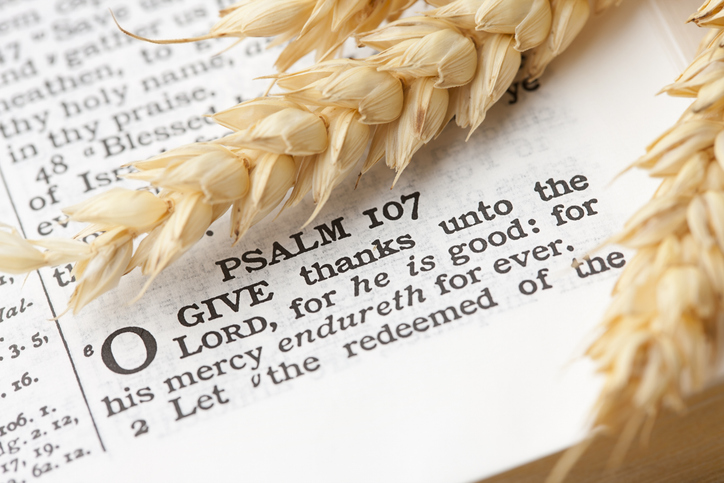
Read and believe in Jesus!

SUNDAY – Day 306 – Luke 19.

Today’s chapter in Luke will revisit some of the events from yesterday’s reading in Matthew.  We will go back to Jericho and meet another Tax Collector named Zacchaeus.  He was a chief tax collector, and as such, he was very wealthy and very disliked. Not only did he collect taxes, but he also oversaw others and probably got a “cut” of their money. 

But Zacchaeus was different from that rich young ruler in the previous chapter.  We will see that his money meant little to him, and he was very eager to see Jesus. 

He was a “wee little man,” or so the children’s song goes, and he could not see Him over the heads of the crowd that followed Jesus as he walked through the city.  Quickly, the enterprising tax collector climbed up in a nearby sycamore tree and spotted Jesus.  Jesus saw him in the tree, knew the thoughts and intents of his heart, and stopped.  

Zacchaeus, hurry and come down, for I must stay at your house today.”

As he scrambled down from the tree, did Zacchaeus wonder how Jesus knew his name? The crowd parted, and the short tax collector pushed through, joyfully leading the way to his house. 

Of course, the crowd grumbled when they saw Jesus go into “that sinner” Zacchaeus’ house.

Before Zacchaeus even called for lunch, he confessed to Jesus, “Behold, Lord, the half of my goods I give to the poor. And if I have defrauded anyone of anything (of course, he had!), I will restore it fourfold.”

How different from that rich young ruler, who went away from Jesus sorrowfully, because he didn’t want to give away even a penny. Zacchaeus offered much more.  The law required only 20% restitution (not half), and replacement of twice the value, not four times.  His heart was truly repentant. 

Today salvation has come to this house, since he also is a son of Abraham.  For the Son of Man came to seek and to save the lost.”

.

Then Jesus told a parable, perhaps even as they all reclined around Zacchaeus’ meal.  It was to remind His followers that Jesus was NOT (right then) going to establish His Kingdom on earth. (He had to suffer and die first, but they seemed deaf to that message.)  So … Perhaps a parable would get them thinking.

He told a story about a nobleman who planned to claim his kingdom and then return.   While he was gone, his servants were to conduct business and make a profit for him. He gave them each 10 minas to work with. He went, received his kingdom, and returned home.  He asked each of his servants what they had gained for him.

One made a tenfold profit. “Good job. You shall have authority over ten cities in my kingdom.”

One made a fivefold profit. “Good job as well. You will be over five cities.”

One made zero profit. He said, “I put the ten mina in my handkerchief, for I was afraid of you. Here is your minas.”  “You wicked servant. Why did you not put my money in the bank so I might have at least collected the interest? Take that mina from him and give it to the one who earned a 10X profit.”

Perhaps the disciples scratched their heads at this, but probably Zacchaeus understood well about profit and loss and nodded his head in understanding.

 But did they all understand that He, the nobleman in the parable, was going away to claim his Kingdom, not seizing it in Jerusalem?

.

Then, as we read yesterday, Jesus proceeded to Bethphage, where the disciples procured a donkey-colt for him to ride on. And as he rode down toward the gate of Jerusalem, the crowd began waving palm branches and strewing them and their cloaks on the ground for Jesus to ride over. 

Blessed is the King who comes in the name of the LORD! Peace in heaven and glory in the highest!” they shouted.

Some Pharisees were in the crowd and shouted at Jesus. “Teacher, rebuke your disciples!”

I tell you, if these were silent, the very stones would cry out,” He answered.

Then at one point, Jesus wept over the Holy City, saying, “Would that you, even you, had known on this day the things that make for peace!  But now they are hidden from your eyes.” And He predicted the time when Jerusalem would fall with not one stone left on another … because they didn’t recognize the “day of their visitation.”  (His time with them.)

Inside the city, the chief priests and scribe sought to destroy Him, but they did not find anything they could do … because all the people were hanging on  His Words.

,

###

.

MONDAY – Day 307 – Mark 11.

Mark repeats the account of Jesus’ triumphal entry into Jerusalem and the brief time in the Temple court.

He tells of Jesus cleansing the temple from those who sold and bought there.  He overturned the tables of the money-changers and the seats of those who sold pigeons.  He ferociously quoted the passage in Isaiah about them making his Father’s house into a den of robbers, when it was supposed to be a place of prayer. 

Jesus left the city and spent the night in Bethany.  The next day, Mark also tells of Jesus cursing the barren fig tree because it had no fruit, perhaps indicating how, when He came to “His own,” He found Israel barren of “good” fruit, and not looking for their Messiah.

Inside, the Jewish leaders again challenge Jesus’ authority to do the things He did (cleansing the temple, etc.).  Of course, Jesus met their challenge with one of His own and they left.

.

John 12.

John’s account backs up a little too, to the night they spent in Bethany before getting the donkey & colt at Bethphage the next day. 

It was at the home of Martha, Mary, and Lazarus, Jesus’s beloved home, about 2 miles from Jerusalem. They gave a dinner from Him, Martha served, and Lazarus reclined at the table near Jesus.  Mary, whose heart was wound up in her Lord, came with an expensive jar of ointment and anointed Jesus’s feet, wiping them with her hair.  The whole house was filled with the amazing aroma of the perfume.

WHY was this ointment not sold for three hundred denarii and given to the poor?”  

Judas Iscariot just could not keep it in.  He saw Mary’s act of extreme love and worship as a big waste.  (Of course, he was the treasurer of the group and kept the money bag, pilfering some from time to time for himself.  If that 300 denarii had been in his pouch, he could have stolen quite a bit.)

Leave her alone,” Jesus said. “She has kept it for the day of my burial.  YOU always have the poor with you, but you do not always have me.”

.

When the large crowd discovered that Jesus was staying there, they crowded around to see Lazarus, whom Jesus had raised from the dead.  So the chief priests and scribes made plans to put Lazarus to death as well, because the miracle turned many Jews to believe in Jesus.

.

Jesus then rode into Jerusalem the next day to the praises and blessings from the crowd. “Hosannah…the King of Israel,”  The Pharisees grumbled to each other, “You see that we are gaining nothing.  Look!  The world has gone after Him.”

.

“The hour has come for the Son of man to be glorified,” Jesus says. “Unless a grain of wheat falls into the earth and dies, it remains alone; but if it dies, it bears much fruit.

At one point, Jesus stops and prays to His father in growing anguish. “Now is my soul troubled. And what shall I say?  Father, save me from this hour:  but, for this purpose, I have come to this hour. Father… glorify Your name.”

A voice thundered from Heaven, “I have glorified it, and I will glorify it again!”

This voice has come for your sake, not mine,” Jesus told the people. “Now is the judgment of this world; now will the ruler of this world be cast out. And I, when I am lifted up from the earth, will draw all people to myself.” (He said this, indicating how he would die.)

But the people responded that they read in the Law that the Messiah would live forever.  What was this about Him dying? Who is this Son of Man, anyway?

‘Walk while you have the light, lest darkness overtake you. While you have the Light, believe in the light.”   “Whoever believes in me believes in Him who sent me.   I have come into the world as Light, so that whoever believes in me may not remain in darkness,” said Jesus, the Holy One of God, among many other things. 

Many of the authorities believed in Him, but for fear of the Pharisees, they did not confess it.  They loved the glory that comes from man more than the glory that comes from God.

 

Journaling through the Bible Chronologically in 2025, Day 305

A NEW MONTH!

Day 305 – Reading – Matthew 20 – 21

Read and believe in Jesus!

Matthew 20.

The Parable of the Vineyard. (Read verses 1-16. What do you think is Jesus’ message?)

At sun-up (6:00 a.m.), a vineyard owner went to the marketplace to hire day workers. (You’ve all see them: men waiting abound Home Depot or other places for day work.)  The owner picked some and took them to his vineyard. On the way, they settled on the usual day’s pay for a day’s work – a denarius.   

The owner saw that he would need more laborers. Perhaps the heat was damaging the grapes, or a storm threatened.  At 9:00 a.m., 12:00 p.m., 3:00 p.m., and 5:00 p.m. he went back and hired more men. Each of these later hires agreed on “what was fair” as pay.

At 6:00 p.m. (12 hours after the first hire), the owner told the foreman to pay the men and send them home. All had done a great job.  Oh, and he was to begin with the last hired, and go on until the first hired with his “paychecks”. (coins) 

The foreman did just that.  As the earliest hires who had worked a full 12 hours watched the others being paid the same wage they had agreed on, the thought “Wow, WE must be getting much more, having been here ALL DAY.  But when the foreman came to them, he doled out a denarius to each.  These workers looked at the coin in their hand and were disappointed, even a bit outraged. THEY had worked for 12 hours, the last men had worked only ONE!  It wasn’t fair!

Was it?

The owner of the vineyard came to see the problem and asked them, “Friends, I am doing you no wrong. Did you not agree with me for a denarius?  Take your pay and go. I choose to give these last workers as I give to you. Am I not allowed to do what I choose with what belongs to me?  Do you begrudge my generosity?”  

Jesus added to the listeners of this parable to help their understanding, “So the last will be first, and the first last.”

OH PLEASE! Let us not begrudge the Lord’s generosity!  For this is a picture-story of all those who are saved by faith in the work of Jesus on the cross.  Some are saved early and work their entire lives for God, perhaps even giving their lives as martyrs.  Then some believe and are saved late in their lives, such as an old gentleman, or and elderly house cleaner.  Or … the thief on the cross.  They have no, or very little time to work in some ministry.  The thief, had only time to BELIEVE.  But still, we all can be confident that a beautiful, forever “Eternal Life” is waiting for us when they die.  Praise God! Thank You for Your so great salvation!

.

Matthew 21.

The time of Jesus “hour” that he predicted three times to His disciples … is beginning.  Having set His face like a flint to do as His Father asks, Jesus now approaches Jerusalem. They stop in Bethphage.  Jesus is not tired, but He knows there is scripture to be fulfilled. (Zechariah 9:9) He sends two of His disciples into town to get a donkey for Him to ride on. (Matthew tells us that the donkey had a foal, which had never be ridden.)  

But what if…” they questioned Jesus.

“If anyone asks, say, ‘The Lord has need of it.”

They get the animals and throw their cloaks on the back of the colt, and Jesus sat on it.  (Now…in normal life, that unbroke colt would have shied away from the flapping cloaks, and surely bucked at the weight of a human on its back.  But this Man, was his Creator. He instantly obeyed.)

As Jesus began riding down the Mount of Olives toward the City gate, the crowd “saw” what was happening.  They began to throw their cloaks and cut palm branches on the road before Jesus.  Excitement grew, and they began shouting, “Hosanna to the Son of David! Blessed is He who comes in the name of the Lord! Hosannah in the highest!” (Psalm 118:25)

As Jesus entered Jerusalem, the whole city was stirred up.  “Who is this?” some cried.  “This is the prophet Jesus, from Nazareth of Galilee!”

(If you want to see how all this (and Jesus’ death) fulfills Daniel’s “weeks” prophecy, read Daniel 9:24-26.)

(At some point, Jesus dismounts the colt and either a disciple, or the owner who followed along, takes the two animals away.) 

Jesus enters the Temple area and sees again the “marketplace atmosphere” of buying and selling sacrificial animals, and changing money.  Jesus is furious for His Father’s sake.  He drives them all out, quoting Isaiah 56:7 and Jeremiah 7:11.  “My house shall be called a house of prayer, but YOU make it a den of robbers!”

Cleansed, the temple court now becomes a place of healing for all who come to Him. 

BUT, when the chief priests and scribes SAW the wonderful things that He did, and the children calling “Hosanna to the Son of David!” THEY WERE INDIGNANT.

Leaders: “Do you hear what they are saying!!??”

Jesus: “Yes. Have you never read, ‘Out of the mouth of infants and nursing babies you have prepared praise?”  (Psalm 8;2)

Then Jesus left the Holy City and went to Bethany and lodged there. (Perhaps with Martha, Mary, and Lazarus.)

The next day, four incidents happen that all point to the failure of Israel and her leaders to obey and please the LORD God.

  • 1.)  The fig tree.  On the way back to the city the next day, Jesus sees a fig tree and reaches for some fruit.  However, the tree is void of all fruit.  Jesus curses it and immediately it withers and dies.  (Remember, that the fig tree often represents Israel. This picture shows Jesus disgust at Israel’s leaders, and is predicting the eventual destruction of the city and their pious rule.
  • 2.) The challenge of authority. Inside the temple court, these leaders come to Jesus demanding WHO gave Him authority to do these things (ride into Jerusalem as Israel’s king and cleansing away the “robbers” in the temple. Jesus asks them a question they fear to answer – from where did John get his authority to baptize” – so Jesus tells them HE won’t answer THEIR question. As Israel’s spiritual leaders, they should be praising God, not questioning the holy One He has sent.
  • 3.) The Parable of the Two Sons represent the leaders themselves, who pompously say they are sent by God, but who do not obey His law, and in fact. corrupt it for the people.  The father asked son #1 to go work in the vineyard.  The son said he didn’t want to go, but later went out to work.  Son #2 said he would go work in the vineyard as his father said, but later did not go out.
  • Jesus said the tax collectors and prostitutes were sinners, but finally obeyed God.  Whereas the religious leaders were represented by the second son who said the kept the entire law, and yet inside they were corrupt and obeyed none of it.
  • 4.) The Parable of the Tenants.  In this parable, the Vineyard owner was God, and the evil tenants were the currant religious leaders.  When God looked for the fruit of righteous in His vineyard, they murdered all God’s servants sent to get it (the prophets) and even HIS SON (Jesus) out of greed.  Jesus told them that the Vineyard owner – God – will come with justice and kill all of them, and give the “vineyard” to others.
  • Jesus was direct with them. “The kingdom of God will be taken away from you and give to a people producing its fruits.”

Of course the chief priests and Pharisees KNEW Jesus was speaking about them.  Right then, they feared to arrest him because of the crowds who held Jesus to be a prophet. But just wait, they thought. 

Just you wait.


Journaling through the Bible Chronologically in 2025, Day 304

Day 304 – Reading – Matthew 19 and Mark 10

Read and believe in Jesus!

Matthew 19 and Mark 10,

Both of these chapters speak about divorce.   It seems when Jesus was teaching and healing, that some legalistic Pharisees approached Him with a question … again, to test Him,

Is it lawful to divorce one’s wife ‘for any cause’?”

What did Moses say?” Jesus asked them, and went on to answer these “supposed” Bible scholars. “Have you not read that He who created them from the beginning made them male and female, and said, ‘Therefore a man shall leave his father and his mother and hold fast to his wife, and the two shall become ONE flesh.’  Whatever, therefore, God has joined together … let not man separate.”

Pharisees:  “Moses allowed a man to write a certificate of divorce and then send his wife away!

Jesus: “It was because of your hardness of heart that Moses allowed you to divorce your wives.  But from the beginning, it was not so.  I say to you, ‘Whoever divorces his wife, except for sexual immorality, and marries another, commits adultery.'”

Later, in private, Jesus’ disciples asked him if it was better to NOT get married. Jesus told them that that way of life was not for everyone.  But if God called someone to abstain from marriage ‘for the sake of the kingdom,’ then it was a good thing.

Then, after blessing marriage, Jesus blesses children. He welcomed them and the Moms who brought them, scolding the disciples for trying to keep them away. “Let the little children come to me. Do not hinder them, for to such belongs the kingdom of God. Whoever does not receive the Kingdom of God like a child … shall not enter it.”

.

The following incident is when Jesus counseled the rich young ruler, which we studied yesterday. The young man had “kept” the law as far as he was concerned, even saying that he “loved his neighbor as himself.”  However, he still felt some lack in his life that would keep him from “eternal life.”  What was it?

It was the FIRST great commandment. He did not love God with ALL his heart, mind, and strength. Jesus saw that his MONEY was first in his heart, and challenged him to sell everything he had, give the money to the poor, and follow Him with just the “shirt on his back.”   This man was sorrowful. He probably cringed at that thought.  And he just couldn’t do it.  Sadly, he went away.

.

During this teaching on marriage, receiving children, and not having a heart for God, Jesus was still in Judea, East of Jericho.  Now, on that journey to Jerusalem, He headed west, passing through Jericho.  As usual, a great crowd followed Jesus and his disciples.

In the midst of the dust and noise of the crowd passing, a blind beggar sitting by the road heard the name, ‘Jesus of Nazareth.’  He began calling, “Jesus! Son of David, have mercy on me!  (Calling Jesus the Son of David meant he recognized Him as the promised Messiah.)

The people around him hushed him.  But Bartimaeus called even louder, “Jesus, Son of David, have mercy on me!”  This was his one and only chance. He called even louder.

And Jesus stopped the procession. “Call him.”  

Now the crowd changed its attitude. “Take heart. Get up; He is calling you!” Throwing off his cloak, he sprang up and came to Jesus.

“What do you want me to do for you?” Jesus asked.

“Rabbi, let me recover my sight!”

“Go your way. Your faith has made you well.” 

And Bartimaeus immediately recovered his sight and followed Jesus on the way. 

.

Compare the response of the rich, young man and the poor, blind man to following Jesus.  The rich man had too much to lose to follow Jesus.  All that wealth and “stuff” held him back.  The blind man jumped at the chance, with nothing hindering him. He’d even thrown off his cloak.  Jesus was enough.


Journaling through the Bible Chronologically in 2025, Day 303

Day 303 – Reading – Luke 18

Read and believe in Jesus!

Luke 18.

In each of Jesus’ parables and teachings, notice WHO He is talking to. 

The Parable of the Persistent Widow is directed to His disciples (going back to 9:22 to verify).  It’s about prayer, persistence in prayer, and faith.

Jesus tells a story about a certain “unrighteous” judge who did not fear God or respect man.  He sounds very self-centered and arrogant.  Each day, this judge heard a request/complaint from a widow about some injustice. He refused to act, probably telling himself there was no benefit to him in doing so.

But she continued to come, day after day after day. He grew tired of seeing her face, of hearing her voice, of her taking up his time.  So finally, to stop her from coming to him, he gave her the justice she requested.  “Finally!” he thought, “I’ll get some peace and quiet!”

After the conclusion, Jesus asked His disciples a question.  “Will not God give justice to His elect who cry to Him day and night?  Will He delay long over them?  I tell you, He will give justice to them speedily.  But… when the Son of Man comes, will He find faith on earth?”   This suggests that there will be FEW “elect” who have genuine faith in the end times. (such as in the days of Noah). 

.

The Parable of the Pharisee and the Tax Collector was directed to “those who trusted in themselves that they were righteous.”  You can guess Jesus is talking to and about the Pharisees.

Two men went into the temple to pray: a Pharisee and a Tax collector. 

Here’s how the Pharisee prayed. Standing apart from the others, he said,

“God, I thank you that I am not like other men, extortioners, unjust, adulterers, or even like… this tax collector.  “I” fast twice a week. “I” give tithes of ALL that I get.”

Here’s how the Tax Collector prayed. Standing far off, his eyes cast to the ground, and beating his chest in sorrow, he said,

God, be merciful to me a sinner!”

Looking at those “who trusted in themselves for righteousness,” Jesus said, “I tell you, this (second) man went back to his house justified, rather than the other.”  Can you imagine the objections in the group of listeners?  No way!  That’s impossible!  You’re crazy!  And Jesus reminds them, “Everyone who exalts HIMSELF will be humbled, but the one who humbles himself will be exalted.”

There is no one truly righteous in themselves. (Psalm 14:1-3) Everyone has sinned. The only hope of justification comes from God to the repentant.

.

This conversation was directed to those around Jesus (bystanders and disciples) as well as directly to a “rich, young ruler” who asked a question – hoping perhaps to outdo the “stuck-up” Pharisees. “Good Teacher, what must “I” do to inherit eternal life?  This man wasn’t a pious teacher of the law, and he certainly wasn’t a hated tax collector. He was just a regular guy (who just happened to have everything – wealth, youth, and power).

Jesus: “Why do you call me good? No one is good by God alone?”  “Was this guy acknowledging Jesus as God? Or was he saying he recognized Jesus as “good” because he, himself, was also “good.”  If so, he was about to be corrected.

Jesus:  “You know the commandments: do not commit adultery, do not murder, do not steal, do not bear false witness, and honor your father and mother.” Notice that Jesus only quoted those commandments that related man to man.

Ruler: “All these have I kept from my youth.”

Jesus: “One thing you lack. Sell all you have and distribute the money to the poor, and you will have ‘treasure’ in heaven. Then, come, follow Me.”

Hearing this, the rich, young ruler became very sad, for he was “extremely rich.”  Slowly, he walked away.

Jesus then turned and said to those around Him: “How difficult it is for those who have wealth to enter the kingdom of God! For it’s easier for a camel to go through the eye of a needle than for a rich person to enter the kingdom of God.” 

His listeners: “Then who CAN be saved?”

Jesus: “What is impossible with men is possible with God.”

Peter: “See, WE have left our homes and followed you.

Jesus: “There is no one who has left house or wife or brothers, or parents, or children, for the sake of the kingdom of God, who will not receive many times more in this time, and in the age to come … eternal life.”

.

And lastly, Jesus directly tells His TWELVE special disciples (for the third time) what the future holds for Him.

See, we are going up to Jerusalem, and everything that is written about the Son of Man by the prophets will be accomplished.  He will be delivered over to the Gentiles. He will be mocked and shamefully treated and spit upon. After flogging Him, they will kill Him. Then ON THE THIRD DAY, He will rise.”

But they understood NONE of these things.  It was hidden from them, and they did not grasp what He said.

(Were their minds and hopes too wrapped up in the “glory” of the Kingdom to come?  Did they still imagine Jesus as King and them as His “right-hand men ruling beside Him?”)  


(Lord, help me to listen and really hear the things You tell us in Your Word. Please give me wisdom and understanding, a soft heart, and a willing spirit.)


Journaling through the Bible Chronologically in 2025, Day 298

Day 298 – Reading – Luke 10

Read and believe in Jesus!

Luke 10.

In the last few verses of chapter 9, Jesus laid out the “cost” of following Him to a few “want-to-be” disciples who tried to join up. 

  1. “I will follow You wherever You go!” said one enthusiastic man.  Jesus answered: “Foxes have holes, and the birds of the air have nests, but the Son of Man has nowhere to lay his head.”
  2. Jesus saw another and said, “Follow me.”  But the man hedged. “Lord, let me go and bury my father.”  Jesus answered, “Leave the dead to bury their own dead. But as for you, go and proclaim the kingdom of God.”
  3. And a third, “I will follow you, Lord, but let me first say farewell to those at my home.”  Jesus answered him too: “No one who puts his hand to the plow and looks back is fit for the Kingdom of God.”

And then (Luke 10), “the Lord appointed 72 OTHERS, and sent them on ahead of him, two by two, into every town and place where he was about to go.”

OTHERS.  These were ones without excuses.  They stayed.  They also need training.  So, as He had sent out the Twelve earlier, Jesus sends these out.  The instructions are the same:

  • Carry no moneybag, knapsack, or extra sandals.
  • Greet (stop and talk for a while) no one on the road.
  • Whatever house you enter, say, “Peace be to this house!” and see if there is a like response.
  • Remain in the same house, eating and drinking what they provide.
  • Heal the sick, say “the kingdom of God has come near you.”

Later, we see them returning with joy, saying, “Lord, even the demons are subject to us in Your name!”  

Jesus acknowledges their success. “I have given you authority to tread on serpents and scorpions, and over all the power of the enemy, so that nothing will hurt you.  NEVERTHELESS … do not rejoice in this, that the spirits are subject to you, BUT THAT your names are written in heaven.”

Jesus then has His own “moment of joy.” “Thank You, Father, Lord of heaven and earth, that You have hidden these things from the wise and revealed them to little children. Yes, Father, for such was your gracious will.”

Then turning back to the disciples, He said privately, “Blessed are the eyes that see what you see!  For I tell you that many prophets and kings desired to see what YOU see, and did not, and to hear what YOU hear, and did not hear it.”

.

Then (to spoil all that joy), a lawyer (a scribe expert in the law of God) stood up to put Jesus to the test.

  • He said, “Teacher, what shall I do to inherit eternal life?
  • Jesus:  “What is written the Law?  How do you read it:
  • Scribe: ‘You shall love the Lord your God with all your heart and with all your mind, and your neighbor as yourself.”
  • Jesus: “You have answered correctly; do this, and you will live.”
  • Scribe, desiring to justify himself: ‘”And WHO is my neighbor?”

Ah… what an opening.  Jesus replied with a true-to-life parable. 

  • A man going down from Jerusalem to Jericho, fell among robbers who stripped him and beat him, and then left him half dead.” 
  • “Now, by chance, a PRIEST was going down that road and SAW him.  He passed by on the other side.” 
  • “Likewise, a LEVITE, when he came to the place and SAW him, passed by on the other side of the road.” 
  • “But a SAMARITAN, as he journeyed, came to where he was ….. and, when he SAW him, he had compassion. He went to him and bound up his wounds, pouring on oil and wine. Then he set him on his own animal, brought him to an inn, and took care of him.  The next day, he paid the innkeeper TWO DINARI (2 days’ wages), saying, “Take care of him. Whatever more you spend, I will repay when I come back.”

Jesus: “Which of these three, do YOU think, proved to be a neighbor to the man who fell among the robbers?”

Jesus had turned the tables on this “intitled” lawyer. The scribe was asking whom HE had to love as a neighbor, but Jesus asked which of the traveling men acted as a neighbor. Not who WAS his neighbor, but who DID the neighborly thing. 

Scribe: “I suppose the one who showed him mercy.”

Jesus: “YOU go, and do likewise.”

.

Next, we see Jesus at the home of Martha and Mary. 

Martha welcomed Jesus and then rushed to prepare a meal for Him and His men. While she worked, Jesus sat in the other room, quietly talking and teaching.  Martha’s younger sister, Mary, had quietly slipped in behind the disciples to sit on the rug and listen to His words. 

As Martha cooked and wiped the sweat from her brow, she worried about everything coming together and if it was enough.  Then everything was ready at once. She needed help laying the table, cutting the bread, and getting the wine!  She needed Mary to come help!  

She went to Jesus, twisting her apron, and said: “Lord, do You not care that my sister has left me to serve alone?  Tell her then to HELP ME”

Jesus softly answered: “Martha, Martha, you are anxious and troubled about many things. (Jesus acknowledged her concerns), “but only one dish is necessary. (after all, Jesus could stretch any meal to feed thousands!). Then, looking at her younger sister, Jesus said,” Mary has chosen the good portion, which will not be taken away from her.”

Did Marth feel scolded?  Or did she return, take a big breath, lay the food on the table, and then get the wine herself?  One glance showed the warmed food covered, no flies, the wine waiting to be poured.

Then, did she untie her apron and slip into the room quietly and sit beside Mary, gently clasping her hand?   Had they smiled at each other, then turned to see Jesus smiling, and then continuing to tell them all about His Father, and His own work to be done.


.

Journaling through the Bible Chronologically in 2025, Day 294

Day 294 – Reading – Matthew 17 and Mark 9

Read and believe in Jesus!

Matthew 17 and Mark 9,

After telling His disciples about His soon-to-arrive suffering, death, and resurrection, Jesus says something hard to understand. “Truly, I say to you, there are some standing here who will not see death until they see the Son of Man coming in His kingdom.”

Our first thought may be, well, WE are here, 2000 years later, and WE haven’t seen Jesus coming into His Kingdom.  But consider a few other thoughts. Jesus could have been referring to His resurrection.  Or, perhaps the coming of His Holy Spirit at Pentecost was in His mind. 

But most likely, Jesus was referring to His “transfiguration” when Peter, James, and John saw Jesus glorified.  In both Matthew and Mark (and Luke), it’s the very next thing that happened after those words.

Jesus and the disciples were still in northern Galilee around Caesarea Philippi. Mt. Hermon (9,000 ft.) is nearby. Jesus took the “inner-circle” disciples, Peter, James, and John, up into this “high mountain.”

Jesus was “transfigured” before them.  And these three disciples saw Him, in some of His ‘Eternal Glory.’

  • Peter says in his account – 2 Peter 1:16b-18. “…we (3) were eyewitnesses of His majesty. For when He received honor and glory from God the Father, and the voice was borne to Him by the Majestic Glory, ‘This is my beloved Son, with whom I am well pleased,’ we ourselves heard this very voice borne from heaven, for we were with Him on the holy mountain.”

Matthew: “His face shone like the sun, and His clothes became white as light.”

Mark: “His clothes became radiant, intensely white, as no one on earth could bleach them.”

(Luke: “The appearance of His face was altered and His clothes became dazzling white.”)

Can you imagine?

And THEN, as if this vision was not enough, the revered Old Testament heroes, MOSES and ELIJAH (representing the Law and Prophets), appeared with Jesus.  These two men, whose own deaths are a mystery, were discussing Jesus’ own upcoming “departure,” which He was about to accomplish in Jerusalem in just a few months. 

  • What do you think they were saying to Jesus?  How were they encouraging Him, do you think?
  • I believe they were calling to His remembrance all the Old Testament scriptures that pointed to Him – beginning at Genesis 3:15 (which Moses wrote) about the “seed of the woman crushing the head of the serpent.”
  • Did Moses remind Jesus of the “Passover Lamb” whose blood on the doors saved a nation from the death angel? Now He would provide salvation to ALL who believed.
  • Perhaps Elijah brought the prophecy of Isaiah 53 to Jesus’ remembrance, reviewing His upcoming suffering, but also the final reward He would have in the Redeemed Saints He would take to Glory. 
  • Maybe Elijah, thinking of the chariot of fire that took him to heaven, encouraged Jesus that He too would return to His Father by being “lifted up to the sky,” while his disciples watched.

We don’t know. My thoughts are just speculation. But in some way, these Old Testament powerhouses strengthened Jesus for the road ahead, and the “cup” he would drink.

And then…

Peter’s words penetrated all that sweet communion. “Lord. It is good that WE are here. If You wish, I will make three tents here, one for You and one for Moses and one for Elijah…!”

But the Father interrupted him, covering the scene with a bright cloud and saying in majesty, “THIS is my beloved Son, with whom I am well pleased, LISTEN TO HIM.”

When the disciples heard this, they fell on their faces and were terrified. Perhaps they even fainted, because it took Jesus coming to them, touching them, and saying, “Rise, and have no fear” for them to see that the vision had gone.

On the way down the mountain, Jesus commanded the three, “You are to tell NO ONE about the vision, until the Son of Man is raised from the dead.”   They kept the matter among themselves, but they didn’t really understand what Jesus meant by ‘rising from the dead.’

###

When they came back to the rest of the disciples, they saw a crowd with them, some Jewish officials, a man, and a very distressed boy.  There was loud arguing by the Jewish scribes, and a great deal of distress in the crowd.

“What’s going on here? What are you arguing about?” Jesus wanted to know.

A man from the crowd answered, “Teacher, I brought my son to You, for he has a spirit that makes him mute. And whenever it seizes him, it throws him down, and he foams and grinds his teeth and becomes rigid.  So….I asked your disciples to cast it out, and they were not able.”

Jesus sighed. “O faithless generation, how long am I to be with you? How long am I to bear with you?  Bring him to me.”

They brought the boy to Jesus, and when it saw Him, immediately it convulsed the boy, and he fell on the ground and rolled about, foaming at the mouth.  

Jesus turned to the father, “How long has this been happening to him?

From childhood. And it has often cast him into fire and into water, to destroy him.” answered the man. “But if you can do anything, have compassion on us and help us.” 

Jesus, to the man, “If YOU can.  All things are possible for one who believes.”

Immediately the father cried out, “I believe; help my unbelief!”

Jesus, seeing the crowd amassing around them, said, “You mute and deaf spirit, I command you, come of of him and never enter him again.”

And after crying out and convulsing him terribly, it came out, and the boy was like a corpse, so that some said he was actually dead.  But Jesus took the boy by the hand and lifted him up. And he arose.  And all were astonished at the majesty of God. 

Later, in the house, the disciples asked Jesus privately why they could not cast the spirit out.  Jesus confided in them that “This kind cannot be driven out by anything but prayer.”  

###

A little later, back in Galilee, Jesus was trying to keep His disciples isolated, for He was teaching them. “The Son of Man is about to be delivered into the hands of men, and they will kill him. And when he is killed, after three days He will rise.”

The disciples were greatly distressed and did not understand what He was saying. And they were afraid to ask Him.  Jesus would keep reminding then of what MUST happen to Him, clear up to the night of His arrest. But they didn’t understand and wouldn’t accept it.   

.

How sweet it must have been to talk with Moses and Elijah on the mountain. They affirmed what was going to happen to Him. And they encouraged Him that indeed, He WOULD rise from the dead, to the glory of God. The plan of salvation, decided on before creation, would be accomplished. Jesus would conquer death and the devil and save His people from their sins.)


Journaling through the Bible Chronologically in 2025, Days 292 and 293

SUNDAY and MONDAY, posted on MONDAY

Day 292 – Reading – Matthew 15 and Mark 7

Day 293 – Reading – Matthew 16 and Mark 8

Read and believe in Jesus!

SUNDAY – Matthew 15 and Mark 7.

The religious leaders are still trying to find something against Jesus so they can arrest Him. They watch him with hawk eyes. 

When Jesus and His disciples came into the marketplace after crossing the Sea, many sick people came to Him and touched Him or His garments. Jesus healed them all, but afterwards, when the hungry disciples bought some items to eat ….  AND ATE THEM …  the Pharisees pounced. 

“Why do your disciples break the tradition of the elders? 

For they do not wash their  hands when they eat.”

The Pharisees and all the Jews do not eat unless they first wash their hands, holding to the tradition of the elders. This washing involved someone pouring a specific amount of water over their hands while the fingers pointed upward, letting it drain off at the wrists. Then, the hands would be turned over with fingers pointed downward, and again water would be poured over them.  After that, each hand would rub over the fist of the other. (This was NOT in the law of Moses. It was a ritual added by the uber-strict scribes and Pharisees.  Other similar rituals applied to washing cups and pots and copper vessels …. AND ‘dining couches.’ (Say what?)

Jesus could see the heavy burdens the leaders put on the people (as compared to the light, easy burden He offered them (Matt. 11:28-30), and it made Him angry. 

He fired back at them, “Well did Isaiah prophesy of you hypocrites, as it is written,

This people honors me with their lips, but their heart is far from me;

In vain do they worship Me, teaching as doctrines. 

the commandments of men.’

You leave the commandment of God and hold to the tradition of Men.”

Then Jesus went on to reveal just how they did that in other ways.  The Law says that man should honor their parents and take care of them when they age, but these hypocrite Pharisees, say about the money they decided to give to pay their vows (instead of taking care of Mom and Dad), that it was “Corbin.”  This meant it could ONLY be used for sacred purposes.  They get spiritual creds from the offering, and the parents suffer.

When you do this, you are making void the word of God!”  Jesus called them “blind guides leading the blind.  When this happens BOTH will fall into a pit.

Then Jesus turned from the Pharisees and gathered the people together to teach them just what happens when you “eat with unwashed hands.”

Jesus: “Hear and understand; It is not what goes INTO the mouth that defiles a person, but what comes OUT OF the mouth.”

Peter: “Explain the parable to us.”

Jesus: “Are you also still without understanding?  Do you not see that whatever GOES INTO THE MOUTH passes into the stomach and is expelled? 

They all nod.

Jesus: “But what COMES OUT OF THE MOUTH proceeds from the heart.  THIS defiles a person. For out of the HEART come…..

  • evil thoughts,
  • murder,
  • adultery, 
  • sexual immorality,
  • theft,
  • false witness,
  • slander,
  • coveting,
  • wickedness,
  • deceit,
  • envy,
  • pride,
  • foolishness.  

All THESE evil things come from within, and THEY defile a person. But to eat with unwashed hands does not defile anyone.”

.

After this, Jesus went away from Galilee and withdrew north to the (Gentile) district of Tyre and Sidon.  There, He entered a house and did not want anyone to know.  But He could not be hidden. (Not this Light of the world!)

A Syrophoenician woman who lived there and had a little daughter with an unclean spirit heard of Him. She came to Jesus and fell at his feet.

  • The woman: “Have mercy on me, O Lord, Son of David, my daughter is severely oppressed by a demon!”
  • Jesus said not a word to her, and the disciples begged Him to send her away.
  • Jesus: “I was sent only to the lost sheep of the house of Israel.”
  • The woman: “Lord, help me!”
  • Jesus: “Let the children be fed first. It’s not right to take the children’s bread and throw it to the dogs.”
  • The woman: “Yes, Lord, yet even the little dogs eat the crumbs that fall from their master’s table.”
  • Jesus: “O woman, great is your faith! Be it done for you as you desire. Go your way, the demon has left your daughter.”
  • And she went home and found the child lying in bed and the demon had gone.

Then Jesus left that area and returned to the Sea of Galilee in the area of Decapolis.  There they brought a man who was both deaf and mute, and begged Jesus to heal him.

In a private area, Jesus put his fingers into the mans ears, and after spitting touched his tongue. The He looked toward heaven, sighed, and said, “Ephphatha!  Be opened!”  The man’s ears were opened and his tongue was released and he spoke clearly.  The people were astonished beyond measure, and said, “He has done all things well. He even makes the deaf hear and the mute speak!”

Great crowd came to Him, bringing the lame, the blind, the crippled, the mute, and many others. They put them at His feet, and Jesus healed them.

And the people GLORIFIED THE GOD OF ISRAEL!

.

###

.

MONDAY – Matthew 16 and Mark 8.

As the news of all the healing spread, a large crowd of 4,000 men gathered.  Again Jesus had compassion on them because they’d been with Him for days now and they had nothing to eat. He didn’t want to send them away, unless they fainted on the way.

Again, as before, Jesus asked them what they had.  This time, the disciples found seven small loaves and a few fish.  Jesus directed the crowd to sit down on the dry ground.  He took the loaves, gave thanks, and broke them and gave them to his disciples to distribute.  He did the same with the few fish.

The people ate and were satisfied.  Then, as before with the 5,000, the disciples gathered up the left-overs. There were seven LARGE baskets full.

.

Immediately, they got into a boat and left for the region of Magdala. (near Capernaum).

Stepping off the boat, Jesus and disciples were immediately met by a mixed group of Pharisees and Sadducees, there to once again “test” Him. 

(It was very unusual that these two groups of religious leaders should come together, for they hated each other.  Big thing?  The Sadducees did not believe in the resurrection of man, and the Pharisees did.)

Anyway, these two groups came to Jesus, asking Him for a “sign from Heaven.”

Jesus reminded them of their lack of discernment.  “When it’s evening and the sky is read, you say ‘It will be fair weather.’  And, when the sky is red in the morning, you say, ‘It will be stormy today.’  You know how to interpret the weather, but not the SIGNS OF THE TIMES!  An evil and adulterous generation seeks for a sign.  NO SIGN will be given except the sign of Jonah.”

Then they got back into the boat and left for Bethsaida. 

(Did the religious leaders go away scratching their heads?  Jonah?  The prophet who preached in Nineveh? That’s His sign?  Huh??)

In the boat, Jesus looked slowly around at His disciples and said, “Watch and beware of the leaven of the Pharisees and the Sadducees!”

The disciples looked at each other.  Leaven?  Is Jesus mad that we forgot to bring those seven baskets of bread pieces?

Jesus must have sighed.  They were missing the point of the warning!!  “Why are you discussing the fact that you have no bread? Don’t you perceive?  Don’t you remember the 5,000 and then the 4,000?  How is it you fail to understand???  I wasn’t talking about BREAD.  I was talking about the TEACHING of the Pharisees and Sadducees. Beware of that!”

At Bethsaida, Jesus healed a blind man. An unusual healing because it was in two steps. First the man got partial healing, seeing people like walking trees, and then was healed completely.

.

Afterwards. Jesus led the disciples north to Caesarea Philipp. (This is the area that Herod Philip ruled.)  As they walked the 25 miles, Jesus asked them a question.

Who do YOU say that I am?”

Peter answered immediately, “You are the Christ, the Son of the living God.”

Jesus: “Blessed are you, Simon Bar-Jonah! For flesh and blood has not revealed this to you, but My Father who is in heaven. 

“You are Peter, and on this “rock” (your confession of who I am), I will build my church, and the gates of hell shall not prevail against it.  I will give to you the keys of the kingdom of heaven (Peter was the first to introduce the Gentiles to salvation).  Whatever you bind on earth shall be bound in heaven, and whatever you loose on earth shall be loosed in heaven.”

.

Then Jesus began to teach them that He must suffer many things and be rejected by the elders and the chief priests and the scribes … and be killed. After three days he would rise again. He said this very plainly.

Peter – the one who just claimed Jesus as the Christ and the Son of God, now took Jesus aside and rebuked Him.  REBUKED the Son of God!!! He said,  “Far be it from You, LORD! This shall never happen to You!”

But Jesus whipped around and said to Peter, “Get behind me Satan! You are a hindrance to me. For you are not setting your mind on the things of God, but on the things of man!”

And then to them all,

  • If anyone would come after Me, let him deny himself and take up his cross and follow me.
  • For whosoever loses his life for my sake and the gospel’s will save it.
  • For what does it profit a man to gain the whole world and forfeit his soul?
  • For what can a man give in return for his soul?
  • Whosoever is ashamed of me and my words in this adulterous and sinful generation, of him will the Son of Man also be ashamed when He comes in the glory of His Father with the holy angels.”

.

(LORD, know my heart, and convict me. O may I never be ashamed of You. May I have courage to take up my cross and follow You!)


Journaling through the Bible Chronologically in 2025, Day 291

Day 291 – Reading – John 6

Read and believe in Jesus!

John 6.

Jesus and his disciples are on the other, more quiet and less populated, side of the sea. But the crowds have followed Him there. Jesus knows they are not looking for the Messiah who was spoken of by the prophets who would change men’s hearts, but rather, one who would feed them and heal their bodies. Nevertheless, when Jesus sees the crowds, like sheep without a shepherd, He has compassion on them and welcomes them. The other Gospels tell us that Jesus spent the day teaching them and healing them.

When the afternoon waned, Jesus held a private conversation with His disciples … testing them, because He already knew what He was going to do. 

  • Jesus to Philip: “Where are we to buy bread, so that these people may eat?”
  • The disciples: “Send them away into the other towns so they can buy themselves food.
  • Jesus: “They need not go away. You give them something to eat.
  • Philip: “It would take “8-months wages” to buy them some food!”
  • Jesus to Andrew: “How many loaves do you have? Go and see.”
  • Andrew: “There is a boy here who has five small barley loaves and two fish. But what are they for so many people?”
  • Jesus: “Have them all sit down on the grass in groups of fifty. Then bring me the 5 loaves and 2 fish.”

The disciples went through the 5,000 men, plus all the women and kids, and settled them into groups. Jesus took the boy’s lunch, looked up to heaven, and said a blessing. Then He broke the loaves and fish and gave them to the disciples to distribute. Everyone ate as much as they wanted, and were satisfied.  At Jesus’ word, the disciples collected 12 small baskets of left-overs, enough for their own lunches.

After the free meal, the people began to talk among themselves. “This is indeed ‘the Prophet’ who is to come into the  world!” (See Deut. 18:18)

Jesus perceived that they were were about to make Him king, so He quietly sent the disciples home in their boat, and faded into the twilight up onto the mountain by Himself. There He prayed to the Father long into the night. 

(Later, He saw the disciples struggling, and went to them walking on the water.)

.

The next day, after seeing that Jesus was no longer with them, and that the boat was gone, the crowd had hurried around (or across in boats) to the other side, to Capernaum looking for the food-supplying, healing Jesus.

Finding Him, they immediately heard Him say, “You are seeking me, not because you saw miracles, but because you ate your fill of the loaves.  DO NOT LABOR FOR THE FOOD THAT PERISHES, but for the food that endures to eternal life … which I will give to You.

  • (This reminds me of the verse Jesus used against Satan’s temptation. Deuteronomy 8:3 – “Man shall not live by bread alone, but by every word that comes from the mouth of the Lord.”)

They passed right over the “food for eternal life” and went to “the LABOR” for eternal life” that they were so proud of doing. “What must we DO to be DOING the WORKS of God?”

Jesus: “This is the WORK of God, that you BELIEVE in Him whom He has sent.”

  • (This reminds me of Ephesians 2:8-9. “For by grace you are saved through FAITH. And this is NOT YOUR OWN DOING, it is the gift of God, not a result of WORKS, so that no one may boast.”)

Then the crowd went back to, “Okay, what SIGN (food) do You DO, that we may see and BELIEVE you. What WORK to YOU perform?  After all, our fathers ate manna in the wilderness.  Moses gave them ‘bread from heaven’ to eat.”

MOSES didn’t give you that bread.  And by the way, my Father gives you the true bread from heaven, “He” who comes down and gives life to the world.”

“Sir!! Give us that bread always!!”

They were totally missing the point. They wanted the LOAVES they’d tasted across the Sea.  And they wanted them DAILY (always).

  • I AM the bread of life; whoever comes to me shall not hunger and whoever BELIEVES in me shall never thirst.”
  • ALL that the Father gives me will come to me, and whoever comes to me, I will never cast out.”
  • And this is the will of my Father, that everyone who looks on the Son and believes in Him should have eternal life, and I will raise him up on the last day.”

The crowd, mostly led by the Jewish leaders now grumbled. (They couldn’t see the loaves coming.)  They said in disgust, “Is not this Jesus the son of Joseph whose father and mother we know?  How does he say ‘I have come from heaven’?”

  • “Do not grumble. NO ONE can come to me unless the Father who sent me draws him.  Truly, truly I say to you … WHOEVER BELIEVES has eternal life.
  • “I am the bread of life.
  • “THIS is the bread that comes down from heaven, so that one my eat of it and not die.
  • “I am the living bread. If anyone eats this bread, he shall live forever.
  • “The bread that I give for the life of the world is my flesh.
  • “Truly, truly, I say to you, unless you eat the flesh of the Son of Man and drink His blood, you have no life in you.
  • “Whoever feeds on my flesh and drinks my blood has eternal life, and I will raise him up on the last day.”

Whoa, whoa, whoa.  This was just too much for the crowds.  Eat Jesus’ flesh and blood? (That’s not kosher! And it’s disgusting.)

.

After this, many of his disciples turned back and no longer walked with Him.

Jesus turned to the Twelve: “Do you want to go away as well?”

Peter: “Lord, to whom shall we go? YOU have the words of eternal life, and we have BELIEVED and have come to know that You are the Holy One of God.”

Jesus: “Yes, did I not choose you, the Twelve? And yet … one of you is a devil.”  He spoke of Judas Iscariot, for he was going to betray Jesus.


Journaling through the Bible Chronologically in 2025, Day 289

THE NEW TESTAMENT!

Day 289 – Reading – Matthew 10

Read and believe in Jesus!

Matthew 10.

Chapter ten focuses on Jesus’ disciples (learners), whom He named apostles (messengers).

The order in the list fascinates me. Jesus seems to put them into pairs.  Was this the “two by two” order they went out? How did these men work together? Or challenge each other? Did their personalities clash? What if the tax collector and the Zealot had been together!! (whoa!)

  • First, Simon Peter and his brother Andrew,
  • James, the son of Zebedee and his brother John,
  • Philip and Bartholomew (or Nathaniel)
  • Thomas and Matthew, the tax collector,
  • James, the son of Alphaeus and Thaddaeus (or Judas, the son of James)
  • Simon the Cananaean (or Zealot)  and Judas Iscariot, who betrayed Him.

Jesus gave these men authority over unclean spirits so they could cast them out, and authority to heal every disease and every affliction. (He had been demonstrating these very things to them so far in His own ministry.) 

Jesus told them to AVOID Gentiles and Samaritans, and to go only to “the lost sheep of Israel.”  (Paul did this in the New Testament, although he was called to go to the Gentiles.  “To the Jew first,” was his mantra. Later, after Pentecost, the disciples would go “to the uttermost parts of the world.”)

Jesus gave His disciples the “message” to proclaim, “The kingdom of heaven is at hand.”  Then they were to heal the sick, raise the dead (wow!), cleanse lepers, and cast out demons.

They were to take no pay, only accepting meals and lodging in “worthy” homes. And they were to take no luggage, trusting God would supply their needs, either by making the clothing/sandals sufficient or by donations.

Jesus warned them to expect persecution. They would be like sheep among wolves, so they were to be WISE as serpents and INNOCENT as doves.  They might be arrested and taken to court, Jewish leaders from the synagogues might flog them, and they might even be dragged before governors and kings for Jesus’ sake. If so, they could trust the Holy Spirit to speak through them when the time came to testify.

They would be hated for Jesus’ sake, butendure to the end” for they WOULD be saved!  They were to go fearlessly, not being afraid to die for His sake. Instead, they should fear God, who determines their eternal destiny.  But HE cares for them; He knows even the number of hairs on their heads.  So, Jesus says, acknowledge Me before men, and I will acknowledge YOU before My Father in Heaven.

He reminded them to expect enemies of the kingdom in their own families, and to remember that whoever loves father, mother, son, or daughter MORE than Jesus is not worthy of Him.  And, pointedly, “whoever does not take his cross and follow me is NOT WORTHY of me.”   Whoever “finds” his life will lose it, and whoever “loses” his life for Jesus’ sake, will find it.

Jesus then reminds them that they are His “ambassadors.”  The way that people treat them (well or poorly) is also how they treat Him. (Remember Jesus’ words to Paul on the road to Damascus? See Acts 9:4-5)  So anyone who even gives them a cool cup of water in His name won’t miss out on his reward.”

###

These words of Jesus could well be taken by us today as we seek to serve Him and tell others about His Kingdom, and the precious salvation He “bought” for those who believe. 

(LORD, Help me not be shocked if I am persecuted for Your sake (even by loved ones), but show me how to depend on You to act the way YOU did when men despised You and treated You wickedly. 

And help me not to expect praise or to seek money, but only desire to serve You humbly, trusting that You will care for me.  Help me to always look forward to my unperishable reward in Heaven.

Oh LORD, may we be “worthy of You” in all we do.”)


Journaling through the Bible Chronologically in 2025, Day 283

THE NEW TESTAMENT!

Day 283 – Reading – Matthew 5-7

Read and believe in Jesus!

Matthew 5- 7, (Luke 6:20-49) – Jesus’ Sermon on the Mount.

  1. You’ve probably read this section of the Bible many times, and perhaps you’ve memorized some of it, like the “Beatitudes” and other well-known verses. 
  2. Let’s look at them again, keeping in mind the things that Jesus has been experiencing (accusations, death threats, evil name-calling, and misunderstanding).
  3. He has officially “called” His 12 disciples, and He now wants to show how HIS Kingdom is different from the World’s (broad) and the Pharisees’ (imprisoning) ways.

“Blessed.” (Happy, fortunate, joyful) That glorious peace and feeling of well-being experienced by those who belong to Him.  

  1. Notice how this list is progressive, beginning with the required heart attitude: ‘poor in spirit.’  When a person comes to Jesus, he must realize his own neediness and inability to help (save) himself.  Only when he sees himself as a hopeless sinner can change begin. (“For all have sinned and fall short of the glory of God,’ and “There is none righteous, no, not one.”)
  2. Mourning” over our sin is “repentance.”  “For godly grief produces a repentance that leads to salvation without regret.”
  3. Being “meek” does not mean “weak,” though they rhyme and are easily mistaken for going hand in hand.  It actually means “self-controlled strength.”  Jesus was meek. Moses was meek.  Do you consider either of these as weaklings?  Jesus said these believers who willing put others before themselves, will “inherit the earth,” and “delight themselves in an abundance of peace.”
  4. Those who hunger and thirst for righteousness are the opposite of the self-satisfied Pharisees who boast about keeping the minutiae of the Law. True believers see their need for the righteousness of God and realize they are unable to get it on their own. But, if they humbly ask for it, they will be satisfied.
  5. Realizing that our righteousness comes from God alone, through Jesus’ work on the cross and our belief, we can be merciful to others, especially for those still seeking.  It’s reciprocal.  If we are merciful and forgiving like our Savior, we will receive mercy and forgiveness in return.
  6. Is it even possible to have a pure heart?  Is it really possible to see God?  “Who shall ascend the hill of the LORD? And who shall stand in His Holy Place?  He who has clean hands and a pure heart, who does not lift up his soul to what is false, and does not swear deceitfully. He will receive blessing from the LORD and righteousness from the God of his salvation. SUCH is the generation of those who seek Him, who seek the face of God.”  
  7. Peacemakers, not Pacemakers!! These are those who have received God’s righteousness and whose hearts are merciful and pure. They are not self-seeking or self-centered. “Seek peace and pursue it.” And “as much as it depends on you, live peaceably with one another.” 
  8. Have you been persecuted for righteousness’ sake?  Persecuted because you claim Jesus as your Savior and Lord. Reviled and have all kinds of evil uttered against you falsely because of Jesus.  “If you are insulted for the name of Christ, you are blessed, because the Spirit of glory and of God rests upon you. (But let none of you suffer as an evil doer or a meddler.) Yet, if anyone suffers as a Christian, let him not be ashamed, but let him glorify God.”    Why are we blessed to experience this?  BECAUSE, the Kingdom of Heaven is yours!  Your home!  Your reward is great in heaven, so REJOICE  and be GLAD!

.

When we have been born from above, and have received the righteousness of God, and our hearts now reflect His own… 

  • THEN we are salt in the earth – prompting people to thirst for Jesus.
  • THEN we are lights to the world and to our families – showing the way to Jesus, and glorifying the Father in heaven. 

Jesus cautions that our righteousness must EXCEED that of the scribes and Pharisees.  It must come from God by grace, and not by working and striving on your own to keep the law.

Then Jesus corrects the people’s view of some of the Commandments (remembering that OUR righteousness must exceed that of the nit-picking Pharisees).

  1. Don’t Murder. (of course!)  But Jesus says anger against our brother or calling him a bad name in public makes us just as guilty as killing him.
  2. Don’t commit Adultery. (of course!)  But Jesus says that those lustful second and third looks, and the pornographic imaginations of our hearts, make us just as guilty of adultery.
  3. What God has joined together (in marriage), let no one separate. (agreed!)  Jesus says that anyone divorcing his wife (or she her husband), except for sexual immorality, makes her (or him) commit adultery. (The same with anyone who marries the divorced party.)
  4. Don’t bear false witness. (true!) But Jesus says Do not even resort to taking an oath in the first place. Let the truth of your WORD of “yes” and “no” be sufficient. 
  5. Exact from others “an eye for an eye” and “a tooth for a tooth.” God gave this law as a RESTRICTION.  A person or judge could only require equal to the offence.  BOTH eyes could not be required for one, neither could a mouthful of teeth be taken for a single one lost. But, Jesus goes WAY beyond that, saying, even in innocence, be willing to give more or even your all.  It’s a witness to the unsaved. And God will take care of it later.
  6. Love your neighbor. (yes!)  But hate your enemy?  Jesus says no.  Love them too! And even pray for them.  Why?  Because then you will be like your Father, who loves all and sends blessings on all, whether they are just or unjust.  Jesus says to be “perfect” in this. Perfect as your Father.

.

Giving to the needy. 

Don’t be boastful about it, just to get the praise of others. Give in secret, and your Heavenly Father will reward you in secret.  This is the way to “lay up treasure in Heaven.”  That kind of treasure is safe.  It can’t be stolen or devalued.  If your “treasure” is in heaven, so will your heart be.  AND REMEMBER – you can’t serve God and money.

Praying like Jesus.

Don’t pray to be seen and thought of as “righteous.”  Pray in secret where only God hears you.  God is who you WANT to hear your prayers, right?   He will reward you. Besides, He knows what you need before you ask Him.  

Here’s a blueprint of prayer. Don’t pray the words. Use it as a pattern of how to pray.

“Our Father in heaven, hallowed be Your name.

Your kingdom come, Your will be done (not mine) as it is in heaven.

Give us this day our daily bread.

Forgive us our debts, as we also have forgiven our debtors.

Lead us not into temptation, but deliver us from evil.

For YOURS is the kingdom and the power and the glory forever.*** Amen”

*** Some manuscripts omit that last line.  It would have been a very inflammatory statement for people living at that time under the rule of the Romans – that the kingdom, power, and glory ALL belonged to God.  That claim was punishable by death. To the Romans, the kingdom, power, and glory all belonged to Caesar.

Worry and Anxiety 

Jesus told the people NOT to be anxious about their lives, food & drink, clothes, or housing. All those things are secondary to your LIFE, and God knows you need them. HE will provide.  And besides, what has anxiety ever gotten you besides ulcers and stress?  Go outside and look at the BIRDS and the FLOWERS.  Beautiful, aren’t they?  Guess who gave them their lovely colors and plumage?  And God also “feeds” them.

But seek first the kingdom of God and His righteousness, and all these ‘things’ will be added to you.  DON’T worry about tomorrow.”

.

Then to sum up the whole sermon, Jesus said,

So, whatever you wish that others would do to you, do also to them,

for this is the Law and the Prophets.”


“Yes, the gate is narrow and the way is hard that leads to life.

And those who find it are few.”


“Some will say on the last day, ‘Lord, Lord, let us in!’

But only the ones who do the will of my Father will be able to go in.

Those others will cry out that they prophesied in my name,

cast out demons in my name,

and did many mighty works in my name.

But I will say, “I never knew you;

depart from me, you workers of lawlessness.”

WHOA!