Archives

2024GOAL – Reading Through The Bible Chronologically, day 177

   Day 177—We are in the 6th month of Bible reading and reading the history of Israel. All the kings in the north were evil in the sight of the LORD, while in the south, a few were pleasing to him, but most also did evil.

 Day 177 – 1 Kings 16, 2 Chronicles 17. (FIVE kings in the northern kingdom; ONE king in the south)

1 Kings 16 describes five kings of Israel in rapid succession, each worse than the former. Baasha became king after killing King Nadab and the entire “house of Jeroboam,” which fulfilled prophecy. Baasha was from the tribe of Issachar and reigned wickedly for 24 years. 

The prophet Jehu came to King Baasha and said that God would wipe him and his entire family off the map because of his sins. Baasha died, and his son Elah reigned for two years. One day, when Elah was drunk, Zimri, the commander of half his army, came in and killed him and became king in his place. As soon as Zimri began to reign, he killed all of Baasha’s family AND all of his friends, fulfilling the word of the LORD via Jehu. 

Zimri must have done a quick job of it because he reigned only seven days. The rest of the troops and all of Israel made Omri king in his place.  When Zimri saw this, he went into the king’s house, set it afire while he was inside, and died.  Suicide. 

King Omri reigned twelve years, fortified a few cities, and made Samaria the capital of Israel. But he did evil in the sight of the LORD even MORE than those before him. When Omri died, his son Ahab became King.  Ahab did more to provoke the LORD than all the kings before him, but his wife, Jezebel, far outdid him in wickedness. 

Side note:  A fulfillment of prophecy is mentioned in 16:34. It says that the city of Jericho was rebuilt during Ahab’s reign but that Hiel, the builder, lost both his oldest and his youngest sons in the construction. This fulfilled the prophecy of Joshua 6:26 to the letter.

..

2 Chronicles 17 describes the godly king Jehoshaphat, who reigned 25 years in Judah (the southern kingdom).

After his father Asa (diseased severely in his feet) died and was cremated, Jehoshaphat came to the throne. Verses 3-6 say, “The LORD was with Jehoshaphat because he walked in the earlier ways of his father David. He did not seek Baals but sought the God of his father and walked in His commandments, not according to the practices of Israel. Therefore, the LORD established his kingdom in his hand.”  “His heart was courageous in the ways of the LORD.”

In King Jehoshaphat’s third year of reign, he sent his officials and the Levites around Judah to teach “the book of the Law of the LORD.” “And the fear of the LORD fell upon all the kingdoms of the lands around Judah, and they made no war against Jehoshaphat.”

(This reminds me of Proverbs 16:7. “When a man’s ways please the LORD, He makes even his enemies to be at peace with him.”)

2024GOAL – Reading Through The Bible Chronologically, days 175 & 176

    Day 175 & 176—We are in our 6th month of Bible reading. What have you learned so far about God and his purposes with His people?

(Note: SUNDAY’s and MONDAY’s readings are combined.)
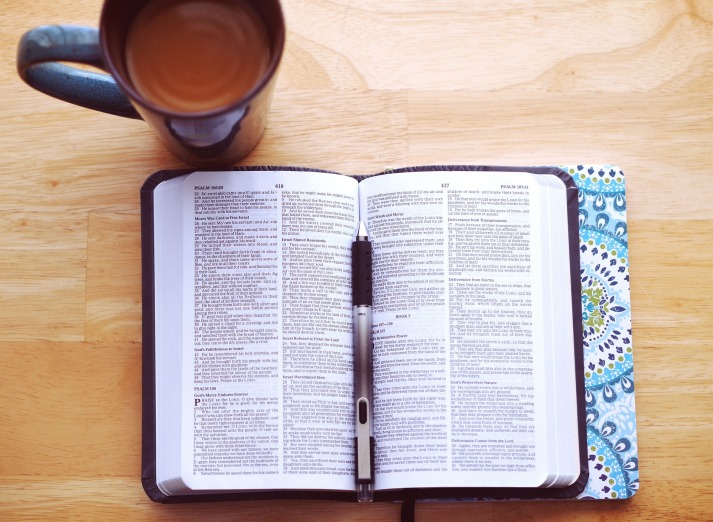
    Day 175 – 2 Chronicles 10 – 12. (A repeat of 2 Kings, but with more details about King Rehoboam.)

2 Chronicles 10. It’s interesting that Rehoboam, Solomon’s son, went to Shechem. Verse 1 says that all Israel had come there to make him King. Undoubtedly, he was solidly installed in that office in Jerusalem where his father reigned.

These northern folks wanted to know how Rehoboam would reign. Would it be as harsh as Solomon all during that building and expansion period?

As we saw yesterday, King Rehoboam consulted both the elder and younger advisors. At 41, he wasn’t a young man to begin his reign, but he went with the youthful advice and came down hard on the people of the North. And they rebelled. “Sayonara, Ray,” they called as they left, and Rehoboam hi-tailed it back to Jerusalem.

From 1 Kings 12-13, we know that Jeroboam was waiting for these northern tribes with open arms.

2 Chronicles 11 describes how Rehoboam strengthened his two-tribe kingdom by building and fortifying fifteen defense cities throughout Judah, placing commanders, weapons, and food provisions in them.

Remember in 1 Kings 12 how Jeroboam turned the hearts of his people away from God by proclaiming Bethel and Dan as cities of worship (instead of Jerusalem) and setting up golden calves in these places for the people to worship instead of the LORD their God. He also gave the office of priest to anyone who wanted it.

In 2 Chronicles 11:13-17, we see the northern priests and Levites leaving their homes, lands, and positions in Israel and coming into Judah and Jerusalem. “And those who had set their hearts to seek the LORD God of Israel came after them from all the tribes of Israel to Jerusalem to sacrifice to the LORD, the God of their fathers.  They strengthened the kingdom of Judah, and for three years, they made Rehoboam, the son of Solomon secure, for they walked for three years in the way of David and Solomon.

But, when Rehoboam was established and strong, he abandoned the law of the LORD and all the country with him. 2 Chronicles 12:1.

Because they were unfaithful to the LORD, King Shishak of Egypt came with hoards of soldiers and chariots and took those fortified cities all the way to Jerusalem.  YIKES!

God told Rehoboam through the prophet Shemaiah that the reason for the invasion was because they had abandoned Him, so He abandoned them.

Surprisingly, the king and his leaders humbled themselves  and said, “The LORD is righteous.”  When God saw this, He relented. He would not destroy them. He would grant them SOME deliverance. But they would be servants to Egypt’s king. (Yesterday, we saw that Shishak took all the treasures of the Temple and the king’s palace as “tribute.”)

So, Rehoboam reigned in Judah for 17 years and then died. His son, Abijah/Abijam*, reigned in his place.

..

    Day 176 – 1 Kings 15, 2 Chronicles 13 – 16. (From here on until the invasion of Assyria, the history of the Jews will track both the northern kingdom of Israel/Ephraim along with the southern kingdom of Judah. All northern kings were wicked; most of the southern kings were also wicked. Kings were either compared to the wicked King Jeroboam or to the righteous King David.)

.

1 Kings 15 covers the end of King Jeroboam’s reign, the brief reign of his son Nadab (evil), and the reign of the usurper, Baasha (evil), who killed the former king and ALL of the house of Jeroboam, as was prophesied in chapter 14:9-11.

.

2 Chronicles 13 describes King Rehoboam’s son, Abijah’s reign in Jerusalem.  He was “a great sinner” according to 1 Kings 15:3, but here he is described as standing for the principles of the LORD God of Israel as David did…. at least when he was at war.

.

2 Chronicles 14.  In this chapter, Abijah’s son, Asa, becomes king. He did what was “good and right in the eyes of the LORD his God.”   “And the kingdom had rest under him.”  “He had no war in those years, for the LORD gave him peace.” 

When Zerah, the Ethiopian, with his MILLION soldiers and 300 chariots, came against Judah, King Asa cried to the LORD. “O LORD, there is none like You to help between the mighty and the weak. Help us, O LORD our God, for we rely on you, and in Your name we have come against this multitude.”  “So the LORD defeated the Ethiopians before Asa and before Judah, and the Ethiopians fled.” 

.

2 Chronicles 15 describes King Asa’s religious reforms, removing the detestable idols from the land and repairing the altar of the LORD. He even removed his mother from being the Queen Mum because she had made an image for Asherah. He cut down that image, crushed it, and burned it.

King Asa then gathered all the people and sacrificed and worshiped the LORD, entering into a covenant with Him “to seek the LORD, the God of their fathers, with all their heart and with all their soul.”

.

2 Chronicles 16.  However, in King Asa’s later years (he reigned 41 years), he strayed from that wonderful commitment.  Instead of trusting the LORD for victory over his enemies, he “paid” the army of Syria to fight with him against King Baasha in the north. As a result, his campaign failed.

The prophet Hanani came to him and said, “The eyes of the LORD run ‘to and fro’ throughout the whole earth to give strong support to those whose heart is blameless toward Him.  YOU have done foolishly in this, for from now on, you will have wars.”

The aging King “was angry with the prophet and put him in stocks in the prison.” (Asa was in a rage because of this…!  Asa inflicted cruelties upon some … at the same time.”)

WATCH OUT, senior citizens!  Stay steady and faithful even in your old age!! (I’m talking to myself here too!)

Two years before King Asa died, he became diseased in his feet, and it became very severe. (Gangrene from diabetes???)  “Yet, even in his disease, he did not seek the LORD, but sought help from physicians.”  (Not saying doctors are wrong, just that seeking the LORD is good.)

(After King Asa died, they laid him on a bier that had been filled with various spices prepared by the perfumer’s art (curious!), and they made a very great fire in his honor.) (Cremation is RARELY used by Hebrews, although King Saul & his sons were also burned. 1 Samuel 31:13)

.

.

*Abijah (my father is the LORD) perhaps had his name changed when he forsook God.
2024GOAL – Reading Through The Bible Chronologically, day 174

   Day 174—We are in the 6th month of Bible reading.

 Day 174 – 1 Kings 12-14. (Rehoboam, the Royal vs. Jeroboam, the Jerk)

2 Kings 11:41-43 describes the last days of Solomon, claiming that even more about him and his wisdom are written in an unknown book, The Acts of Solomon.  King Solomon reigned for 40 years, as did his father, David.

Then, as all kings and paupers do, the king died. He was buried in “the City of David.”  And his son Rehoboam began his reign, heralding the beginning of the downfall of mighty and glorious Israel. 

1 Kings 12 tells of Rehoboam’s “folly.”

Obviously, he inherited NONE of his father’s wisdom and did not ask God for any.  At least he inquired of his father’s experienced advisors about how to rule the people. But he also asked the young men who’d been raised in the palace with him and who knew nothing about living as a common person in the labor force. Basically, it was either ‘be kind to the people and serve them’ or ‘be nasty to them, like a tyrant.’ 

Rehoboam chose tyranny, and the people rebelled.

Waiting in the wings was Jeroboam (the man about whom the prophet Ahijah said would rip ten of the tribes away from the kingdom and rule them).  He easily led the discontented ten northern tribes away from Rehoboam.  Rip-p-p-p-p!  Rehoboam immediately assembled 180K soldiers together to fight the departing tribes, but God said through the prophet Shemaiah. “NO! You shall NOT fight your relatives.”  And (incredibly) they listened to the words of God.

So the kingdom of Israel is now two parts, “Israel” (ten tribes in the north) ruled by Jeroboam, the Jerk, and “Judah” (two tribes of Judah and Benjamin in the south) ruled by Rehoboam, the Royal.  The northern tribes are also sometimes called “Ephraim.”

Here’s why I call Jeroboam “the Jerk.”  God had given him (and his offspring) the northern part of Israel to reign. He set up his capital in Shechem (about the middle of the northern tribes).  BUT he did not trust God and feared that the people – when they went to Jerusalem to worship three times per year – would want to go back to Rehoboam. He didn’t like that possibility, so he built TWO places for Israel to worship; one in Bethel and the other way at the northern tip of the land, in Dan. 

These were not approved worship places for the LORD. No, Jeroboam the Jerk followed the example of ole Aaron and made two calves of gold for the people, saying THESE were what brought you out of slavery in Egypt. WHAT????  He also made priests of anyone who wanted to be one. AND… chose another Feast Day from his own heart to sacrifice to these two idols.   JERK!

.

1 Kings 13 is kind of a weird chapter about some prophets of God. 

One (Prophet A) appeared and cried out against Jeroboam at the altar in Bethel while the Jerk was making sacrifices. This prophet said that a future Southern king named Josiah would tear the altar down after sacrificing the false priests upon it!  Whoa!

Jeroboam did NOT like this and tried to waylay the prophet.  But God had told him that under no circumstances was he to stop there, so he slipped away. 

Then another old prophet (Prophet B) stopped the first one who was heading back to Judah. And with a false prophecy, tempted Prophet A to come in for a snack. He did, but God was angry about his disobedience, and when he was finally on his way again, a lion killed him. (Didn’t eat him, just killed him and stood there along with the prophet’s donkey in the middle of the road!)

Well, Prophet B now got an actual word from God: “Prophet A died because he disobeyed Me and listened to you!” Well this prophet went, brought back the dead one and buried him. The town mourned him too. THEN, Prophet B made his sons promise to bury him when he died, in the grave with Prophet A, saying he was a true prophet.) I told you chapter 13 was weird.

..

Chapter 14 describes a young son of King Jeroboam the Jerk getting sick.

The king told his wife to disguise herself and go to another prophet, Ahijah, to learn what would happen to the boy. The disguise did not fool Abijah, even though he was nearly blind, and he immediately told the Jerk’s wife that the boy was going to die.

But there was WORSE news. God (through Abijah) told the woman a message to tell her husband. It was also the end of the house of Jeroboam – all the males would be cut off and his house burned up as a man burns up a dung pile. Why?

Because when God “exalted him from among the people and made him leader over His people, Israel, and tore it from the house of David (who kept God’s commandments and followed Him with all his heart) ….. he did evil and made for himself other gods and metal images, provoking God to anger, and he cast God behind his back.”

And, as the woman came to the threshold of her house… the boy died “because in him there was found something pleasing to the LORD, the God of Israel.” (He would not suffer his father’s judgment.)

Eventually, the Jerk died after a 22-year reign.

Rehoboam the Royal reigned for 17 years, and in his fifth year, the king of Egypt came up and took away the treasures of the house of the LORD and the king’s house.

Eventually, the Royal died too, and was buried in the City of David. His mother was an Ammonite, and during Rehoboam’s reign, high places and pillars and Asherim were built on every high hill and under every green tree. And there were male cult prostitutes in the land, and they did all the abominations of the nations living there before Israel.