Archives

Journaling through the Bible Chronologically in 2025, Day 17

Day 17. Reading in Genesis 16 – 18. 

I invite you to first read the scripture for the day and meditate on it. Then, share your thoughts in the comments.

Genesis 16.

Ten years in the “promised” land, and Abram still had no offspring. Not ONE of the millions God had promised him had been born. Did he begin to doubt God’s word to him?

The Bible doesn’t say. But his wife, Sarai must have thought so. She tried to hurry things along by offering Abram a way to have that child. It wasn’t God’s way, but it was part of the culture of that day. She gave him Hagar – a slave whom she’d brought back from Egypt in that fiasco – as a surrogate for her. Any child born from Hagar would be theirs according to custom.

It worked. Hagar became pregnant. Hagar also became arrogant, looking down on her elderly mistress. “Ha! You old withered thing, I’m the one who will give the master a child.” 

Sarai complained to Abram, who told her to do what she wanted with her own slave. Hagar is sent away (probably intending that she would die).  A child by Hagar was a mistake, Sarai knew now, but you can’t “get rid of” a conceived baby that easy.

Next is the really unusual part. The two old but faithful servants of God are disobedient and harsh. At this point, Abram doesn’t care about the child he is to have with Hagar, and Sarai definitely hates her. Hagar has been arrogant and mean. (All of them have sinned.) But God intervenes in this mess. He meets Hagar, promises that her son will be fruitful (and a wild-ass of a man who will always be at war with his siblings), and sends her back to Sarai (we assume humble and obedient). Her heart has been changed because she knows God has truly “seen” her. 

Hagar then gives birth to Ishmael, the child of Abram’s fallen flesh, beloved but a thorn in his family’s side forever.

  • I’ve always hated reading this chapter in Genesis. How would I feel giving my husband to a pretty young thing because I was inadequate? (He goes quite willingly too!) And then, seeing that my plan worked, being angry about it, and wanting the results of my sin to disappear! And, on top of it all, having to see my husband love the child more every day. 
  • Yes, I wish this incident had not happened in the Bible. (And so did Sarai, I think.)  But there are lessons to be learned. Don’t run ahead of God, assuming YOU know what is best. Trust Him ALWAYS. Wait for the Lord, and HE will bring it to pass. Don’t try to hide your sin, but repent and confess it.

Genesis 17.

It’s about 13 years later, and Abram FINALLY hears from God again. “I am God Almighty; walk before me and be blameless, that I may make a covenant with you and multiply you.”

And Abram fell on his face.  (In fear, relief, joy, worship?)

God renews His promise of fruitfulness, saying Abram will be the “Father of a multitude of NATIONS.” (That’s what the name ‘Abraham’ means.) He will be VERY fruitful. Kings will come from him. The land will belong to his offspring as an EVERLASTING POSSESSION.

Then, God describes that new covenant.  It was to be God’s covenant evident in their flesh.  Circumcision. EVERY male, 8 days and older, was always to be circumcised as an undeniable, forever sign of their belonging to God.  (Note that Abraham obeyed that very day. EVERY male (himself and Ishmael included) was circumcised.)

Before that, however, God had also said that he AND SARAH (her new name) would have a son, and nations and peoples would come from that boy.  ABRAHAM FELL ON HIS FACE AGAIN AND LAUGHED. (He was 99 then, and Sarah was 90.)

When he finished laughing, Abraham asked God that Ishmael would “walk before God” and be the promised seed. By then, the old man had come to love the young teen. (This is a problem with sinful endeavors! You love them.)

God was firm.  “NO, SARAH, YOUR WIFE will bear you a son.” (“Oh, and by the way, you’re going to call him ‘laughter'”)

I can almost hear God sigh about Abraham’s request.  “But…. I’ve heard you, and I will bless and make Ishmael fruitful. He’ll father twelve princes.  BUT!!!  I will establish my covenant with Isaac, whom Sarah shall bear to you NEXT YEAR.”

Genesis 18.

God is so kind. Not only has He told Abraham that his wife would become a mom, He and a couple of angels appear to inform HER (among other things) that she will become pregnant at 90.

Abraham recognizes the heavenly visitors and quickly arranges a special meal for them so they will stay awhile. While they were eating, Abraham stands by as an eager butler.  Then God looks up and asks, “Where is Sarah?” (Of course, he knows very well she is just inside the tent, listening at the door.  “Do they like my biscuits? Was the veal prepared to their liking?” 

I will surely return next year, and Sarah shall have a son,” God says, perhaps a bit louder.  This comment super tickled Sarah’s funny bone, and she laughed out loud. “Me, a woman past menopause, get pregnant?  Hahahaha.”

Why did Sarah laugh?  Is anything too hard for the LORD? Next year, Sarah WILL have a son,” the LORD repeated.

“I didn’t laugh!” Sarah said.

Yes, you did.” 

.

Next on God’s agenda was Sodom. He’s decided to tell Abraham his plans since he was to become a great nation, and God had chosen him to keep the way of the LORD and do righteousness and justice. God tells him of his plan to destroy that wicked city.

Abraham, thinking immediately of his nephew, Lot, begins to plea-bargain.

“Suppose there are 50 righteous people in that city?”

I won’t destroy it if there are 50 righteous people there,” God says.

“Suppose there are only 45 righteous?”

“I’ll not destroy it if there are 45.”

“Suppose only 40 are found?”

“Not if there are 40 righteous.” says our merciful God.

“30?”

“I won’t if 30 are found.”

“Um, suppose only 20 are found?”

“Not if there are 20.”

“Oh, Lord, don’t be angry. I’ll speak one last time. Suppose there are only TEN found?”

“For the sake of ten,” the LORD says, “I will not destroy the city.”

Then the Lord went His way, and Abraham returned to his tent. 


  • God is so forgiving and merciful. After Sarah and Abraham’s disobedience, He promised them a son of their own. And after both laughed at the idea, God remained true and, in a twist of humor Himself said they were to name the baby “Laughter.”  For Abraham’s sake, He even promised to bless the “child of their fleshly efforts,” Ishmael.   
  • Now, after Abraham’s intense “prayer” for the people of Sodom, God said he would spare the whole city if there were just TEN righteous people found in it.  (Unfortunately, there was ONLY ONE righteous person there.)


  • I am so grateful for God’s love, mercy, and forgiveness! I have deserved His wrath and punishment so often, and yet, for His Son’s sake, He has shown grace to me and blessed me.  He frequently even blesses my own fleshly efforts – like this blog.   
  • Like Abraham, am I willing to totally give myself to Him in whatever way He asks, even if it is painful?    And am I as concerned for my unsaved relatives as Abraham was for Lot? Have I dared to intercede for them again and again? Lord, help me.


.

Journaling through the Bible Chronologically in 2025, Day 16

Day 16. Reading in Genesis 12 – 15. 

I invite you to read the scripture for the day and write what was meaningful to you “in the comments.” We can encourage each other in Him.

Genesis 12.

While we’ve been studying Job, Abram and his family have been residing in Haran where Abram’s father, Terah, eventually dies. 

Now the LORD tells Abram to leave Haran and “go to the land I will show you.”  God makes a series of wonderful and fantastic promises to Abram about his descendants and a future “someone” coming from his line Who will “bless all the families of the earth.”  Abram immediately obeys.  He was seventy-five.

Abram took his wife, orphaned nephew, Lot, and all his possessions (people, animals, and stuff) and traveled to Shechem in Canaan. (We will read a lot about Shechem in days to come.)  There, God made another promise to Abram. This land would be God’s gift to his descendants, HIS FAMILY LAND.  Abram responded by building an altar and worshipping God.

From there, Abram continued south to the hill country near Bethel, where he again worshipped God, then moved ever onward toward the Negev (South).  In fact, because of famine, Abram continued south, right out of the promised land, into Egypt, where there was food.  Huh?  (This was going to be a pattern with his family.)

OUTSIDE THE PROMISED LAND, our brave world traveler Abram becomes a quivering leaf.  He’s terrified he will be killed so the Pharoah can take his beautiful Sarai as a royal wife.  “Say you are my sister,” he prompts her, “otherwise I might be killed.” (No concern for her, only for himself.)  She does, and the worst happens. Sarai finds herself among the other women in the Pharaoh’s haram. Seriously??

But God takes care of her and causes PLAGUES on Pharaoh and his household (a little foretaste of what happens when a Pharoah keeps something that belongs to God).  The Egyptian king is rightfully angry at being tricked. “Here, take your wife and go!” He boots them out of Egypt. 

  • While I deride Abram for thinking of himself above his wife, how often have I put MY OWN DESIRES and needs above my husband’s?  More than I can count, I fear. I am selfish.  Oh, Lord, help me to love sacrificially as YOU love me. Help me to trust YOU, as Sarai did.

Genesis 13.

Abram (and all his people and stuff) returned all the way into the promised land to Bethel, where he had last worshipped God before making the trek into Egypt. There, he called on the LORD and worshipped Him.

  • Lord, help me to remember this: When I go off into sin and get caught, help me to look for the place/time where I last had sweet communion with You and go there.

Now Abram had another problem. Between them, he and his nephew had too much stuff. There was not enough land for all the animals to graze. So Abram said they had to move apart. He gave Lot the choice of where he wanted to go. (It was unusual for the older to do this for the younger.) 

Young Lot looked around (and down) and decided that the “hill country” had no excitement and was lacking in “things to do” and the “niceties” of the good life.  The valley, on the other hand, looked lush, advanced, and populated (like Egypt). “Hmm, Uncle Abram, I choose down there.”  And they separated. (And as we’ll see, Lot moved his tent ever closer to the wicked city of Sodom.)

Then, the LORD came to Abram again with an additional promise. “Look in all directions, for all the land you see, I will give to you and your offspring FOREVER.  I will make your offspring as numerous as the dust of the earth.  Get up, walk the length and breadth of “YOUR” land.”

Abram did that and eventually settled by the oaks of a man named Mamre, which is Hebron today.  He built an altar and worshiped God.

  • When I am sorrowful at the loss of someone or something I love, God comes near to assure me of His love and care. And He often fills that void with something unexpected and good…if I will only look around for it (in all directions). Praise YOU, Lord!

Genesis 14.

Aha!!  Next, we read of a battle royale!  Evil against more evil, and the “good” rescues the day. Hooray!

Four strong kings, to whom the five lesser kings served tribute (one of them the king of Sodom. where Lot lived), came to pound the five for NOT paying their due.  The Four conquered all the area around the lush valley, then attacked the Five and defeated them.  They carried all the loot and people as slaves on the journey back to the Old Country.  Lot was among them!

One slave escaped, ran to Abram, and told him about his nephew. Whoa, talk about arousing an angry lion. Abram gathered all the soldiers in his own household (318 men), plus the personal armies of his three neighbors, and took off after the Four kings.  They chased them over 150 miles past Damascus and whomped on them.  Abram and company returned home with all the loot and people in a victory parade.

Bera, the King of Sodom, went out to meet Abram. (He planned to congratulate him and reward him with all the loot. 

BUT NOTICE (I love this!) that crossing Bera’s path and cutting him off was another king who made his way towards Abram. This was the King of Salem (later JeruSALEM), Melchizedek, whose name meant King of Righteousness.  He was both a king and a priest, and before Bera could get to Abram, Melchizedek (who brought bread and wine) blessed God’s man and had “communion” with him.  And Abram gave HIM a tithe of the loot as an offering.  (WHO DOES THIS MYSTERY KING remind you of?) 

Finally, King Bera reaches Abram and tells him to take all the loot as his payment for rescuing his city. Abram looks the king of Sodom right in the eye (having been fortified by the godly priest-king) and says he will not take so much as a shoelace for himself lest the king say HE made Abram rich (instead of the LORD).   He rightfully claims loot for his men and his friends’ men for their good work. 

  • Lord, keep my eyes focused on Heavenly things, and not on things I can gain from the world!

Genesis 15.

In the quiet of post-victory, the word of the LORD comes to Abram again in a vision.  “Fear not, Abram, I AM your shield; your reward shall be very great.”  Instead of getting the paltry reward that the king of Sodom offered, the King of Heaven now comes to Abram and offers HIMSELF.  I am your shield in the battles you fight. I am your ultimate reward. 

It’s interesting that after all this (the battle, victory, meeting with Melchizedek, and being promised great reward from God), Abram remembers that he is childless.  He has no one but his chief servant to leave it all to when he dies.  (True! What good is a vast amount of wealth, if when you die, it all goes to the state.)

See God’s tenderness to Abram.

Your very own son will be your heir.  Abram, look up to the heavens. See all those stars?  Your offspring – from your very own son – will number MORE than those!”

And Abram believed God’s promise. 

God counted that belief as righteousness. 

  • I was at a wild animal park in Africa one night without electricity. None. There were no clouds, and we were amazed and awe-struck as we looked upward.  The vast clusters of stars we’d only seen in photos were REAL. There were fat ribbons of stars so close together that they blurred into a long “Milky Way” of light.  Bright constellations appeared, individual beacons too!  I will never forget it.  And THIS (perhaps more) is what Abram saw. So many stars!  And he believed that God would make his descendants like this.  WOW. Oh, for this kind of faith!

.

.

God then confirmed His words by a one-sided covenant (promise) to Abram. As the man slept deeply, God (as a light) passed through a series of animals Abram had killed and divided in two.  This symbolized God saying HE would sooner be killed and divided like the animals THAN TO GO BACK ON HIS WORD TO ABRAM. 

God then prophesied about Abram’s descendants spending 400+ years in another land until the time was right. But He would lead them back here, to this land (described in detail), with great possessions WHEN THE TIME WAS RIGHT. 

Abram would himself die in peace at a good old age.

2024GOAL – Reading Through The Bible Chronologically, days 356-357

   Day 356-357—We are in the LAST month of Bible reading for the year, studying the LETTERS of the Apostles.  NOTE: Sunday’s and Monday’s studies will be posted on MONDAY,

Day 356 – Hebrews 7 – 10 (Melchizedek, Better Covenant, Redemption, Sacrifice, Faith)
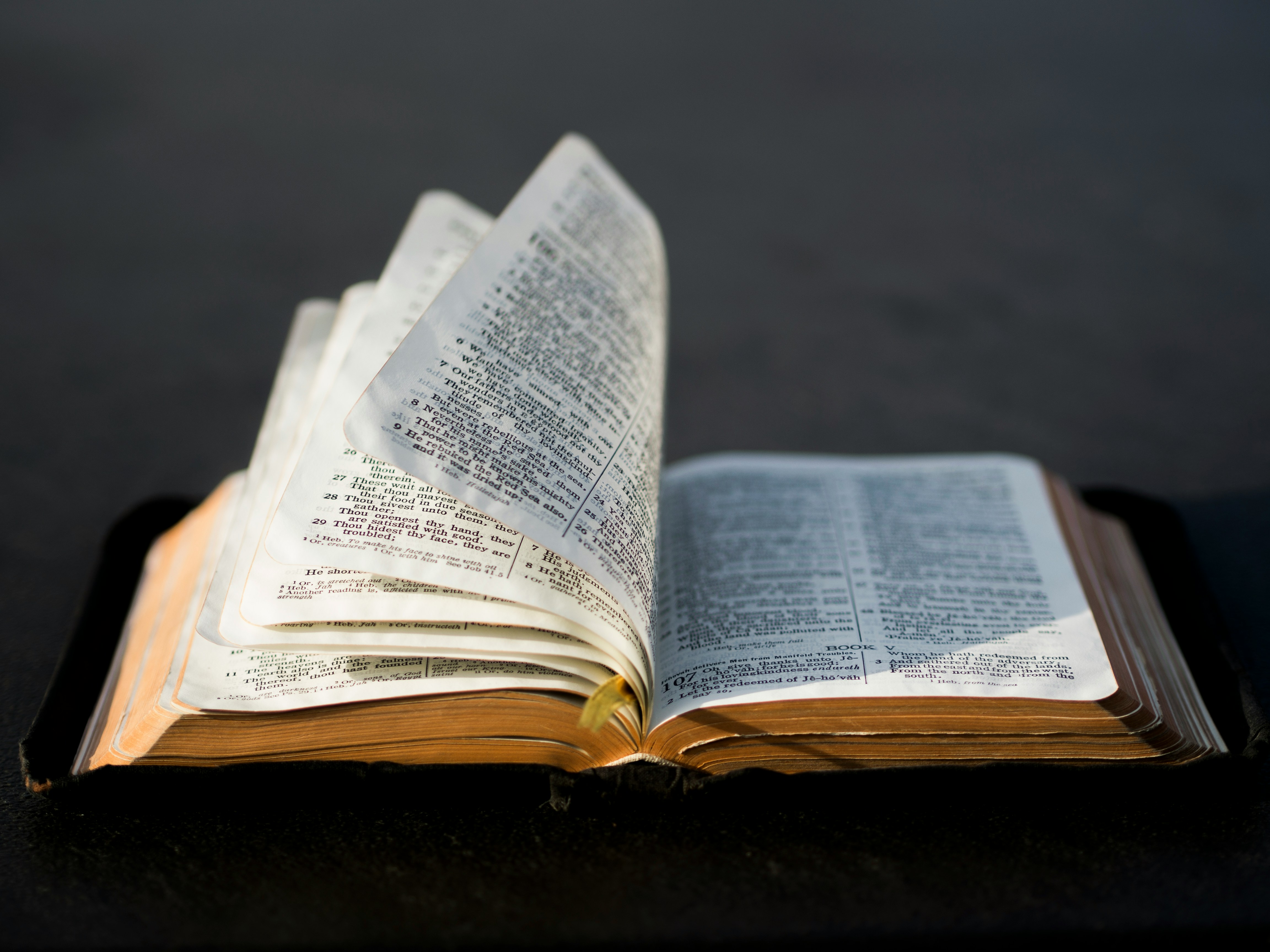
Read a quick review of Melchizedek and Abraham in Genesis 14:18-20.

Hebrews 7.

The author discusses Melchizedek, king of Salem (peace), king of righteousness (zedek) and a priest of the Most High God. He tells how Abraham, coming home from rescuing his nephew Lot from an invading army, gave this priestly/kingly man a tithe (10th) of the loot. And Melchizedek blessed Abraham.

This was WAY before Israel’s priesthood was set up on Mt. Sinai, with Aaron, the Levite, as High Priest.  In a way (the author of Hebrews says), Aaron, the High Priest, paid tribute to Melchizedek, “being still in Abraham’s loins.” (He had no children at that point.)

Melchizedek is also said to have had “no beginning of days nor end of life” as a priest forever. He was a priest not based on the law (like Aaron) but on the power of an “indestructible” life. The author compares Jesus to this mysterious man, without beginning or end of days, but HIS ministry is much more excellent.  

The first covenant of law could make nothing perfect, so a new one was needed, allowing us to draw near to God. “Consequently, Jesus can save to the uttermost, those who draw near to God through HIM since He always lives to make intercession for them. 

Jesus is a high priest, holy, innocent, unstained, separated from sinners, and exalted above the heavens.  HE HAS NO NEED TO OFFER SACRIFICES DAILY like other priests, first for their own sins, then the people.  Jesus did this ONCE FOR ALL when he offered up HIMSELF.

Hebrews 8.

Jesus, as High Priest, is seated at the right hand of the throne of the Majesty in heaven, a more excellent ministry than the old one.  He can mediate better because the new covenant has better promises and is faultless. In this new covenant, God says He will put His Law on their hearts and minds, not stone tablets, and His people will know Him.

He will be merciful toward their iniquities and will remember their sins no more!

Hebrews 9.

The author then reminds readers how the old covenant worked, with the Holy and Most Holy places in the “tent of worship.”  Behind the second curtain was the ark of the covenant and God’s presence.  No one could go into this place except for the High Priest, and that only once per year… carrying the blood of the sacrifice. 

But Christ, as high priest, entered ONCE FOR ALL into the most holy place through HIS OWN BLOOD. Doing this, he obtained ETERNAL REDEMPTION.  He appeared ONCE FOR ALL to put away sin by sacrificing himself. 

Hebrews 10.

Under the old covenant, the sacrifices were a reminder of sins every year. “For it is impossible for the blood of bulls and goats to take away sins.”  Now, we have been sanctified (made clean, holy) through the offering of the body of Jesus Christ ONCE FOR ALL.

When Christ had offered FOR ALL TIME A SINGLE SACRIFICE FOR SINS, He sat down at the right hand of God. “For by A SINGLE OFFERING, He has perfected FOR ALL TIME, those who are being sanctified.”

Jesus. the perfect, sinless High Priest, offered Himself a spotless sacrifice and opened the new and living way for us through the curtain so that we can now “draw near (to God) with a true heart in full assurance of faith.” 

.

Day 357 – Hebrews 11 – 13 (the FAITH chapter & heroes of the faith, witnesses for us to endure too, discipline as sons, acceptable worship, final instructions)

Hebrews 11.

Hebrews 11 is called the “Faith Chapter” or the “Saint’s Hall of Fame.” In it, the author defines faith and how it’s to be used. He lists heroes of faith from the Old Testament, sixteen by name (including women), and many others by deeds or means of death. These all have served and glorified God.

DEFINITION: “Faith is the assurance of things hoped for, the conviction of things not seen.” (verse 1)

WHAT IT INVOLVES: “Without faith, it is impossible to please God, for whoever would draw near to God must believe that He exists and that He rewards those who seek Him.” (verse 6)

From righteous Abel to the prophet Samuel, men and women have lived and died for God, loved and obeyed Him, trusted and spoke for Him without shame or fear, and many paid for it with their lives. 

These heroes “conquered kingdoms, enforced justice, obtained promises, stopped the mouths of lions, quenched the power of fire, escaped the edge of the sword, were made strong through weakness, became mighty in war, put foreign armies to fight, and some women received back their dead by resurrection!! 

(I can think of some names that come to mind here, can you?”

Others were tortured for their faith, suffered mocking and flogging, even chains and imprisonments, stoning, beheading (killed by the sword), and even being sawn in two!  They were destitute, afflicted, mistreated, and lived in deserts, mountains, dens, and caves.  OF WHOM THE WORLD WAS NOT WORTHY!

And YET, they did not “see” the promised Messiah they spoke about and waited for like WE HAVE!  (How totally blessed we are!)

Hebrews 12.

“Therefore, SINCE we are surrounded by so great a cloud of witnesses (those heroes listed above), let us also lay aside every weight and sin which clings so closely, and let us run with endurance the race that is set before us, looking to Jesus the founder and perfecter of our faith.  He, for the JOY that was set before Him, endured the cross, despising the shame, and is seated now at the right hand of the throne of God.”

Jesus, as God’s Son, endured much hostility against Him. And so we, as God’s children, must endure “discipline” too.  God disciplines us (through suffering/persecution) for OUR GOOD, so we may share His holiness.  It doesn’t seem pleasant at the moment, but later, it “yields the peaceful fruit of righteousness” to those trained by it. 

So…. lift your drooping hands….strengthen your weak knees….and make straight paths for your feet.   And “let us be grateful for receiving a kingdom that cannot be shaken (by persecution or death), and thus let us offer to God acceptable worship, with reverence and awe, for our God is a consuming fire.”

Hebrews 13.

The author encourages readers to continue in brotherly love, hospitality to strangers, and prayer and support for those imprisoned for their faith.  They are to be faithful in marriage, not love money but be content with what they have.

They are to “remember their leaders (in prayer and financially), the ones who first spoke the Word of God to them.”  They are to consider the fruit of those men’s ministry and imitate their faith.  They are to pray and support their leaders and also to submit to and obey them (for THOSE MEN will have to give an account one day).

He ends with a doxology. ‘Now may the God of peace, who brought again from the dead our Lord Jesus, the great shepherd of the sheep, by the blood of the eternal covenant….equip you with everything good, that you may do His will.

To Jesus Christ be glory forever and ever. Amen”


2024GOAL – Reading Through The Bible Chronologically, day 355

   Day 355—We are in the LAST month of Bible reading for the year, studying the LETTERS of the Apostles.

Day 355 – Hebrews 1 – 6 (Preeminence of Jesus, don’t neglect salvation, high priest forever)

The author of this weighty book is unknown (well, the Holy Spirit wrote it through a person; we just don’t know who), and the recipients are also unknown (i.e., the city – perhaps it was circulated among many groups). Still, it seems to be written to Jewish believers.

Since referrals to Temple worship are mentioned throughout, it was probably written BEFORE 70 AD when the Temple in Jerusalem was destroyed. HINT: to understand the book of Hebrews more clearly, perhaps first read the OT book of Leviticus.

Hebrews 1.

Although the book opens almost like a Star Wars movie (Long ago, at many times and in many ways…), the truths contained in it are in no way fanciful. 

It portrays Jesus in glorious splendor as the “Son of God,” the “Heir of all things,” the “One who created all things, upholding the universe by the word of His power,” the “radiance of the glory of God,” and the “exact imprint of His (God’s) nature.”   After “making purification for sins,” He sat down at the right hand of the Majesty on high (to be worshiped forever). 

Jesus IS God, hands down.

He is far superior to ANY of the angels, who are only ministering spirits sent to “serve” believers. 

Hebrews 2.

“Therefore,” the writer says, it is even MORE important that we pay attention to what we have heard about Him and His ministry on earth and in heaven.  Jesus was the founder of our great salvation, and we are warned not to neglect it!

Jesus suffered and died “to bring many sons to glory” because, as part of the triune Godhead, it was determined that it should happen in that manner. As God, Jesus became “flesh” like us and through His death, He made powerless the devil who, with God’s permission, had held the power of death. Being in the flesh and overcoming death, Jesus can now help us when we are tempted.  

Hebrews 3.

Jesus, now the apostle and faithful high priest of our confession, is FAR SUPERIOR and worthy of more glory than Moses, who also was faithful in all God’s house.

Moses oversaw the building of the Tabernacle of God. Jesus oversees the building of the “living” Temple of God, which is made up of all believers.

The writer warns us not to be like those Jews in the wilderness who “hardened their hearts” and “put God to the test.” He writes, “Take care, brothers, lest there be in any of you an evil unbelieving heart, leading you to fall away from the living God. But exhort one another every day, that none of you may be hardened by the deceitfulness of sin.”

Hebrews 4.

The Good News came to us just as to them (those in the wilderness during Moses’ time), but the message they heard did not benefit them because they were not united BY FAITH with those who listened. The writer urges us with Psalm 95:7-8, “Today if you hear His voice, do not harden your hearts.” 

For the word of God is living and active, sharper than any two-edged sword, piercing to the division of soul and spirit, of joints and marrow, and discerning the thoughts and intentions of the heart. And no creature is hidden from His sight, but all are naked and exposed to the eyes of Him to whom we must give account.”

Let us HOLD FAST our confession, for we have a High Priest who can sympathize with our weaknesses, One who has in every respect been tempted as we are, and yet without sin. Let us then, with CONFIDENCE, draw near to the throne of Grace that we may receive mercy and find grace to help in time of need.”

Hebrews 5.

The writer then describes human high priests chosen and appointed to act on behalf of men concerning God and to offer gifts and sacrifices for sins.  They can deal gently with the “ignorant and wayward” since they are also beset with weaknesses. But God appointed Christ as High Priest forever “after the order of Melchizedek” (and not Aaron).  (Genesis 14:18-20)

The writer now seems frustrated, wanting to teach them things harder to explain, but they are not ready to hear them.  Instead, they still need to be taught the basic principles of God. They need “milk” instead of the “solid food” of the mature believer, who has had his powers of discernment trained through practice. 

Hebrews 6.

The writer wants to go on from the elementary doctrine of Christ (repentance from dead works and faith in God as taught in the OT). These outward things don’t ensure salvation. They are aspects visible to people, but God sees the TRUE thoughts and intentions of the hearts. He knows if a person’s confession is genuine and based on faith through Christ’s atoning death.  He wants them to have the “full assurance of hope” until the end.

Those who have “fled for refuge” in Christ alone have a sure and steadfast anchor of the soul. Christ, a sinless high priest like Melchizedek, has entered “behind the curtain into the inner place” (God’s presence) on our behalf.

2024GOAL – Reading Through The Bible Chronologically, day 344

   Day 344—We are in the LAST month of Bible reading for the year and studying The ACTS of the Apostles with the LETTERS of the Apostles.

Day 344 – Romans 11 – 13 (Israel: remnant & olive tree, a living sacrifice, gifts of Spirit, submission & honor to authorities)

Romans 11.

Still writing about his people, Paul tells the Corinthians that God has not forsaken or rejected Israel. He has kept a remnant (like Paul) for salvation, but the rest have hardened hearts, blind eyes, and deaf ears. They have stumbled on the rock, which is Jesus the Messiah.

Their hardheartedness opened the way for the Gentiles to receive God’s salvation. Paul hopes it will also make them jealous and cause them to return to their God.

Paul also cautions the Gentiles not to become proud, for as God removed some natural branches of the Olive tree, which is Israel, to “graft” them in, He can also remove the grafted branches.

“Note then the kindness and the severity of God: severity toward those who have fallen, but God’s kindness to you (Gentiles), provided you continue in His kindness.”  Paul further cautions them, “Lest you be wise in your own eyes, I want you to understand this mystery: a partial hardening has come upon Israel until the fulness of the Gentiles has come in.  And, in this way, all Israel will be saved.”

“Oh, the depth of the riches and wisdom and knowledge of God!  How unsearchable are His judgments and how inscrutable His ways!”

Romans 12.

Paul then appeals to the Corinthian believers to “present your bodies as a living sacrifice, holy and acceptable to God, which is your spiritual worship. Do not be conformed to this world, but be transformed by the renewable of your mind, that by testing you may discern what is the will of God, what is good and acceptable and perfect.”

Paul tells them that they are ONE body with MANY members who do not have the same function in the body of Christ. He then lists some of the gifts of the Spirit that have been given to them separately. They are to USE them.

  • prophecy, in proportion to their faith
  • service, in serving one another.
  • teaching
  • exhorting
  • contributing with generosity
  • leadership, with zeal
  • acts of mercy, with cheerfulness.

(Compare these with the gifts mentioned in 1 Corinthians 12 & 14)

The marks of every TRUE CHRISTIAN are:

  • genuine love,
  • honoring each other,
  • fervency in Spirit,
  • service to the Lord,
  • rejoicing in hope,
  • patience in tribulation,
  • constancy in prayer,
  • generosity in giving,
  • showing hospitality,
  • living in harmony with each other,
  • associating with the lowly,
  • repaying no one evil for evil,
  • living peaceably with everyone.

All Christians should show these traits.  (Seriously, this list is so good for all of us to ponder!!)

Romans 13,

Paul charges them to “be subject to the governing authorities. For there is no authority except from God, and those that exist have been instituted by God. Whoever resists the authorities resists what God has appointed, and those who resist WILL incur judgment.” 

(Whoa, this is absolutely appropriate for today!!)

Rulers are NOT a terror to good conduct, but to bad. If you do wrong…BE AFRAID.  He is the servant of God, an avenger who carries out God’s wrath on the wrongdoer.  PAY YOUR TAXES, for the authorities are ministers of God.  “Pay to all what is owed to them;  TAXES to whom taxes are owed, REVENUE to whom revenue is owed, RESPECT to whom respect is owed, HONOR to whom honor is due.”

OWE NO ONE ANYTHING except to love each other, for the one who loves another has fulfilled the law. Love does no wrong to a neighbor; therefore, it fulfills the law.

“The night is far gone; the day is at hand. So then, let us cast off the works of darkness and put on the armor of light. Put on the Lord Jesus Christ, and made no provision for the flesh, to gratify its desires.”

2024GOAL – Reading Through The Bible Chronologically, days 335 & 336

   Day 335—We are in the LAST month of Bible reading for the year and studying The ACTS of the Apostles with the LETTERS of the Apostles.

Day 335 – 1 Corinthians 9 – 11 (Rights, privileges, & service, Idolatry, the glory of God, Head coverings, The Lord’s supper)

1 Corinthians 9.

In the previous chapter, Paul talked about his freedom to eat meat offered to idols, EXCEPT when it offended a weaker brother. He would never do anything to make such a one stumble.

Now, he talks about his freedoms and rights he does NOT insist upon.  Other apostles and missionaries,  like Jesus’ brothers and even Peter, took their believing wives with them. Was it only Barnabas and Paul who worked for a living as well as preached?  Wasn’t a soldier due his own expenses? Didn’t a vineyard planter eat the fruit?   He then quotes Deuteronomy 25:4 about not muzzling an ox who grinds the grain. Does not HE have the same rightful claim?

Yet, Paul chose NOT to claim the privilege but to work and impose no obligation on the people. He would rather die than have anyone deprive him of his ability to “present the gospel free of charge.”  He’s made himself a servant of all, that he might win more of them, Jews or Gentiles.  He compares this self-discipline to men in a race, running to “win the prize.”  He does it to win “the imperishable victory.” (Souls for the Lord Jesus)

1 Corinthians 10.

Next, Paul segues into comparing the Israelites of Moses’ time to those alive in that day.  “Those ancient Jews were examples for current believers.  Although they saw the miracles of God firsthand, they desired evil, were idolaters, and committed sexual immorality when they worshiped the golden calf Aaron made. That day, 23,000 were killed by God’s wrath. When they complained, thousands were destroyed by serpents. 

Paul urges the Corinthian church, “We must not put Christ to the test.” He encourages them, “No temptation has overtaken you that is not common to man. God is faithful and will not let you be tempted beyond your ability, but with the temptation He will also provide the way of escape, that you may be able to endure it.”

And so, he tells them to FLEE FROM IDOLATRY. (Corinth was full of idolatry, a great temptation.)  You can not worship idols (demons) and worship Christ too. 

“All things are lawful, but not all things are helpful. All things are lawful, but not all things build up.”  “So, whether you eat or drink, or whatever you do, do all to the glory of God.  Give no offense to Jews or Gentiles or the church of God.  Be imitators of me, as I am of Christ.”

1 Corinthians 11.

Paul then addresses head coverings for both men and women. Culturally, Corinthian men covered their heads when worshiping in pagan temples, while women only covered theirs when married.  Paul says men are to stand with heads uncovered because Christ is the head of every man in Christ.  

These traditions worked in the early church in Corinth to distinguish Christians from pagans. The same is true for women who covered their heads and had long hair, while men did not. The idea is to glorify Christ in all you do.

Then Paul gives explicit instructions for the Lord’s Supper. Verses 23-26 are often repeated in our services today when we observe Communion. 

He reminds us, too, of Jesus’ sacrificial death, his blood as a ransom payment for our sins, and his bodily death in our place.  He urges the Corinthians (and us) to examine and judge themselves and partake worthily.

.

Day 336 – 1 Corinthians 12 – 14 (Spiritual gifts, the Love Chapter, Prophecy & tongues, orderly worship)

1 Corinthians 12.

Paul next clarifies a controversial subject in the Corinthian church. Spiritual gifts were needed in the newly planted churches because the New Testament had not yet been written. Not many Gentile churches would have the Torah, Prophets, and Teachings scrolls of the Old Testament.  And so the Spirit of God distributed to each church what the leaders and congregations needed.  The Corinthian church was fully blessed in this way. But they were viewing and using these gifts in the wrong ways.

First, they were to discern if the gifts in question were from the Spirit of God. Paul reminded them how they’d been fooled by worshiping idols and demons.  “No one speaking in the Spirit of God ever says that Jesus is accursed.  And no one can say Jesus is Lord except in the Holy Spirit.” 

Once that is settled, he describes the various spiritual gifts, services, and activities that are given to the church by the Holy Spirit…FOR THE COMMON GOOD, not for individual glory. They are the gifts of wisdom and knowledge spoken to edify the church, extraordinary faith, gifts of healing and working of miracles, prophetic speaking, discernment of spirits, various tongues, and the interpretation of the tongues. (Others are included in lists in Romans 12 and 1 Peter 4)

“All these gifts are empowered by one Spirit, who apportions to each one individually as He wills.”  “God arranged the members in the body, each one of them, as He chose.”

They were not to quarrel, envy each other’s spiritual gifts, or seek the “flashiest” ones.  All the gifts were needed and valuable.

Next, Paul lists the “gifted men” God appointed to lead the church. These were: Apostles, Prophets, Teachers, Miracle workers, Healers, Help ministers, Administrators, and Speakers of various languagesIn these, Paul recommends asking God for the “higher” gifts, but ALL were to be used in a “MORE EXCELLENT WAY.”

1 Corinthians 13.

And, that excellent way was/is in…LOVE.  

This chapter is known as “The Love Chapter.” Paul says that any of the above gifts and gifted offices, if used purely for selfish motives and not with the Spirit’s fruit of LOVE, are merely annoying noise, less than nothing.

Then, Paul lists the numerous aspects of love that believers will show towards one another if ruled by God’s Spirit.  (These are very convicting. Take some time to read verses 4 – 8 and apply them to yourself.  Then ask God to make them evident in your life.)

Eventually, all the gifts will disappear when the Lord returns and takes His family to Heaven. But love never ends.  “So now faith, hope, and love abide, these three, but the greatest of these is love.”

1 Corinthians 14.

After that strong teaching on how all the gifts of the Spirit are to be used – with true love – Paul sheds more light on two gifts being abused in the Corinthian church: Prophecy and Tongues.

Paul urges them to pursue love and the spiritual gift of prophesy. (Not necessarily of FORE-telling, but of FORTH-telling the Word of God, for the edification of the whole church.)  And if the gift of tongues is used, they were to make sure someone was there to interpret what was said, or else how could the entire church be helped?

Paul tells them that these ministry gifts IN CHURCH MEETINGS were to be performed by men only. Yes, women would be blessed by gifts, but they should use them in the home or as in our times, in women’s ministries. 

Paul concludes by saying, “Earnestly desire to prophesy, and do not forbid speaking in tongues. But everything should be done decently and in order.”


2024GOAL – Reading Through The Bible Chronologically, day 272

    Day 272—We are in the NINTH month of Bible reading with more of Israel’s history and the end of the book of NEHEMIAH, with a PSALM.

    Day 272 – Nehemiah 11 – 13, Psalm 126 (leaders in Jerusalem, the dedication of the wall with choirs, Nehemiah leaves & returns & scolds people)

Nehemiah 11.  This chapter lists the secular and religious people living inside Jerusalem and tells how 1 in 10 were chosen by lot to live within the city’s walls. 

.

Nehemiah 12.  This chapter begins by listing the priests and Levites who had returned with Zerubbabel and Jeshua/Joshua and Nehemiah and Ezra. 

Next, the completed wall of Jerusalem, which Nehemiah was sent to rebuild, was dedicated in a large and joyful ceremony.  (With gladness, thanksgiving, singing; with cymbals, harps and lyres.)  The leaders of Judah were put up on the wall, and two great choirs were appointed to give thanks.  Ezra, the scribe, led the procession up to the temple. They sang and rejoiced, “for God had made them rejoice with great joy; the women and children also rejoiced. And the joy of Jerusalem was heard far away.”

Men were appointed over the storerooms, contributions, first fruits, and tithes to gather into them portions required by the Law for the priests and Levites.  “And all Israel in the days of Zerubbabel and Nehemiah gave the daily portions for the singers and gatekeepers as well as the Levites and priests.”

.

Nehemiah 13.  On that day of dedication, they read from the Book of Moses in the hearing of the people.  This time, they discovered the law that said no Ammonite or Moabite (descendants of Lot) should be allowed in the assembly of God. This was because of how they had treated Israel when they came from Egypt. (Numbers 22-23).  As soon as the people heard this, they separated from Israel those of foreign descent.

NOTE: It appears that after this, Nehemiah returned to the service of cupbearer to King Artaxerxes. He had been gone for two years.  While he was back in Persia, things began to fall apart. The priest, Eliashib, who was over the chambers for grain & offering storage, had cleaned out one of the larger ones and made a room for Tobiah. (Remember him? Arch foe of the Jews, back in Nehemiah 1-8) 

Other things had happened, too. The offerings for the Levites had fallen off, so they had to go work their farms outside the city. All kinds of work and buying & selling were done on the Sabbath, which had caused God’s anger in the past.  And, the people had begun intermarrying again with women of Ashdod, Ammon, and Moab, so much so that their children couldn’t speak or understand Hebrew. 

.

Nehemiah 13.  Nehemiah (after about 9 years, asked King Artaxerxes if he could return to Jerusalem to set things right. He was given approval.

He first threw Tobiah and all his furniture out of the temple storage chamber and had it cleaned.  Then, he confronted all the officials of Jerusalem and asked why the tithes had stopped coming in.  Soon, the people were bringing their tithes of grain, wine, and oil into the storehouses. Nehemiah chose reliable men to distribute it to the Levites.  (The prophet Malachi – which we’ll read tomorrow – also prophesied against these people for neglecting this very thing.)

Next, Nehemiah raged against the people for buying and selling in the city on the Sabbath. What is this evil thing you are doing, profaning the Sabbath day? Did not your fathers act this way, and did not our God bring all this disaster on us and this city?”  He regulated the opening and closing of the city gates, closing them at the beginning of the Sabbath and not reopening them until afterward.  When merchants camped outside the walls to sell there, he chased them off. 

Nehemiah got very angry with those who were intermarrying with pagans. He confronted them, cursed them, beat some of them, and pulled out their hair.  He made them take an oath that they would not give their daughters to pagans or take women from them. 

 “Did not Solomon, king of Israel, sin on account of such woman?. He was beloved by his God and God made him King over all Israel. Nevertheless, foreign women made even him to sin.  Shall you do all this great evil and act treacherously against our God by marrying foreign women???

Even a grandson of the high priest had married a daughter of Sanballat (Remember him?).  Nehemiah chased him out. 

“Thus I cleansed them from everything foreign, and I established the duties of the priests and Levites, each in his work.”  Remember me, O my God, for good.

.

NOTE: We don’t know if Nehemiah ever returned to Babylon/Persia.  And even though we study the prophet Malachi tomorrow, the book of Nehemiah was the final book in the original Old Testament.  It was the end of the Biblical history of the Jews for about 400 years until the next prophet came saying… “Prepare the way for the Lord, make his paths straight. Repent, for the kingdom of heaven is at hand.” (A voice crying in the wilderness: John the Baptist)

.

Psalm 126. 

"When the LORD restored the fortunes of Zion, 
we were like those who dream.
Then our mouth was filled with laughter
and our tongue with shouts of joy;
then they said among the nations,
'The LORD has done great things for them.'
The Lord has done great things for us; we are glad."

2024GOAL – Reading Through The Bible Chronologically, day 271

    Day 271—We are in the NINTH month of Bible reading with more of Israel’s history and the book of NEHEMIAH.

    Day 271 – Nehemiah 8 – 10 (Joy at the reading of the Law, Feast of Booths celebrated, confession, and commitment)

Nehemiah 8. After the wall was finished, and the people were living in their towns, in the seventh month, the men, women, and children of the age to understand gathered in the square just inside the Water Gate on the east side of the city and south of the Temple.

They gathered together to hear Ezra read the “Book of the Law of Moses.” (1st five books of the Bible, the “Torah”). “Bless the LORD, the great God,” Ezra said, and all the people answered, “Amen, amen.” Then they lifted their hands, bowed their heads, and worshiped the LORD. 

(I should do this before I read God’s word each morning, too!)

Standing on a raised wooden platform, with Levites on either side, Ezra read from early morning until midday. The Levites helped the people to understand the Law while they listened. The people were attentive, hearing like it was the first time, and they wept.

“This day is holy to the LORD your God,” said Nehemiah. “Go, eat the fat, drink sweet wine, and share with the needy.  Do not be grieved, for the joy of the LORD is your strength.

Then, they gathered again the next day to study the words of the law. They heard about the Festival of Booths/Tabernacles and realized they hadn’t obeyed that command for quite a while.  Ezra told them to gather branches and build booths, for they would celebrate the week unto the LORD. (It was to remember the days they’d lived in temporary shelters those 40 years in the wilderness.)  And they kept the feast, after which there was a “solemn assembly.” (The Day of Atonement)

.

Nehemiah 9.  The people assembled, fasting and in sackcloth. They confessed their sins and the iniquities of their fathers.  They stood and heard the reading of the Law for a quarter of the day, and for another quarter, they confessed and worshiped the LORD their God.

Then, in verses 4 – 37, the Levites stood on the stairs and cried to the LORD their God. Then they commanded the people to  “Stand up and bless the LORD your God from everlasting to everlasting.”

In worship and confession of sin, the Levites recited God’s mighty redemptive acts on Israel’s behalf, from creation through His promises to their forefathers, His faithfulness and care of them despite their sin and rebellion, and His offers of grace and mercy. “You gave Your good Spirit to instruct them, and did not withhold your Manna and gave them water.”  

They praised God for bringing them into this good land and giving them prosperity but confessed that when they were filled with His great goodness, they became disobedient, rebelled, and committed great blasphemies. He had given them to their enemies (in Judges), but, when they cried to Him, He had sent them saviors and rest. However, soon, they were back into their old sinful ways.

God had warned them for many years by His prophets, but they would not listen. Finally, He sent them as captives to foreign lands.  But even there, He had spared a remnant. 

“Now, therefore, our God, the great, the mighty, and the awesome God, who keeps covenant and steadfast love, let not all the hardship seem little to You that has come upon us.  You have dealt faithfully, and we have acted wickedly.  

They confessed that despite being in the land God had promised to their fathers, they were slaves. SLAVES! The land’s rich yield all went to the kings God set over them….because of their sins. Those kings now rule over their bodies and livestock as they please.

Because of all this, the Levites prayed, We make a firm covenant in writing” to obey God and not repeat the sins of our fathers.”

.

Nehemiah 10. Like John Hancock boldly signing our own Declaration of Independence, Nehemiah, the governor, was the first to sign the seal of that “firm covenant.” Then came the names of the priests, Levites, and others. Surprisingly, Ezra’s name is not listed. All the rest of the people entered an oath (and a curse for breaking it) to walk in God’s law, to observe and do all the commandments, plus His rules and statutes. They also “obligated themselves” to bring yearly tithes and offerings to the house of God. We will not neglect the house of our God.”


(Fresh starts, vows, and commitments are so wonderful. I wonder how long they – like we – can keep them.) 


2024GOAL – Reading Through The Bible Chronologically, day 270

    Day 270—We are in the NINTH month of Bible reading with more of Israel’s history and the book of NEHEMIAH

    Day 270 – Nehemiah 6 – 7 (Nehemiah threatened, wall finished, genealogies)

Nehemiah 6. Unable to get the building of the wall stopped with military force because the people kept weapons with them as they worked, Sanballat and Tobiah tried a new method.  They sent a letter inviting Nehemiah to come away for a little conference down by the coast. 

He saw through their murderous plot and said, “No thanks. I’m busy right now.”  Not to be discouraged, the conniving group sent four more invitations. (Hey, did it get lost in the mail? Come join us!”)  But Nehemiah’s answer was always the same. Nope.

Next, Sanballat sent him “an open letter.” This suggested that many people had read it and agreed with it.  The letter claimed Nehemiah planned to make himself king, and they were building the wall to revolt against Persia. Artaxerxes will hear about it and send an army.  “So come, let us counsel together.”

But again, Nehemiah saw through their attempt to get him alone to kill him.  He and Artaxerxes had a deal. When the project was done, Nehemiah would return to resume his position as cupbearer. The king trusted him.  Nehemiah knew these were attempts to keep the wall from being finished, and he prayed, “But now, O God, strengthen my hands.”

Finally, Tobiah and Sanballat hired a false prophet (actually a friend of Nehemiah’s) to tempt him, out of fear for his life, to go into the temple to hide because the plot was to kill him that night.  Well, Nehemiah was not afraid except to go into the temple.  “Should a man as I run away?  And what man such as I could go into the temple AND LIVE??” 

And he prayed, “Remember Tobiah and Sanballat, O my God, according to these things they did, and also the prophets who wanted to make me afraid.”

And so, the wall was finished!! After being in ruins for nearly 100 years, the wall around the holy city was completed in 52 days.  And the enemies around Jerusalem WERE AFRAID.  They knew God had helped them.

.

Nehemiah 7.  Then, after Nehemiah had finished all the gates and doors in the wall, he put his brother Hanani in charge of the city, telling him not to open the gates until the sun was well up, and to close and lock them in the evening, and post guards. The city was “wide and large,” and few people lived inside the walls. And their homes were not yet rebuilt. 

Then, Nehemiah found the record of the people who planned to return, written by Ezra in Babylon. Nehemiah updated it to the ones who had actually made it to the land, 42,360 besides servants (7,337). Some people could not trace their lineage, although they considered themselves Jews and they were included. He also listed the many gifts that were given, mainly for the upkeep of the Temple and those employed there. (Worth millions today.)

2024GOAL – Reading Through The Bible Chronologically, day 269

    Day 269—We are in the NINTH month of Bible reading with more of Israel’s history and the book of NEHEMIAH.

    Day 269 – Nehemiah 1 – 5 (Nehemiah to Jerusalem, rebuilding the wall, opposition)

NOTE: Ezra and Nehemiah were originally one book, with Ezra as the author. Ezra draws from Nehemiah’s personal diaries.

Nehemiah 1. Nehemiah was the cupbearer to the Persian King Artaxerxes in the capital of Susa. (This king was Esther’s stepson.) As cupbearer, Nehemiah was with the king at meals and tested the drinks for poison. He was a trusted servant.

Nehemiah’s brother, who had been in Judah, arrives and reports that the returned exiles are in trouble. It’s been 13 years since Ezra led the second wave of returnees. The temple is completed but not secure since the city walls are still rubble with the gates charred. 

This distresses Nehemiah, and he weeps. Then, he prays, confessing his and their sin, praises God’s faithfulness to His promises, and asks for mercy. (Nehemiah prayed for four months before finally approaching the King with a request.)

,

Nehemiah 2. One day, when serving the king’s wine, Artaxerxes noticed his downcast face. At first, the king thought… EEEK, has the man tested my wine and been poisoned???  “Are you sick??”  And Nehemiah told him about his “heart” sickness concerning Jerusalem, where his ancestors were buried. It was sitting in ruins.  

“What are you requesting?” asked the king.

Before answering, Nehemiah quickly prayed to God in heaven, then said, “If it pleases the king, and if your servant has found favor in your sight, send me to Judah, to Jerusalem, that I may rebuild it.”

The king glances at the queen sitting beside him, then asks, “How long will you be gone?” Nehemiah tells him.

The king agrees to let him go, and also to Nehemiah’s request for letters of passage proving he is on the King’s errand and acquisition papers for supplies to rebuild and repair the Temple courtyard and the city walls.  The king grants it all and includes an armed escort for protection because “the good hand of my God was upon me.”

Four months and three days later, Nehemiah gathered a few men and went out at night to survey the broken-down walls. Then he told the Jews, “Come, let’s build the wall of Jerusalem, that we may no longer suffer derision.”  He told him how King Artaxerxes had approved and that the hand of God was upon him for good. 

“Let us rise up and build!” they said. 

But, opposition arose from 3 men, local district leaders in Samaria, Ammon, and an area south of Jerusalem.  “What are you doing? Are you rebelling against the king?”  (Fortifying a city in a Persian-controlled land could be seen as doing just that.) 

“The God of heaven will make us prosper, and we, His servants, will arise and build,” Nehemiah answered.

,

Nehemiah 3. This chapter chronicles the people assigned to each of the areas of the wall and the gates of Jerusalem. They were responsible for building that portion and connecting it to their neighbors.  (If possible, get a map of Jerusalem at the time of Nehemiah that shows all the gates and towers.  It’s fascinating.) 

,

Nehemiah 4.  Sanballat, Gov. of Samaria, was enraged and jeered at the Jews, “What are these feeble Jews doing? Will they revive the stones out of the heaps of rubbish and burned ones at that?”    

And Tobiah, the Ammonite, jeered, “Yes, what they are building–if a fox goes up on it, he will break down their stone wall.”

And Nehemiah prayed, “Hear, O our God, for we are despised. Turn back their taunt on their own heads and give them up to be plundered in a land where they are captives.”  AND THEY CONTINUED TO BUILD THE WALL up to half its height – for the people had a mind to work.

But, now the Arabs and Ashdodites joined Sanballat and Tobiah, and were very angry. They plotted to come and fight against Jerusalem and cause confusion in it.

And Nehemiah prayed to God and set a guard as protection against them day and night.  As the people began to fear, Nehemiah stationed people with swords, spears, and bows.  “Do not be afraid,” he said. “Remember the Lord, who is great and awesome. Fight for your brothers, your sons, your daughters, your wives, and your homes!

From then on, half the people worked on construction, and half held spears, shields, bows, and coats of mail.  Those who carried burdens were loaded in such a way that each labored on the work with one hand and held his weapon with the other.  And each builder had his sword strapped at his side while he built.

And so they labored from the break of dawn until the stars came out.  And then they stayed inside the walls at night, guarding the work. None of them removed his clothes, and each slept with his weapon at his right hand.

,

Nehemiah 5.  As if the threat of battle was not enough, a problem arose from within.  It seems that some wealthier people were hoarding and not helping the poor, especially as there was also a small famine going on.  What???  This was one of the things that the prophet Jeremiah had accused the people of before Jerusalem was destroyed – neglecting the poor by the greedy wealthy.   Would the people always return to former sins? 

This totally angered Nehemiah, and he blasted the nobles and officials.  “How can you exact interest from your “brothers?”  We have brought back our Jewish brothers who were sold to the nations, and now YOU are selling them again!!!  Ought you not to walk in the fear of the LORD? Let us abandon this exacting of interest.  Return to them their fields, vineyards, olive orchards, houses, and percentage of money, grain, wine, etc., you have been extracting from them!!

And…. they said, “We will restore these.  We will require nothing from them.  We will do as you say.” And the people did as they promised. WHOA!

Nehemiah led by example, feeding people with his own money (not the King’s allowance) each day. 

“Remember for my good, O my God, all that I have done for this people.”