Day 226—We are in the eighth month of Bible reading, with more of Israel’s history and prophecy.
Day 226 – Jeremiah 26 – 29 (Jeremiah threatened & spared, Zedekiah & Nebuchadnezzar, a false prophet, letter to the exiles)
Jeremiah 26 repeats the message and threat to our prophet from 11 years earlier when God offered the relenting of the disaster if the people would repent. (More recently, there is no such offer.) Jeremiah’s life is/was threatened, but the city officials spare him, listing other prophets whose lives were spared in the days of Hezekiah and Jehoiakim.
.
Jeremiah 27. Jeremiah’s message now is to the kings of Edom, Moab, Ammon, Tyre, and Sidon. As the object lesson to accompany the message, Jeremiah was to make and wear a wooden yoke on his neck.
The message from the Creator of earth and everything in it, “I have given all these lands into the hand of Nebuchadnezzar, the king of Babylon, MY SERVANT, (in that he serves God’s plans). All the nations shall serve him, and his son, and his grandson until the time of his own land comes. Then, many nations and great kings shall make him their slave.
BUT if any nation or kingdom will NOT serve this Nebuchadnezzar and put its neck UNDER THE YOKE OF THE KING OF BABYLON, I will punish that nation with sword, famine, and pestilence.”
“But any nation that WILL bring its neck under the yoke of the king of Babylon and serve him, I will leave on its own land to work it and dwell there,” declares the LORD.
Then Jeremiah warns the people of Judah and Jerusalem not to listen to false prophets and priests but to submit to Nebuchadnezzar’s yoke. God promises to bring back the vessels of the House of the Lord when He brings back the exiles…in 70 years. (One year for every Sabbath year they did not honor.)
.
Jeremiah 28. In that same year when Zedekiah (the last king to reign), the false prophet, Hananiah spoke against what Jeremiah said, saying instead that the LORD would break the yoke of Babylon and bring back the people in TWO YEARS. To illustrate his false prophecy, he went to Jeremiah, took the yoke off his neck, and broke it.
Soon after Jeremiah went to Hananiah with this word from the LORD, “You have broken wooden bars, but you have made in their place bars of iron. I have put upon the neck of all these nations an iron yoke to serve Nebuchadnezzar, and they shall serve him.”
“Furthermore, listen Hananiah, the LORD has not sent you, and you have made this people trust in a LIE. Therefore, behold, I will remove you from the face of the earth. This year you shall die, because you have uttered rebellion against the LORD.”
Hananiah died in the seventh month.
.
Jeremiah 29. Then Jeremiah sends a letter to the exiles whom Nebuchadnezzar had taken into exile from Jerusalem to Babylon, along with King Jehoiachin, the queen mother, and all the officials and craftsmen.
Thus says the LORD of hosts, the God of Israel, to all the exiles whom I have sent into exile from Jerusalem.…
” Build houses and live in them; plant gardens and eat their produce. Take wives and have sons and daughters; take wives for your sons, and give your daughters in marriage, that they may bear sons and daughters, multiply there, and do not decrease. But seek the welfare of the city where I have sent you into exile, and pray to the LORD on its behalf, for in its welfare you will find your welfare. “When seventy years are completed for Babylon, I will visit you, and I will fulfill to you my promise and bring you back to this place. For I know the plans I have for you, declares the LORD, plans for welfare and not for evil, to give you a future and a hope. Then you will call upon me and come and pray to me, and I will hear you. You will seek me and find me, when you seek me with all your heart, I will be found by you, and I will restore your fortunes and gather you from all the nations and all the places where I have driven you, and I will bring you back to the place from which I sent you into exile.”
Jeremiah 29:5-14
But to those who refused to surrender to Nebuchadnezzar, the LORD said…
“Behold I’m sending on them sword, famine, and pestilence, and I will make them like vile figs that are so rotten they cannot be eaten. I will pursue them with sword, famine, and pestilence and will make them a horror to all the kingdoms of the earth, to be a curse, a terror, a hissing, and a reproach among all the nations where I have driven them because they did not pay attention to my words.”
The LORD trashes the lying words of the false prophets Ahab and Zedekiah. Then the king of Babylon “roasts them in the fire!!!” God also curses the false prophet Shemaiah, and all his descendants, none of whom will see the return from exile…. for speaking “rebellion against the LORD.”
Day 224 & 225—We are in the eighth month of Bible reading, with more of the book of Jeremiah
NOTE: Sundays and Mondays are posted together.
Day 224 – Jeremiah 18 – 22 (potter & clay, broken flask, Jeremiah persecuted, Nebuchadnezzar, Sons of David & Josiah, )
Jeremiah 18 continues with the inevitable destruction of Judah/Jerusalem, this time with the illustration of the potter and the clam (Isaiah used this three times.). Shaping, re-shaping, and destroying pots is what the potter and what God does… as it seems good to them.
When the people plot against Jeremiah for his counsel, the prophet prays to God.
.
Jeremiah 19. Jeremiah again goes to the potter to buy a flask. He’s to take the elders of the people and the priests and go to the Valley of Hinnom. He is to proclaim God’s disaster on Jerusalem and its people because of “the blood of the innocents”, the sons burned as offerings to Baal. He is to tell them of the bodies of their own sons and daughters in that “Valley of Slaughter” and then break the flask in the sight of the men. “So I will break this people and this city, so that it can never be mended.”
(NOTE: The place, Topheth (drums) mentioned here, is another name for the valley of Hinnom or the Valley of Slaughter, where, when the children were burned as sacrifices to Baal, drums were beaten loudly to drown out their screams.)
.
Jeremiah 20. After hearing these things, Pashhur, the priest and chief officer in the house of the LORD, persecuted Jeremiah by putting him in stocks. When he was released, Jeremiah proclaimed a curse on Pashhur and his house. They would be taken to Babylon and die there.
Jeremiah laments his calling, saying he is persecuted whenever he speaks the Word of the LORD. But if he tries to keep in the words, “there is in my heart as it were a burning fire shut up in my bones, and I am weary of holding it in, and I cannot.”
“O LORD of hosts, who tests the righteous, who sees the heart and the mind, let me see your vengeance upon them, for to you have I committed my cause.”
.
Jeremiah 21. Judah’s last king, Zedekiah, sends Pashhur and Zephaniah to Jeremiah to inquire about Nebuchadnezzar, the king of Babylon. “Will God do his wonderful deeds and make this king withdraw from us?”
But the LORD tells Jeremiah a different message. On the contrary, God will not help them fight the Chaldeans but will take their own weapons and fight against Judah Himself, “with outstretched hand and strong arm, in anger and in fury and in great wrath. And I will strike down the inhabitants of this city, both man and beast. They shall die of great pestilence. Afterward, I will give Zedekiah, king of Judah, and all his servants and the people in this city who survive… into the hand of Nebuchadnezzar.”
But the merciful God warns the people, “I set before you the way of life and the way of death. He who stays in this city shall die by the sword, by famine, and by pestilence. But he who goes out and surrenders to the Chaldeans… shall live. For I have set my face against this city for harm and not for good. It shall be given into the hand of the king of Babylon, and he shall burn it with fire.”
.
In Jeremiah 22, God warns both the king of Judah, and the sons of Josiah (the last four evil kings), “Woe to him who builds his house by unrighteousness.” And to “Coniah” (Jehoiachin), “I give you into the hand of Nebuchadnezzar. I will hurl you and the mother who bore you into another country where you were not born, and there you shall die. Write this man down as childless, a man who shall not succeed in his days for NONE of his offspring shall succeed in sitting on the throne of David and ruling again in Judah.”
(NOTE: Jehoiachin wasn’t actually childless. This points to the fact that none of his descendants… down to Joseph, the husband of Mary, would ever sit on the throne in Israel. So then, how can Jesus then be the Messiah? It was because Joseph was NOT involved in the bloodline of Jesus (as His step-father). Jesus’s blood right to the throne of David came through Mary from David’s son Nathan (not Solomon), bypassing the curse. See Luke 3:313-32 and Jeremiah 36:30.)
..
Day 225 – Jeremiah 23 – 25 (Promise of the righteous Branch, evil/false leaders of His people, good & bad figs illustration, 70 years of captivity)
Jeremiah 23. God curses the evil leaders (shepherds) who have led his people astray and tells of a time when a Good Shepherd, a Righteous Branch of David’s line will reign as king and deal wisely,
Jeremiah is heart-sick for all the false prophets and ungodly priests in the land, who, like Sodom and Gomorrah turn the people to evil. God says to pay no attention to them when they prophesy peace and prosperity, for God WILL bring disaster on them and all who listen to them. God is EVERYWHERE. He fills the heaven and earth. The false prophets cannot hide from Him.
.
Jeremiah 24. After Nebuchadnezzar had taken from Jerusalem, King “Coniah” (Jehoiachin, grandson of Josiah), his officials, craftsmen, and metal workers, to Babylon, the LORD showed Jeremiah a vision of two baskets of figs. One basket held delicious, good figs, while the other one had very bad, disgusting figs.
God pointed to the good figs as “the exiles from Judah, whom I have sent away from this place to the land of the Chaldeans. I will set my eyes on them for good, and I will bring them back to this land. I will build them up and not tear them down; I will plant them, and not uproot them. I will give them a heart to know that I am the LORD, and they shall be my people and I will be their God, for they shall RETURN TO ME WITH THEIR WHOLE HEART.”
As for the stinky, bad figs, God said, “…and so I will treat Zedekiah, (the last) king of Judah, his officials, the remnant of Jerusalem who remain in this land (those last 11 years), and those who dwell in the land of Egypt. I will make them a horror to all the kingdoms of the earth, to be a reproach, a byword, a taunt, and a curse in all the places where I shall drive them. And I will send sword, famine, and pestilence upon them until they shall be utterly destroyed from the land that I gave to them and their fathers.”
(NOTE: These verses quote Deuteronomy 28:25, 37, and are also fulfilled in the history of the long dispersion until Messiah returns.)
.
Jeremiah 25 again speaks harsh words by God to the people who “persistently did not listen to Him, or obey his words, but provoked Him to anger.
God will “devote the cities of Judah and their inhabitants to destruction.” (Think Jericho.) “This whole land shall become a ruin and a waste, and these peoples shall serve the king of Babylon SEVENTY YEARS. After the seventy years are completed, I will punish the king of Babylon and that nation for their iniquity.
Then the LORD sends (literally?) the prophet Jeremiah with “the cup of God’s wrath to all the nations. First to Jerusalem and the cities of Judah, Egypt, Uz, all the cities of Philistia, Edom, Moab, Ammon, Tyre, Sidon, the coastland across the sea; Dedan, Tema, Buz (and all who cut the corners of their hair), Arabia, the mixed tribes of the desert, Zimri, Elam, Media, the north far and near, all the kingdoms of the world that are on the face of the earth. And after them, Babylon shall drink it.”
“Behold, I begin to work disaster at the city that is called by my name… I am summoning a sword against all the inhabitants of the earth.” Prophesy against them, Jeremiah, “The LORD will roar from on high…. against His fold and against all the inhabitants of the earth.” ” for the LORD has an indictment against the nations,” “He is entering into judgment with all flesh, and the wicked will be put to the sword.”
(NOTE: Although against the nations at Jeremiah’s time, this has “end-time” implications and must ultimately be fulfilled in the time of tribulation. (Revelation 6 – 19)
Day 223—We are in the eighth month of Bible reading, with more of Israel’s history and prophecy.
Day 223 – Jeremiah 14 – 17 (Terrible drought, false prophets, no turning back, famine-sword-death, trust & the Sabbath) These chapters reveal the sternness of the Lord, the pleading and depression of Jeremiah, an a glimmer of hope for the obedient.
Jeremiah 14 begins with a dire picture of drought and famine and Jeremiah pleading for God to relent. ONCE AGAIN, God tells Jeremiah, “Do not pray for the welfare of this people. Though they fast, I will not hear their cry, and though they offer burnt offerings and grain offerings, I will not accept them. But I will consume them by sword, by famine, and by pestilence.”
Jeremiah then points out FALSE prophets who say Judah will not see those things, and God responds, “I did not send them, nor did I command them to speak. They are prophesying a lying vision, worthless divination, and the deceit of their own minds.”
The rest of the chapter is either Judah or Jeremiah for Judah pleading for God to relent, even acknowledging their wickedness. They tell God they know the false gods cannot bring rain; only He can!
Jeremiah 15. Here, God responds to their pleading. It’s too little, too late. “Though Moses and Samuel stood before me, yet my heart would NOT turn toward this people. Send them out of my sight.” “I will make them a horror to all the kingdoms of the earth because of what Manasseh, the son of Hezekiah, king of Judah, did in Jerusalem.” See 2 Kings 2:2-7, 10-15
Jeremiah is overcome with grief at this and wishes he had not been born.
God reminds him of His promised protection for the remnant of Judah who obeys.
Still, Jeremiah, in self-pity, asks God not to fail him like a streambed that’s dried up. God reprimands his prophet for feeling sorry for himself and tells him to repent. He does, and God promises to protect him.
Jeremiah 16. God tells Jeremiah NOT to take a wife and have children because those who are born then will suffer deadly diseases, perish by the sword, and by famine. Both great and small shall die in the land. They shall not be buried or lamented.
When the people ask why these predictions, Jeremiah is to say, “Because your fathers have forsaken me and have gone after other gods and have served and worshiped them, and have forsaken me and have not kept my law, AND because YOU have done worse than your fathers.” ” Therefore, I will hurl you out of this land into a land that neither you nor your fathers have known, and THERE you SHALL SERVE OTHER GODS DAY AND NIGHT, for I will show you no favor.”
HOWEVER….. for the faithful remnant, the LORD promises restoration. And their deliverance from Babylon will be greater than their former deliverance from Egypt. And such deliverance will result in Israel never again turning to idols. They will entirely and permanently renounce idolatry.
Jeremiah 17. After that vision of hope, the passage turns again to their horrendous sins of idolatry, depending on their own flesh, and dishonesty in gaining wealth.
Thus says the LORD:
Cursed is the man who trusts in man
and makes flesh his strength,
whose heart turns away from the LORD."

"Blessed is the man who trusts in the LORD,
whose trust is the LORD.
He is like a tree planted by water,
that sends out its roots by the stream,
and does not fear when heat comes,
for its leaves remain green,
and is not anxious in the year of drought,
for it does not cease to bear fruit.

The heart is deceitful above all things,
and desperately sick;
who can understand it?
I the LORD search the heart
and test the mind,
to give every man according to his ways,
according to the fruit of his deeds."

"Heal me, O LORD, and I shall be healed,
save me, and I shall be saved,
for you are my praise." (Jeremiah)
Then the LORD tells Jeremiah to go to the gates of Jerusalem, and remind the people of the importance of “keeping the Sabbath Day holy unto Him.” He tells them the results of their hearing and obeying His words (blessings) or NOT listening and keeping the day holy (destruction).
Day 222—We are in the eighth month of Bible reading: Israel’s history and Jeremiah’s prophecy.
Day 222 – Jeremiah 10 – 13 (Idols & the Living God, Judah breaks covenant, Jeremiah & God, a loincloth)
Jeremiah 10 writes of the stupidity of fashioning your own idols of wood, silver, and gold, of dressing them up and taking them where you go. How foolish! They can neither do good or evil. Unlike the LORD.
There is NONE like Him. He is the true God, He is the living God and the everlasting King. He is the one who formed all things. The LORD of hosts is His name.
Jeremiah 11 tells again how God is righteous, caring for His own people and promising them the land of milk and honey if they would but obey His voice. And THEY did not obey or incline their ear, but everyone walked in the stubbornness of his evil heart. And so, the LORD is bringing disaster upon them.
Again God tells Jeremiah, “Do not pray for this people, or lift up a cry or prayer on their behalf, for I will not listen when they call to me in the time of their trouble.”
Jeremiah 12. Jeremiah now argues with God about why the wicked still prosper, seeming foolish because he could not see their end and in judging God. But God reminds him of the invaders coming, overwhelming the land like a flood. Both the Babylonians and God’s sword of condemnation are the same.
But, God, ever so merciful, says, “After I have plucked them up, I will again have compassion on them, and I will bring them again, each to his heritage and each to his land.”
In His compassion, God even promises the other nations, “And it shall come to pass, if they will diligently learn the ways of my people, to swear by my name, “as the LORD lives,” even as they taught my people to swear by Baal, then they shall be built up in the midst of my people.”
Jeremiah 13. God gives Jeremiah an object lesson. He is to go buy a linen loincloth, wear it for a few days, then take it off, go to the Euphrates, and hide it there. After many days, he was to go and dig it up. But it was spoiled and good for nothing. God said THIS was His spoiling the “great pride” of Judah, who stubbornly followed their own heart and went after other gods.
Since a loincloth clung close to a person’s skin, so God made the house of Judah cling to Him that they might be His people, a name, a praise, and a glory. But they would not listen.
Then God gives the message, “Hear and give ear; be not proud, for the LORD has spoken. Give glory to the LORD your God before He brings darkness… before your feet stumble on the twilight mountains, and while you look for light, He turns it into gloom and makes it deep darkness.”
Day 221—We are in the eighth month of Bible reading, with more of Israel’s history and prophecy (Jeremiah).
Day 221 – Jeremiah 7 – 9 (God’s ultimatum, the people’s response, & dire results, Jeremiah’s grief for the people & God’s response)
Jeremiah 7. The “faithless” people of Judah were holding the Temple of the LORD as a kind of “lucky charm,” thinking that as long as they worshiped God in the Temple, they could do whatever abomination they wanted outside the premises.
“Don’t trust in these deceptive words, ‘This is the temple of the LORD, the temple of the LORD, the temple of the LORD,” to keep you from exile.” No! God wants heart evidence of repentance.
“Amend your ways and your deeds, and I will let you dwell in this place.”
“For if you TRULY amend your ways and deeds, if you TRULY execute justice one with another, if you do not oppress the sojourner, the fatherless, or the widow, or shed innocent blood in this place, and if you do not go after other gods to your own harm…. THEN I will let you dwell in this place.”
However, God knows their hearts.
“Behold you trust in those deceptive words (the Temple, the Temple) to no avail. will you steal, murder, commit adultery, swear falsely, make offerings to Baal, and go after other gods that you have not known (all those 10 commandments) and then come and stand before ME in this house and say, “We are delivered!” — only to go on doing all these abominations?
“Has this house, which is called by My name, BECOME A DEN OF ROBBERS IN YOUR EYES?“
And then God gives Jeremiah instructions concerning them. “As for you, do NOT pray for this people or lift up a cry or prayer for them, and do NOT intercede with me, for I will not hear you.”
Wow, that is truly serious for God to tell him that there are people beyond prayer.
Jeremiah 8. The LORD tells His prophet that the land of Judah will be covered with their bones like dung. And death shall be preferred to life for all the Remnant that remains. Then Jeremiah mourns the unrepentance of the people of Judah.
“Why has this people turned away in perpetual backsliding…they refuse to return.”
“I mourn, and dismay has taken hold of me. Is there no balm in Gilead? Is there no physician there? Why, then has the health of the daughter of my people not been restored? Oh, that my head were waters, and my eyes a fountain of tears, that I might weep day and night for the slain of the daughter of my people.”
Jeremiah 9. The “weeping prophet” continues to mourn for the people and the land that will be desolate and destroyed. “I will take up weeping and wailing for the mountains, and a lamentation for the pastures of the wilderness, because they are laid waste…”
“WHY???” asks the sorrowful prophet, and God answers.
“Because they have forsaken my law that I set before them and have not obeyed my voice or walked in accord with it, but have stubbornly followed their own hearts and have gone after the Baals,”
And so, God says He will feed them with bitter food and give them poisonous water and scatter them among the nations and send the sword after them till they are consumed. I will punish ALL those who are circumcised merely in the flesh — all the house of Israel are uncircumcised in heart.”
EXTRA: Read God’s words in 9:23-24 about what a person should be boasting about, and compare with how Paul uses this in 1 Corinthians 1:26-31
2 Kings 22 and 2 Chronicles 34. After the disastrous reigns of Manasseh and Amon, the 8-year-old Josiah becomes king and reigns for 31 years. He does what was right in God’s sight. (This reminds me of King Joash who began at 7 and was a good king, until the end. 2 Kings 11)
Josiah orders the clean up and repair of the Temple (the previous kings had put in all kinds of idols and paraphernalia). During the cleanup, the Book of the Law is discovered, and when read to Josiah, he tore his clothes and repented. “Great is the wrath of the LORD that is kindled against us, because our fathers have not obeyed the words of this book, to do according to all that is written concerning us.”
The prophetess Huldah tells him that, indeed, all the terrible judgments of God WILL come upon Judah and Jerusalem, but because of Josiah’s heart for good, they will not happen until after his death.
2 Kings 23 and 2 Chronicles 35. So Josiah turns Jerusalem and Judah upside down, instructing all the people to walk after the LORD, and to keep His commandments with all their heart and soul, and to obey all the words written in the book. And he destroys, grinds to dust, burns, and kills all who were involved in pagan idol worship. He also puts away any medium or necromancer and other abominations. (A thorough housecleaning.)
And he restored the ceremony of Passover and Unleavened Bread according to all he read.
Unfortunately, at the end of the 31 years, Josiah sees Egypt’s Pharoah Neco going to attack and fight with the Assyrians and thinks to join the fray. Neco tries to persuade him to go back, but Josiah refuses, and he is shot. He dies in Jerusalem. (2 Chronicles 35:22) says the message from Neco was from the LORD. “nevertheless Josiah did not turn away from him, but disguised himself in order to fight with him. He did not listen to the words of Neco from the mouth of God but came to fight in the plain of Megiddo. And the archers shot King Josiah.”
All Jerusalem lamented him. Even the prophet Jeremiah wrote a lament about him.
2 Kings 23:31-37. Josiah’s evil son, Jehoahaz, reigned in his place for 3 months. Neco carried him off to Egypt till he died. Then the Pharaoh made Eliakim, another of Josiah’s sons, king in his place and re-named him Jehoiakim. This king paid silver and gold tribute to Neco.
Jehoiakim reigned 11 years and did what was evil in the LORD’s sight.
(The end of Judah and Jerusalem is near.)
Day 218 – Zephaniah 1 – 3 (Prophecy in King Josiah’s time, but before all his reforms, lingering wickedness from Manasseh and Amon triggering the severe judgment prophesied, the Day of the Lord warning “is near”)
Zephaniah 1. Zephaniah is a prophet of royal blood, the great-great grandson of Hezekiah. He begins with the coming judgment on the remaining Southern Kingdom of Judah. Although reform comes during King Josiah’s lifetime, it is too little, too late, and doesn’t outlast him.
The first verses are sweeping, including all the earth, then narrow to Judah, beginning with the wicked sons of the king. The last verses seem to speak of the quickly coming invasion by Babylon, as well as echoing that great still future Day of judgment.
Zephaniah 2. In the first verses of this chapter, God mercifully invites His people to repent, to entreat the favor of the LORD. Then, although God uses the neighboring peoples to punish His people, they do not go unjudged – Philistia, Moab, Cush, and Nineveh.
Zephaniah 3. Then, the prophet returns to Jerusalem, the city of their God, who has no excuses for their wickedness. “She listens to no voice; she accepts no correction; she does not trust in the LORD; she does not draw near to her God. Her officials are roaring lions; her judges are evening wolves. Her prophets are fickle, treacherous men; her priests profane what is holy. The LORD within her is righteous, He does no injustice….. but the unjust knows no shame.”
Then follows the destruction of the city and land, the nations of the world, reminding me of Daniel’s prophecies.
In verses 9-20, the prophecy changes to blessing and restoration of God’s people and the nations. God will gather a people of one pure language to call on His name. It will be a humble and lowly people who see refuge in the name of the LORD. They will do no injustice and speak no lies.
“Sing aloud, O daughter of Zion; shout O Israel! Rejoice and exult with all your heart, The LORD has taken away the judgments against you; he has cleared away your enemies. The King of Israel, the LORD, is in your midst; you shall never again fear evil.”
“The LORD your God is in your midst,
a might one who will save;
He will rejoice over you with gladness;
He will quiet you by His love;
He will exult over you with loud singing.”
“At that time, I will bring you in, at the time when I gather you together; for I will make you renowned and praised among all the peoples of the earth when I restore your fortunes before your eyes,” says the Lord.”
Day 216—We are in the EIGHTH month of Bible reading, with more of Israel’s history and prophecy.
Day 216 – Nahum 1-3 (Prophecy about the Assyrian capital of Nineveh; a sequel to Jonah)
Nahum 1 begins clearly as a prophecy (oracle) about Nineveh, stating the attributes of God that make her destruction inevitable. God is jealous, avenging, and wrathful against His adversaries and enemies. He is powerful over all aspects of creation.
He is good, a stronghold in the day of trouble for those who know to take refuge in Him… but with an overflowing flood, He will make a COMPLETE END of the adversaries.
It’s interesting that Nineveh had walls 100 feet tall and a moat 150 wide and 60 feet deep, but God caused the Tigris River to flood into the city, eroding the walls so that the Babylonians could overtake it. “Thus says the LORD, though they are at full strength and many, they will be cut down and pass away.
And the prophet encourages Judah about them, “Behold, upon the mountains, the feet of him who brings good news, who publishes peace! Keep your feasts, O Judah; fulfill your vows, for NEVER AGAIN shall the worthless pass through you; he is utterly cut off.”
Nahum 2 details the imminent destruction of Nineveh, including the mad, confused race to mount an army to defend itself. “The chariots race madly through the streets; they rush to and fro through the squares.”
“He remembers his officers; they stumble as they go, they hasten to the wall; the siege tower is set up.”
“The river gates are opened; the palace melts away.” (flood water destroying clay walls)
“Nineveh is like a pool whose waters run away. “Halt! Halt! they cry, but none turns back.”
“Desolate! Desolation and ruin! Hearts melt and knees tremble, anguish is in all loins; all faces grow pale!”
“Behold, I am against you, declares the LORD of hosts, and I will burn your chariots in smoke and the sword shall devour your young lions….”
In Nahum 3, three charges are listed against Nineveh: 1) unusual cruelty & treachery, 2) spiritual & moral harlotry, and 3) pride/arrogance in her own security.
But to the LORD of hosts, all Nineveh’s fortresses were like “fig trees with ripe fruit – easily plucked.”
All her troops were “women.”
Her mighty gates “stood wide open.”
Her princes were like “grasshoppers,” her scribes like “locusts settling on fences.” When the sun rises they fly away.
“Your shepherds are sheep, O king of Assyria.
There is no easing your hurt; your wound is grievous (fatal). All who hear the news about you clap their hands over you. For UPON WHOM has not come your unceasing evil?”
And Jonah would be clapping his hands loudest, I believe.
Day 215—We are beginning the EIGHTH month of Bible reading, with more of Israel’s history and prophecy.
Day 215 – 2 Chronicles 32 – 33 (Review of Hezekiah’s glory days, his pride, and Manasseh’s reign and repentance, Amon)
Chapter 32 repeats 2 Kings 18-19 and Isaiah 36-37, showing the Assyrian king, Sennacherib invading Judah, trash-talking the God of Israel, Hezekiah’s prayer, and God’s deliverance by His mighty angel wiping out the Assyrian army in a night.
It also states again how Hezekiah’s pride grew about his very great riches and honor and how he made huge treasuries for himself. (Part of it came from the gifts the people gave to God and him when God defeated the Assyrian army). It also hints that the envoy from Babylon was “a test from God” to see what was in Hezekiah’s heart. (He failed.)
(Interestingly, those Babylonian representatives were sent to Hezekiah “to inquire about the sign that had been done in the land.” It seems that as far east as Babylon, the moving backward of the sundial ten steps was noticed. It reminds me of the “star” that appeared in the East that prompted the Maji to come see Israel’s new king when Jesus was born!)
Chapter 33 tells the story of Manasseh’s reign. He began at age 12 (conceived during Hezekiah’s, extra, proud, fifteen years of life.) He was horribly evil, undoing all the good that his father had done. He blatantly disregarded the laws of God about worshiping false gods and idols, sacrificing children, seeing out mediums and sorcery, and keeping holy the Temple of God.
33:10“The LORD spoke to Manasseh and to his people, but they paid no attention. Therefore, the LORD brought upon them the commanders of the army of the king of Assyria, WHO CAPTURED MANASSEH WITH HOOKS AND BOUND HIM WITH CHAINS OF BRONZE AND BROUGHT HIM TO BABYLON.”
Interestingly, when Manasseh was in distress —–He entreated the favor of the LORD his God and humbled himself greatly before the God of his fathers. He prayed to him —–, and God was moved by his entreaty and heard his plea and brought him again to Jerusalem. THEN MANASSEH KNEW THAT THE LORD WAS GOD.”
WOW! Hezekiah began good and fell into pride. Manasseh began terrible and ended up humble and honoring God.
Unfortunately, it was too late for his son, Amon, who ruled after Manasseh. He DID NOT humble himself before the LORD but did evil and sacrificed to images. He was assassinated after two years, and his son Josiah reigned.
It seems Josiah learned from his grampa and did what was RIGHT in the eyes of the LORD. 34:1-2
Day 214—We are beginning the EIGHTH month of Bible reading, with more of Israel’s history and prophecy.
Day 214 – 2 Kings 20 – 21 (A repeat of Hezekiah’s sickness & foolishness, Manasseh & Amon)
Chapter 20 retells (from Isaiah 38) the latter years of King Hezekiah, how he became deathly ill, prayed, and was given 15 more years to live. He used those years foolishly, boasting to the visiting Babylonian well-wishers about all that he owned. Isaiah scolded him and foretold of when the Babylonians would ruthlessly attack and take it all away. Hezekiah was not concerned, however, because “at least it won’t happen in my days.”
Chapter 21 tells of his very wicked son, Manasseh becoming king at 12 years old. (He was born in Hezekiah’s last “foolish” 15 years!!). This guy was worse than any of the kings of the northern kingdom. Manasseh “did what was evil in the site of the LORD, according to the despicable practices of the nations whom the LORD drove out before the people of Israel.”
He rebuilt the high places. He erected alters for Baal. He made Asherah poles. He worshiped all the host of heaven. He built altars to them IN THE HOUSE OF THE LORD. He burned his son as an offering. He used fortune telling and omens. He dealt with mediums and necromancers. He carved an image of Asherah and set in the house of the LORD. He led Israel astray to do more evil than the nations had done whom the LORD destroyed before the people of Israel.
And BECAUSE of this….. The LORD vowed to bring “such disaster on Judah that the ears of everyone who hears of it will tingle.”
After many years of utter evil (2 Chronicles 33 tomorrow will tell of his repentance after a terrifying incident!!), Manasseh dies and his evil son, Amon reigns for two years. Manasseh’s legacy continues in the son, as he served and worshipped idols. “He abandoned the LORD, the God of his fathers and did not walk in the way of the LORD.
After two years, his servants killed him and made Josiah (at 8 years old) the new king.
Day 213—We are at the end of the seventh month of Bible reading, and we are finishing the book of Isaiah.
Day 213 – Isaiah 64 – 66. (God’s mercy for those who remember Him, judgment & salvation, new heavens/earth, the contrite, God’s glory)
Chapter 64 continues extolling God’s mercy.
“From of old no one has heard or perceived by the ear, no eye has seen a God besides You, who acts for those who wait for him”
The sinfulness of all mankind.
“We have all become like one who is unclean, and all our righteous deeds are like a polluted garment.” “There is no one who calls upon your name, who rouses himself to take hold of you…”
Begging for forgiveness.
“But now, O LORD, you are our Father; we are the clay, and you are our potter; we are all the work of Your hand. Be not so terribly angry, O LORD, and remember not iniquity forever. Behold, PLEASE LOOK, we are all your people.”
Chapter 65. God responds, offering salvation to Gentiles.
“I was ready to be sought by those who did not ask for me; I was ready to be found by those who did not seek me. I said, ‘Here am I, here am I,” to a nation that was not called by my name.”
God lists the abhorrent sins of His own people.
“I spread out my hands all the day to a rebellious people, who walk in a way that is not good, following their own devices; a people who provoke me to my face continually, sacrificing in gardens and making offerings on bricks; who sit in tombs, and spend the night in secret places; who eat pig’s flesh, and broth of tainted meat is in their vessels; who say, “Keep to yourself, do not come near me, for I am too holy for you.”
THESE ARE A SMOKE IN MY NOSTRILS….”
God’s plans for the future – new heavens and earth, a millennial kingdom.
“For behold, I create new heavens and a new earth, and the former things shall not be remembered or come to mind. But be glad and rejoice forever in that which I create; for behold, I create Jerusalem to be a joy and her people to be a gladness.”
“The wolf and the lamb shall graze together; the lion shall eat straw like the ox, and DUST SHALL BE THE SERPENT’S FOOD. (Genesis 3:14)
Chapter 66. The humble and Contrite in Spirit are honored.
“Thus says the LORD; Heaven is my throne, and earth is my footstool;” “But this is the one to whom I will look; he who is humble and contrite in spirit and trembles at my word.”
Jerusalem is pictured as a gracious mother.
“Rejoice with Jerusalem, and be glad for her, all you who love her; rejoice with her in joy, all you who mourn over her….that you may nurse and be satisfied from her consoling breast; that you may drink deeply with delight from her glorious abundance. For thus says the LORD: “Behold I will extend peace to her like a river, and the glory of the nations like an overflowing stream.”
And a final word of JUDGMENT and the GLORY of the LORD.
” For behold, the LORD will come in fire, and His chariots like the whirlwind, to render His anger in fury, and His rebuke with flames of fire. For by fire will the LORD enter into judgment, and by His sword, with all flesh; and those slain by the LORD shall be many. ” “For I know their works and their thoughts, and the time is coming to gather all nations and tongues. And they shall come and shall see My Glory.”
For as the new heavens and the new earth that I make shall remain before me, says the LORD, so shall your offspring and your name remain (Israel). From new moon to new moon, and from Sabbath to Sabbath, ALL FLESH shall come to worship before Me, declares the LORD.”
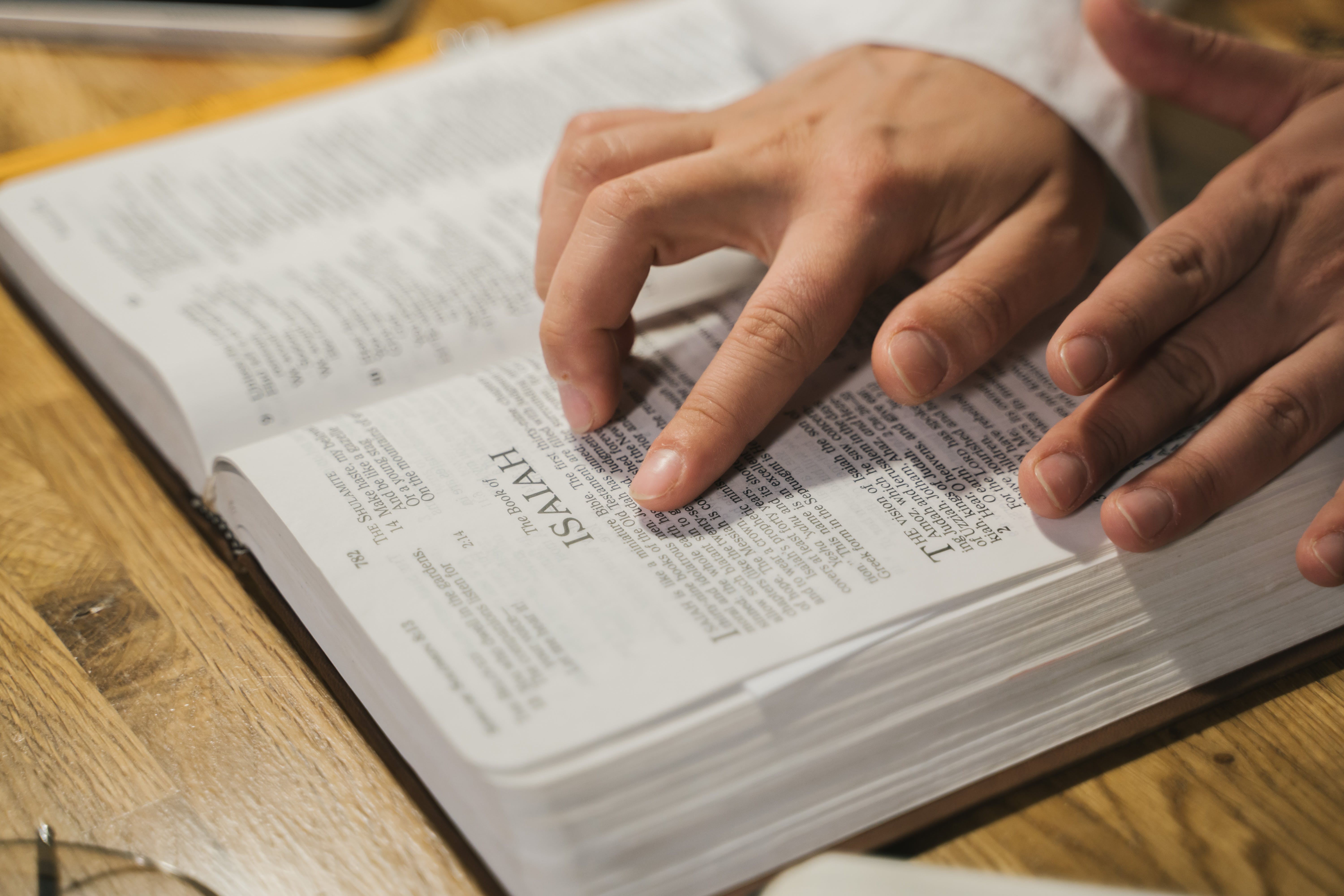 Day 226 – Jeremiah 26 – 29 (Jeremiah threatened & spared, Zedekiah & Nebuchadnezzar, a false prophet, letter to the exiles)