Archives

2024GOAL – Reading Through The Bible Chronologically, day 229

Day 229—We are in the eighth month of Bible reading, with more of Israel’s history and prophecy from Jeremiah.

    Day 229 – Jeremiah 35 – 37 (the Rechabites, scroll burning, Zedekiah warned, Jeremiah in prison)

Jeremiah 35. God uses the obedience of a non-Israelite people to shame his own.

The Rechabites were a Kenite group related to Moses’ father-in-law. They lived within Israel’s borders, and when Nebuchadnezzar attacked, had come to Jerusalem.

Two hundred years earlier, their ancestor Jonadab had commanded them NOT to ever drink wine and to live in tents.  They had wholly obeyed.  When Jeremiah brought them in, at the LORD’s command, and offered them wine to drink, they refused.  God blessed them, not for their abstinence, but for their obedience, and held them up as an example to the disobedient Judahites.

.

Jeremiah 36. In a bit of a flashback we see God telling Jeremiah to write down everything He had told the prophet about Israel, Judah, and the nations in one scroll. Jeremiah (in prison) called the scribe, Baruch, and dictated God’s words to him.  Then he told Baruch to go to the temple and read the words to the people, for they were fasting, and perhaps their hearts were more open. “Maybe every one of them will turn from his evil way.”

Baruch obeyed. Then, King Jehoiakim’s officials demanded that Baruch read the scroll to them as well, and he did. They were afraid but said the king HAD to hear it too.  They told Baruch to hide, took the scroll, and had another official, Jehudi, read it to the king.  However, as he read, the king cut off each portion of the scroll and tossed it into the fireplace.  And no one in the room feared that the king was burning the WORD OF GOD.

God then told Jeremiah to dictate another scroll (which he did, because we are reading it). And “many similar words were added to them.”

.

Jeremiah 37. We are back in the time of King Zedekiah, the last king of Judah, whom Nebuchadnezzar had appointed.  And neither this king, his servants, or the people of the land listed to the words of the LORD that He gave to Jeremiah. Nevertheless, Zedekiah asked Jeremiah to PRAY for them.

God, through Jeremiah, told the king that, Nope, nothing will help now.  The Chaldeans WILL fight against the city, capture it, and burn it with fire. “Don’t deceive yourselves saying, “the Chaldeans will surely go away,” for they will NOT go away. For even if you should defeat the whole army who is fighting against you, and there remained of them only wounded men… they would rise up and burn this city with fire.”

During a break in the fighting, Jeremiah set out from Jerusalem to go to Benjamin to receive the land he had purchased earlier. But the sentry thought he was defecting to the Chaldeans. And although Jeremiah argued he was not, they brought him back, beat him, and imprisoned him.  And he remained in the dungeon many days.

Secretly, King Zedekiah called for him and asked, “Is there any word from the LORD?”

Jeremiah said, “Yes,” and gave him this prophecy. “You shall be delivered into the hand of the king of Babylon.”  Then, Jeremiah begged the king not to send him back to the dungeon lest he die.

Zedekiah ordered him to the court of the guard (better circumstances) and fed him with daily bread until it was all gone in the famine.

2024GOAL – Reading Through The Bible Chronologically, day 228

Day 228—We are in the eighth month of Bible reading, with more of Israel’s history and prophecy from Jeremiah.

    Day 228 – Jeremiah 32 – 34 (Jeremiah buys land, God’s assurance, future promises, everlasting covenant with David, Zedekiah’s heart & actions)

Jeremiah 32.  During the siege of Jerusalem by Nebuchadnezzar, the LORD told Jeremiah to buy a field in Benjamin.  (Say what?  Right when we are being attacked & carried away??)  But Jeremiah obeyed the voice of the LORD, bought the field, paid for it, signed the deed, and preserved the legal papers.

Then Jeremiah went to the LORD, saying he knew God was powerful, that nothing was too hard for Him, that He had done great and marvelous deeds for Israel, and that He had now brought disaster on His disobedient people and given Jerusalem into the hands of the Chaldeans.  Jeremiah said he KNEW that what God says, comes to pass, but… um… You said to buy a field, though this land is in the hands of the Chaldeans….  (Basically, he is asking God ‘why?”)

And the LORD answered him, “Behold I am the LORD, the God of all flesh. Is there anything too hard for me? (repeats Jeremiah’s words).  Yes, I’m giving the city into the hands of the Chaldeans.  Yes, it’s because my people have done so wickedly such abominations.

BUT!!!  “I will gather them from all the countries to which I drove them in my anger and my wrath and in great indignation. I WILL BRING THEM BACK TO THIS PLACE to dwell in safely. They shall be my people and I will be their God.”   “Just as I have brought all this great disaster upon this people, so I will bring upon them all the good that I promise them.”   “Fields shall be bought for money, and deeds shall be signed and sealed and witnessed, in the land of Benjamin, in the places about Jerusalem, and in the cities of Judah.”

.

Jeremiah 33.  Then the LORD promises even greater and FUTURE blessings for his people.  “Call to me and I will answer you, and will tell you great and hidden things that you have not known.”

God promises to bring Jerusalem to health and healing, to prosperity and security. He will restore their fortunes and rebuild them. He will cleanse them of all sin and will forgive them of rebellion.  Jerusalem will become “a name of joy, praise, and glory” to God and before all the nations. 

And, fantastically…. “the days are coming when I will fulfill the promise I made to the house of Israel and the house of Judah. …I will cause a “righteous Branch” to spring up for David, and HE shall execute justice and righteousness.”   “And this is the name by which Jerusalem will be called: “The LORD is our righteousness.”

.

Jeremiah 34.  Then comes a chapter about Zedekiah, the final king to rule Judah.  Jeremiah was to tell the king, “I am giving this city into the hand of the king of Babylon, and he shall burn it with fire. You shall not escape from his hand but shall surely be captured and delivered into his hand. You shall see the king of Babylon eye to eye and speak with him face to face. And you shall go to Babylon.”

For reasons we don’t know but might surmise, King Zedekiah makes a proclamation of covenant with all the people of Jerusalem to set at liberty all their Hebrew male and female slaves. (God’s law was that a Hebrew could only be an indentured servant for 7 years, and at the 7th year, would be freed. But the greedy for wealth and power people had not done that and had kept them in slavery.)

And they obeyed and set them free!  (WOW!!)

BUT…afterward, they turned around and took back the male and female slaves that they had set free and put them into subjection as slaves. (WHAT??)

Then God told them through Jeremiah, “You recently repented and did what was right in my eyes….” “But then you turned around and profaned my name when you took back the male and female slaves.” “Therefore…..I proclaim to you liberty to the sword, to pestilence, and to famine.”

“I will give you into the hand of your enemies and to the hand of those who seek your lives.” “…into the hand of the army of the king of Babylon, which has withdrawn from you. Behold, I will command and bring them back to this city. They will fight against it, take it, and burn it with fire.”

2024GOAL – Reading Through The Bible Chronologically, day 170

   Day 170—We are in the 6th month of Bible reading.  Today we are reading in ECCLESIASTES.

 Day 170 – Ecclesiastes 1 – 6. (The words of “the Preacher,” the son of David, king in Jerusalem)

This is the third book of Solomon’s “wisdom.”  Whereas the Song of Solomon seems to have been written in his youth, and Proverbs in his middle years, Ecclesiastes seems to have been written after most of his life is past, in the “evil days of old age.” (See 12:1

Thirty-eight times, he sighs and proclaims that “all is vanity” (vapor, nothingness).  Ecclesiastes 1:2. “Vanity of vanities, says the Preacher, vanity of vanities! All is vanity.”

It seems then that Solomon takes a survey to test himself. He tries “everything under the sun” to see if it lasts and is good. 

First is PLEASURE. He tries everything he can imagine – wine, women, and song. He built houses and vineyards, gardens and parks, fruit orchards, and pools. He possessed slaves, herds, and flocks more than any other person. He gathered silver and gold and the treasure of kings. He gained prestige and honor. WHATEVER his eyes desired, he acquired.  

2:11. “…and behold, all was vanity and a striving after the wind, and there was nothing to be gained under the sun.”

Next, Solomon tries wise living and hard work. He discovers that in the end, both the fool and the wise man die and are forgotten. 2:17-18. “So I hated life because what is done under the sun was grievous to me, for all is vanity and a striving after the wind. I hated all my toil in which I toil under the sun, seeing that I must leave it to the man who will come after me, and who knows whether he will be wise or a fool?”

But we see a glimpse of “sanity” in 2:24-26.  “There is nothing better for a person than that he should eat and drink and find enjoyment in his toil. THS ALSO I SAW is from the hand of God, for apart from Him, who can eat or who can have enjoyment? For to the one who pleases Him, God has given wisdom and knowledge and joy…”

Chapter 3 begins with the well-known comparison of seasons.

For everything there is a season, and a time for every matter under heaven;
a time to be born, and a time to die;
a time to plant, and a time to pluck up what is planted;
a time to kill, and a time to heal;
a time to break down, and a time to build up;
a time to weep, and a time to laugh;
a time to mourn, and a time to dance;
a time to cast away stones, and a time to gather stones together;
a time to embrace, and a time to refrain from embracing;
a time to seek, and a time to lose;
a time to keep, and a time to cast away;
a time to tear, and a time to sew;
a time to keep silence, and a time to speak;
a time to love, and a time to hate;
a time for war, and a time for peace.

3:20. “All go to one place. All are from the dust, and to dust all return.” 

In Chapter 4, Solomon looks at all the evil under the sun. “I saw all the oppression done under the sun. And behold the tears of the oppressed, and they had no one to comfort them! On the side of their oppressors there was power, and there was no one to comfort them. And I thought the dead who are already dead were more fortunate than the living who are still alive.”

4:13. “Better was a poor and wise youth than an old and foolish king who no longer knew how to take advice.”

5:10. “He who loves money will not be satisfied with money, nor he who loves wealth with his income. This also is vanity. When goods increase, they increase who eat them.” 

5:12. “Sweet is the sleep of a laborer, whether he eats little or much. But the full stomach of the rich will not let him sleep.”,

5:18, 19b-20.“Behold, what I have seen to be good and fitting is to eat and drink and find enjoyment in all the toil with which one toils under the sun the few days of his life that God has given him, for this is his lot.  ...and to accept his lot and rejoice in his toil, this is the gift of God. For he will not much remember the days of his life, because God keeps him occupied with joy in his heart.”

#2024GOAL – Reading Through The Bible Chronologically, day 111

    Day 111—Today we begin the eleventh book in the reading plan. We have been reading the Bible daily for a third of the year. What have you learned about God and yourself?

   Day 111 – 2 Samuel 1 – 4 (David as king, ending Saul’s dynasty)


1 Samuel ends with the death of Saul in a battle with the Philistines. Saul is fatally wounded and ends his own life. Three of his sons also die in battle, including Jonathan.

Meanwhile, David battles the Amalekites and has a resounding victory.

In 2 Samuel 1, a warrior comes to David with the news that King Saul and Jonathan are dead. Thinking he will garner some favor with David, he claims that HE killed them. David inquires who the man is and finds he is an Amalekite.  David mourns the death of Saul and Jonathan and has this man killed for what he thinks is his part in the death of “the LORD’s anointed.”  David then laments Saul and Jonathan with a beautiful song eulogizing them.

In 2 Samuel 2, David asks, and the LORD tells him to go to Hebron, where the tribe of Judah anoints him their king.  Meanwhile, Saul’s son Ish-bosheth is proclaimed king in Israel by Saul’s commander, Abner. (Where was Abner in the battle that killed his king?)  Then Abner, with the servants of Ish-bosheth, meets Joab with the servants of David and they face off. They decide that 12 from each group will fight. They do and kill each other. Then they all fight and Abner’s group is defeated and runs.  Joab’s men chase them, with Joab’s brother Asahel personally chasing Abner. Twice, Abner warns him away, but Asahel persists, so Abner turns around and kills him. (Oops. Not good!)

Joab’s men keep after Abner until a group of Benjaminites (Saul’s tribe) stand with him to fight.  They call a truce, and Joab and crew return home.

2 Samuel 3 tells us that there was a long war between the house of Saul and the house of David, with David growing stronger. Abner attempts a coup by sleeping with Saul’s concubine, and Ish-bosheth calls him on it. Abner then vows to take all of Israel to David and sends this message to David.  Judah’s king agrees to meet Abner but requires him to bring David’s first wife, Michal, whom Saul gave to another man. Abner grabs her and goes south, with the grieving husband following behind, crying.  David is pleased to get Michal back and sends Abner away in peace.

Joab is horrified that David made peace with the man who killed his brother and follows him. He beckons Saul to a private conversation by the wall, where he kills him.  David becomes angry with Joab and curses him and his family.  Then David makes them all mourn for Abner and bury him in Hebron, and so lets the people know it was not HIS fault that Abner is dead.

(Even though David does not punish his commander for going behind his back, his last word to his son Solomon before he died was to KILL JOAB.)

2 Samuel 4 tells how Ish-bosheth is murdered by two of his own men. These men took Ish-bosheth’s head to David, and much like the Amalekite, claimed they killed David’s last enemy.  And, like before, David has THEM killed for assassinating the young man in his own bed, and buries the head.

#2024GOAL – Reading Through The Bible Chronologically, day 103

    Day 103 —  We have been reading the Bible daily for over a quarter of the year. Praise God! What have you learned about God? About yourself?

   Day 103 – 1 Samuel 18 – 20, Psalms 11 & 59 (Saul, David & Jonathan)

In Chapter 18, David meets Saul’s son, Prince Jonathan, and they immediately feel a strong and godly kindship and love. Perhaps Jonathan recognized the man who would be Israel’s future king instead of himself, giving David his royal robe, armor, sword, bow, and belt. 

David was successful in every campaign and task Saul sent him on, garnering the praises of all the women. Saul’s jealousy was enflamed when he heard them sing “Saul has struck down thousands, and David ten thousands.” And when the harmful spirit came on him, they called David with his lyre. Saul sat with his spear in his hand, brooding, but when he threw it at David, the future king evaded it…twice!

Then Saul promised David his first daughter if he was valiant enough to fight the Philistines, but later reneged and gave her to another man. Saul’s second daughter, Michal, loved David, so Saul thought she was a perfect incentive for David to go to battle… and perhaps die. Saul promised him Michal if he would kill 100 Philistines. David killed 200, and Saul was forced to give his daughter. But he became even more afraid of David. “So Saul was David’s enemy continually.”

In Chapters 19 and 20, Saul repeatedly tries to kill David, who always miraculously escapes out of his hand.  Jonathan doesn’t want to believe his father wants to kill his BFF, but it’s finally revealed and Jonathan sees for himself.  He sadly bids David to leave. They pledge their total support and allegiance to each other and David begins his flight from the mad king. 

Psalm 11 beautifully tells David’s song of fleeing from the one who desires his life and trusting in his God as the refuge for all the righteous. 

Psalm 59 is a prayer of David for God to deliver him from his enemies who try to kill him, specifically Saul and the men he sends to hunt for David. But David trusts in God, and sings His praises, brave enough to fight the Philistines, but later reneged and gave her to another man. Saul’s second daughter, Michal, loved David, so Saul thought she was a perfect incentive for David to go to battle… and perhaps die. Saul promised him Michal if he would kill 100 Philistines. David killed 200,

But I will sing of your strength; 
I will sing aloud of your steadfast love in the morning.
For you have been a fortress and refuge to me in the day of my distress.
O my Strength, I will sing praises to you,
For You, O God, are my fortress,
the God who shows me steadfast love.

#2024GOAL – Reading Through The Bible Chronologically, day 96

    Day 96 —  We have been reading the Bible daily for a quarter of the year, and today, we are reading the ninth book. Praise God! What have you learned about God? About yourself?

   Day 96 – Ruth 1 – 4 (A love story, a redemption story)

This book is a wonderful change from the sin and degradation we read in Judges.  But note, in verse 1, that it takes place during that dark time.  God always has a “light” shining for Him.

In Chapter 1, we see a family in the tribe of Judah, traveling to Moab because of a famine in Israel.  Sadly, their trouble doesn’t end there, because after the two sons marry Moabite women (a no-no in God’s law), the husband and both boys die. Widow Naomi and her two daughters-in-law are alone in a country where women are not respected. Naomi, in bitterness, decides to go home, where in Israel, God’s law (if obeyed) helps widows.  She sends the girls home where, hopefully, they can find new husbands.  But, one of them, Ruth, wants to stay with Naomi. She wants Naomi’s people and the LORD to be hers too. That was a very brave move.

Chapter 2 tells how Ruth begins to earn a living in the way God provided. Israelites were to leave the corners of their fields unharvested so the poor could glean grain to eat. Boaz, the owner of the field, recognizes Ruth as Naomi’s Moabite daughter-in-law and admires her work ethic and character. He tells her to glean only in his fields, then tells his men to leave more stalks and not to bother her as she works among them. He then invites her to have lunch with him and his men.

Naomi is thrilled. She recognizes Boaz as one of her kinsmen, a man who could “redeem” her husband’s and sons’ property, taking Ruth as his wife.

In Chapter 3, Naomi gives Ruth some special instructions when the winnowing of the harvested grain is to take place. It may seem odd to us, but what Ruth does is not devious in that culture, but merely a way to “propose marriage” to a man. (Or show that she is available.)  I think Boaz was very willing after watching this sweet, hard-working woman, and he says he will redeem Naomi’s land and take her for his wife.  However, there is a minor problem. There is another “redeemer” closer than he is.

Chapter 4 tells of Boaz’s steps to ensure everything is above board.  He advises the closer redeemer of the opportunity to redeem the land for Naomi’s family. The man agrees until he learns he would also need to marry Ruth.  He has a wife and sons and doesn’t want to jeopardize their inheritance, so he declines. Boaz is now free to marry Ruth, allowing her first child – considered a descendent of Naomi’s husband – the double-portion birthright of his goods.

The couple is married, and Ruth bears Boaz a son, Obed. Naomi is ecstatic. She is a grandma at last and quickly becomes the baby’s “nanny.”

The denouement in this story is fantastic.  This baby boy is none other than the grandfather of the man who would become King David, the ancestor of Jesus, the King of Kings.

#2024GOAL – Reading Through The Bible Chronologically, day 65

    Day 65—  We have begun the THIRD month of Bible reading! We’ve been reading for over a 1/6 of a year! Praise God! I hope it’s become a GOOD habit that we will continue.

   Day 65 – Numbers 26 – 27 (A new census, Passing the baton)

Chapter 26 is maybe a bit tedious to read with all its names and numbers. But it was very important to Israel. They are now about to conquer the Promised Land, and it will be divided up among the 12 tribes according to their number; bigger areas to bigger tribes, etc.

This census was also to determine that ALL of those who rebelled against God 38 years earlier and refused to go into the Land were dead. Remember at this point, only Joshua and Caleb (in their 80’s now), and their families, plus Moses remained. (26:64-65)

In the count of tribes, SEVEN had grown in size, while FIVE had decreased. The total number of Israelites 20 years of age and older (suitable for the army) was 1,820 fewer than the tally in chapter one. The Levites, who would receive no land as inheritance since the LORD Himself was their inheritance, had increased in number by 1,000.

Chapter 27 begins with a new problem. Five women, daughters of one man, came to Moses saying that their father had no sons and had died in the wilderness.  Was their family to lose the rightful inheritance because there was no sons?  Moses inquired of the LORD, Who said that the daughters were correct and they were given their father’s inheritance.

Then a NEW LAW was written for Israel about the Land and the absence of male heirs. The inheritance would first be given to the daughters, or, if none, to the diseased man’s the brothers, and then uncles. If none of these were alive, the “nearest kinsmen” of the tribe would possess it.  (This very law will come up in the book of Ruth.)

Then, THAT time comes. God tells Moses to set apart Joshua to lead Israel in his place – because of his sin of “failing to uphold God as holy in the people’s eyes” at the waters of Meribah.  So Moses takes Joshua before the high priest, Eleazar in the presence of all the people, and lays his hands on him as a symbol of passing his authority and leadership. And so, in the eyes of God and the people, Joshua is officially commissioned to lead the people into the Land when the time came.

Moses was not to die yet, but the people had confidence that they would not be left without a leader when he did.

May 4, 2021 – #4 of 31 Days of Biblical Women

Esther ~~

Esther, chapter 2

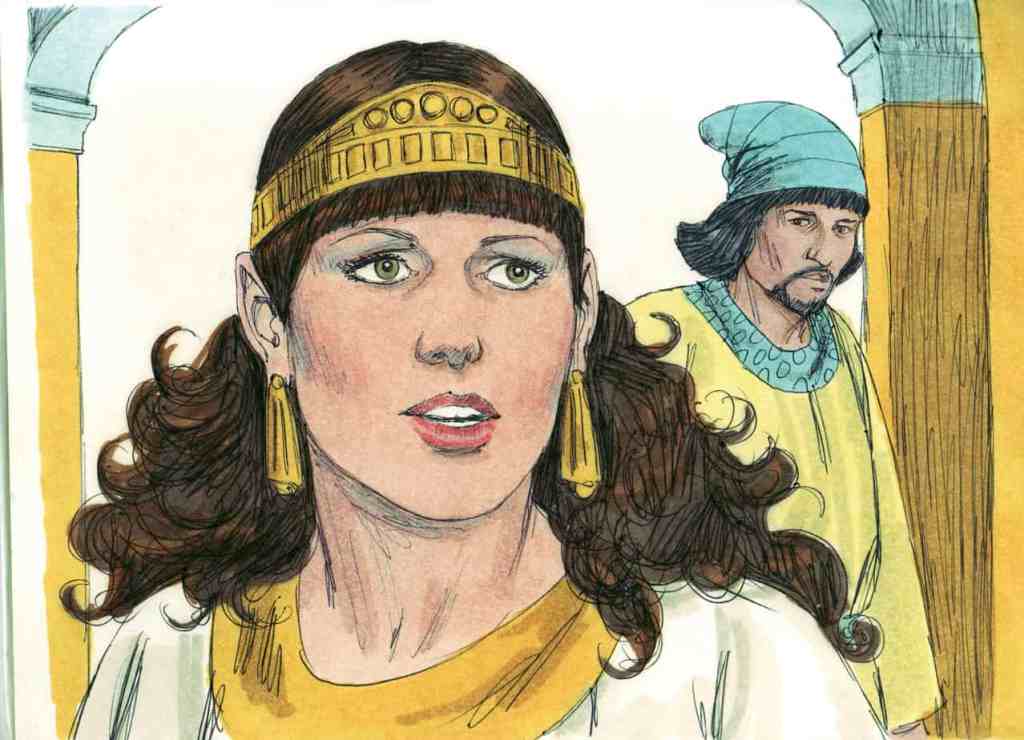
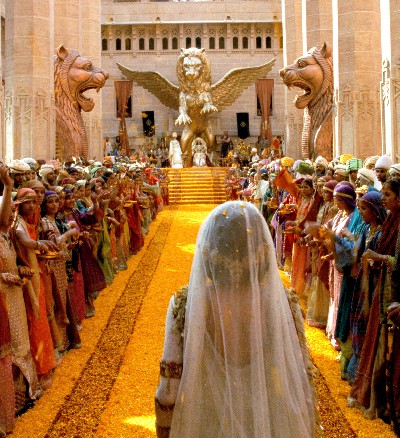
A beautiful girl chosen by the King of Persia to be his new Queen, unbeknownst to him, a Jewess. Pampered and Primped in the king’s haram spa until she was fit to be called to spend a night with Him. She found favor.

Meanwhile, a proud and pompous descendant of the Amaekites approached the King with a wicked plan. He hated all Jews and tricked the King into agreeing that a “subversive people group” needed purging from Persia.

Esther got wind of the plot from her uncle Mordecai. He asked her to save her people by doing the impossible – going into the king’s inner court without first being called to beg his favor. The law stated that the one who did so was to be put to death…. unless the king held out the golden scepter.

Her uncle’s words, “Do not think to yourself that in the King’s palace you will escape any more than all the other Jews. For if you keep silent at this time, relief and deliverance will rise for the Jews from another place, but you and your father’s house will perish.  And who knows whether you have not come to the kingdom for such a time as this?”

While the Jews in capitol city fasted and prayed – Esther and her women as well – Esther made a plan.  She went in the strength of Almighty God with the simple, yet sly plan, to see the King.

And miracle of miracles King Ahasuerus held out the scepter!

Twice the King and the Amalekite were invited to Esther’s private quarters for a sumptuous meal. During the second, when the King was sated with rich food, Esther told him about the Amalekite’s plot to kill her.

In a rage, the king ordered his death by hanging, and since the Law of the Persians could not be cancelled, he ordered that the Jews could fight and defend themselves when the henchmen came.

After that, a great celebration was held to honor the Jews’ victory. It’s called Purim, and is celebrated today.

##

PS: The whole story of Esther in the Bible is a delightful, intriguing read.  I’ve left out many of the unbelievable details. But read it on your own. It almost sounds like an episode of the Keystone Cops.


LORD, help me to be willing to stand up against evil and proclaim the righteousness of God and the Son regardless of my own safety.

JH

May 3, 2021 – #3 of 31 Days of Biblical Women

Sarah ~~

Genesis 18:1-14

Sarah had followed her husband from Ur of the Chaldees (modern day Iraq) to Canaan (later to be Israel) along with his father, brother, and nephew. A long journey because God had called her husband – a man of faith – to this new land. God had promised it would be theirs forever.

Then, walking from one end to the other of this long strip of “promised” land at the Eastern side of the Great Sea, camping in tents, till the pasture ran out, then moving on, making do.

And then a famine, no crops, no water for the animals, and another long journey to Egypt. “Say you are my sister, Sarah,” her husband whispered as they entered the well-watered land.

And of course she did, because she always obeyed him, and after all, wasn’t she his “half” sister? But who knew that Pharoah would desire her and take her. Sarah looked at her husband with pleading eyes as she was led away. “Tell him the truth, husband!” But he was silent.

Sarah was a woman of faith. She prayed to God and rested in the peace He sent as she settled in the kings harem. And then tragedy struck Pharoah’s palace; women began miscarrying babies, infants who were born died, and not one woman could conceive. And God spoke to Pharoah in a dream. “That woman you took is another man’s wife. Return her to him.”

This Pharoah listened to God. He took Sarah and returned her to her husband, along with food, livestock, servents, gold and silver.

“Your God spoke to me, why didn’t you?  What’s wrong with you, man? What, you were afraid?  Give me a break!  You are lucky, I could have defiled her…. and then what would your God have done to me. BE GONE!”

And yes, reader, that happened again with King Abimilech. But this time she was a few weeks pregnant with a promised son. “Tell him you are my sister,” he’d said, and Sarah didn not even look back. She trusted God. She knew this king would not defile her. God would protect that promised seed growing within her – the One by whom the whole world would be blessed, the One who would come to save His people. Hadn’t He promised it?

Sarah remembered a few months earlier, when three strangers had come to their tent. They looked like angels, Sarah thought! She had hid inside, right at the flap of the tent and listened to them.  And her laugh of… of what? Joy? distain? unbelief?  She knew not which. But the One had said that in a year she would bear a son!  Ha! She was 75 and her husband 100.

But it had happened, so Sarah KNEW the Holy One would protect the small speck of humaness in her by the power of His Word.

And the son was born. He was named Isaac, which means “he laughs.”  Yes, he was a good, happy baby. But Sarah knew that the Holy One had heard her laugh, and had His own joke with the boy’s name.


LORD,  that I might have patience and faith to trust You in my trials, and joy in all  Your promises.

What if There’s No Pumpkin Pie? Ending the Year with Hope

Spectacular fall colors, warm apple desserts, and spiced-aroma candles. What’s not to love?  Whether my grandsons and I drink hot cider and eat donuts on my screened porch, or I enjoy my personal time under a warm blanket reading a good book, surrounded by the sights and smells of fall, I’m in a happy place.

                  As the leaves began to change and I was greeted by a raining day, my mind turned to baking pumpkin bread. With my weekly shopping list in hand I went to one supermarket only to find the shelf that housed pumpkin was bear. I waited until the next week and the same was true in two different supermarkets. Sure that I had missed the usual baking displays, I approached a store clerk to ask. He told me I’m not alone in that request. Shoppers had purchased the canned pumpkin earlier –at the start of COVID-19, along with the rush on paper products. Stores are waiting for the crop to be picked, processed, and shipped. Another unprecedented experience in 2020.


                 No pumpkin. Strange. What if we won’t have pumpkin pie for Thanksgiving?  It’s first world problem I know, but I asked myself that question. We’ve asked and continue to ask many  “what if” questions-more serious than pumpkin pie. We are entering another season that looks different. Our cozy, colorful, and warm autumn picture may have a chilly and cloudy cast.

What if there’s no opportunity to be with family due to COVID-19 restrictions on travel?  Family gatherings look different. Unless I want to quarantine in NY for 14 days and be tested before and after I travel, I can’t fly to see family in NY.  My family may have pumpkin pie without me.

What if grief, already exaggerated in this season, is met with fewer face to face contacts and hugs?  The grief support group I facilitate has been cancelled twice because our church closed due to COVID-19. At a time when grievers especially need face to face support even at a 6-foot distance, we meet by text and phone. Pumpkin pie is not served.

What if the usual Christmas concerts, holiday parties, and children’s programs are canceled this season?

What if there’s no pumpkin pie at Thanksgiving?

The prophet Habakkuk in the OT answers that  “what if” question when he says,

Though the fig tree does not bud and there are no grapes on the vines, though the olive crop fails and the fields produce no food, though there are no sheep in the pen and no cattle in the stalls, (and no pumpkin pie, or travel, or events, or…), yet I will rejoice in the Lord, I will be joyful in God my Savior. The Sovereign Lord is my strength, he makes my feet like the feet of a deer, he enables me to tread on the heights. Habakkuk 3:17-19 NIV

And the apostle Paul adds to that when he says, “I know what it is to be in need, and I know what it is to have plenty. I have learned the secret of being content in any and every situation, whether well fed or hungry, whether living in plenty or in want. I can do all this through him who gives me strength.” Philippians 4: 11-12 NIV

So what if?

  • What if I renewed my focus during the closing weeks of 2020?
  • What if I monitored my thinking?
  • What if I intentionally used positive words in my self-talk?
  • What if I followed Habakkuk and the apostle Paul’s reminders?

Then… We can live in contentment because we can draw on God’s promises to stay the course, live in His strength, and remember Peter’s words in 2 Peter 1:3 (NLT) By his divine power, God has given us everything we need for living a godly life.

What if? What are your strategies to answer that question with “then”? 


For more of Marilyn Nutter’s blog posts, books, etc., click here.