Archives

Journaling through the Bible Chronologically in 2025, Days 82 & 83 (PART 2)


We are diving into the History of Israel – post-Moses.

Will the new leadership change the Nation?

What did you learn today about God’s faithfulness?

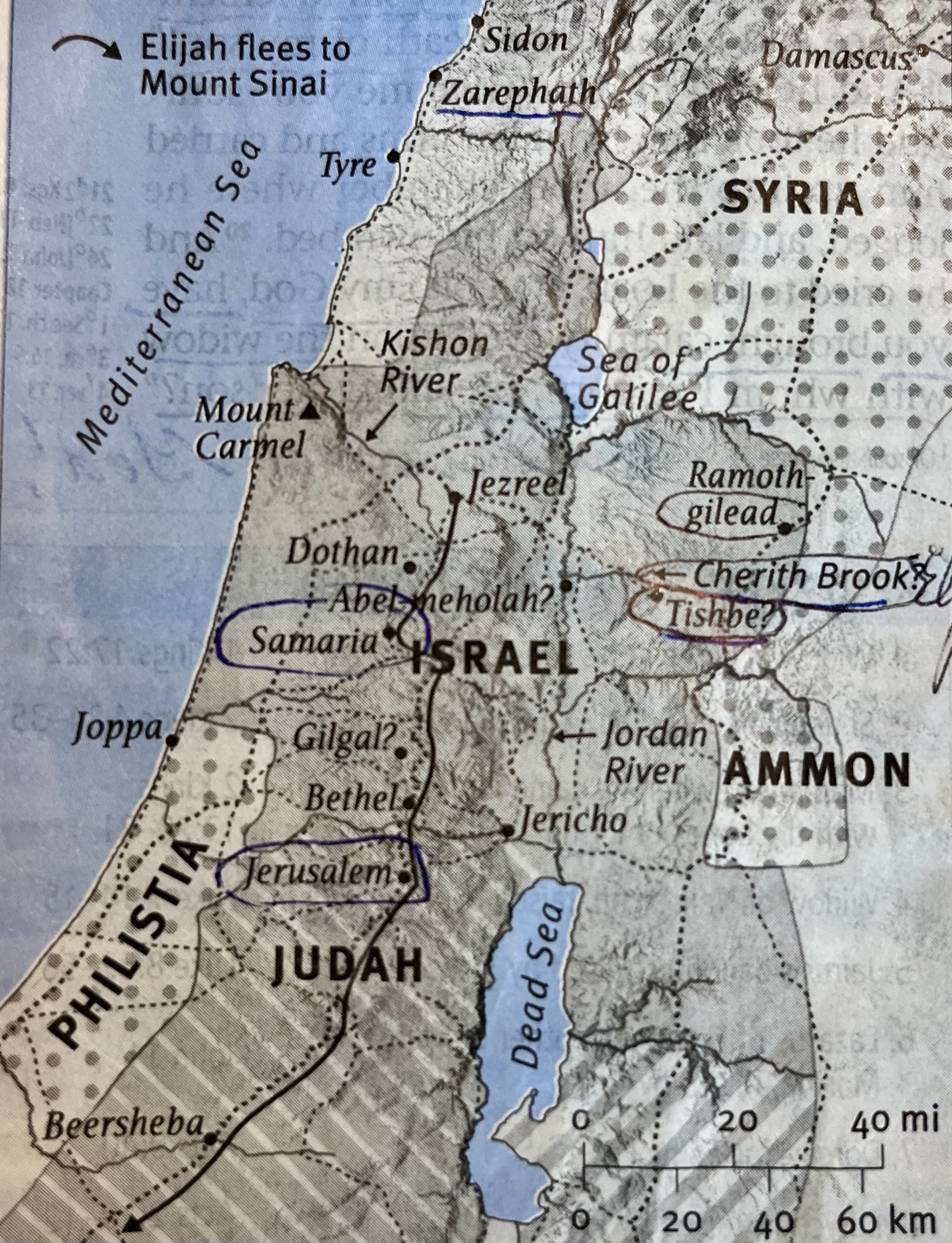
Joshua 5.

Israel is in the Promised Land!  They still have a lot of work to do, but they are there.

All the kings of the Amorites and the Canaanites heard how the LORD had dried up the Jordan river for the people to cross (just like had happened at the Red Sea) and “their hearts melted and there was no longer any spirit in them.”

The first thing God told Joshua to do was, “Make flint knives and circumcise the sins of Israel.”  So Joshua obeyed.  The reason why this had to be done was because only the Israelite men who had come out of Egypt were circumcised. They were all dead, and they had not circumcised their children for all those 40 years in the desert.  ISRAEL had to do this. It was the covenant sign that they were the people of GOD.

After the days of healing, the LORD said, “Today, I have rolled away the reproach of Egypt from you.” And they called the place Gilgal (“to roll”)

Then – oh, how appropriate! – Israel observed Passover as they had when they escaped Egypt!

And the very next day, they ate of the produce of the land, with UNLEAVENED cakes.  AND THE MANNA CEASED THE NEXT DAY. 

Then it seems (like Nehemiah did centuries later) Joshua went out to assess Jericho. And there he was met by a “man with a drawn sword in his hand.” 

Are your friend or foe?” cried Joshua.

No,” came the voice of authority. “I am the commander of the army of the LORD.”  

Joshua fell on his face to the earth and worshiped him saying, “What does my lord say to his servant?

Then, like with Moses at the burning bush, the commander of the LORD’s army said. “Take of your sandals for the place where you are standing is holy.”

And Joshua did.

Joshua 6.

Then the Commander of the LORD’s army told Joshua the strategic plans to take Jericho.  They were very strange, but so God-like!.  And Joshua obeyed to the letter.

  • March around the city (in silence), all the men of war going around the city once a day for six days.
  • Seven priests shall bear seven trumpets, blowing them continually before the Ark. 
  • Mighty men of war were to march before the Ark, and the rear guard walked after the Ark. 
  • On the seventh day they were to march around the city seven times and the priests would blow the trumpets. 
  • When they made a long blast of the trumpet, all the people were to shout with a great shout. 
  • And the wall of the city will fall down flat.
  • Then all the people shall go straight in and take the city.
  • They are to save the gold, silver, bronze, and iron and put it in the treasury of the LORD.
  • All else they were to utterly destroy. NO ONE COULD TAKE ANYTHING FOR HIMSELF!!! 
  • ONLY RAHAB and all who were in her house were to be saved alive.

And it all happened just as the LORD’s Commander ordered Joshua.  After the walls fell down they went in and captured the city, “devoting EVERYTHING alive to be killed by the sword.” Then they burned the city.

(Can you imagine the Canaanites nearby hearing that, and then seeing the great plume of smoke rising from Jericho.  Terrifying!)

The two spies went to Rahab’s house which was “protected” by the blood-red rope – that section of wall the only one left standing – and rescued her and her family.  They put them outside the camp (temporarily).  She and all her family lived in Israel after that. (And eventually she married Salmon and gave birth to Boaz, who married Ruth, whose grandson was King David.) (See Matthew 1:5 and Ruth 4:13-17)

Then Joshua cursed any man who tried to rebuild Jericho.  (See 1 Kings 16:34)

Joshua 7.

ISRAEL IS ON A ROLL!!!  Champions!!  Conquerors!!  Unstoppable! —- Until they weren’t.

The next day, Joshua and the army looked at the little town of AI, and thought they could take it in their sleep. Joshua sent spies, and they brought back the same message.  “No problem!”  So they sent only a small strike force. 

But the “easy battle” fell flat, they were soundly defeated, and 36 Israeli soldiers were killed. The hearts of the people of Israel melted now, and became like water

WHY?????

Joshua tore his clothes and fell on his face before the Ark of the Covenant. “Alas, O LORD, why did you bring us here if your are going to give us into the hands of our enemies to destroy us.  Would that we’d been content to stay on the other side of the Jordan.  We turned our backs like cowards!  The Canaanites will trash your great name!! Boo-hoo!”

GET UP!” said the LORD to Joshua. “Why have you fallen on your face.  ISRAEL HAS SINNED AND TRANSGRESSED MY COVENANT.  They have taken some of the things I forbade you to take from Jericho. I will be with you NO MORE UNLESS YOU DESTROY THE DEVOTED THINGS AMONG YOU.  

The LORD told Joshua to present the people before Him in the morning, to find the guilty man.

So Joshua rose early and brought Israel, tribe by tribe, clan by clan, and man by man, until ACHAN was found.  “My son, give glory to the Lord God of Israel and praise Him. Confess.”

So Achan confessed his lust and greed and covetousness for a beautiful cloak from Shinar, 200 shekels of silver and a gold bar. “I coveted them and took them.”  Sure enough, Joshua found the stash in his tent.

So Joshua and all the people brought him, and the silver and the cloak and the gold, and his sons and daughters and his oxen and donkeys and sheep, and his tent and all that was in it to the Valley of Achor. 

And all Israel stoned them with stones. They burned it all with fire, then piled up a great heap of stones over it all. 

Joshua 8.

Then God told Joshua to take ALL the fighting men to Ai.  “I have given you the king, his people, and all his city and land. Do to it as you did at Jericho. This time, lay an ambush behind the city.

And so Joshua led them to victory.

(Hey, obey God. Seek His face and direction in all you do. And see how it goes!!

Israel obeyed, struck them all down by the sword. They devoted all the inhabitants to destruction, only the stock and spoil of that city they were allowed to take.

Then Joshua took all Israel to Mount Ebal and Mount Gerizim and put half of the people on one, and the other half on the other, with the Levitical priests and the Ark of the Covenant in the middle. Then they read the curses and blessings to each other, as Moses instructed. 

And the whole (entire) book of the Law of Moses was read to the people. “There was not a word of all that Moses commanded” that Joshua did not read before the assembly of Israel, including women, little ones, and the sojourners among them. And he built an alter to the LORD, the God of Israel.

Had he learned his lesson? 

I don’t think so………………….


Journaling through the Bible Chronologically in 2025, Day 79

Read today’s scripture.

What do you learn NEW about God’s goodness?

Who can you share that with today?

Deuteronomy 28.

Moses offers blessings and more curses to Israel, depending on their heart for God.

If you faithfully obey the voice of the LORD your God, being careful to do all His commandments that I command you today, the LORD your God will set you high above all the nations of the earth. And all these blessings shall be upon you and overtake you, if you obey the voice of the LORD your God.”

Blessings for them and their families anywhere they live, and in whatever they do, with the defeat of all their enemies are promised.

The LORD will establish you as a people holy to himself, as he has sworn to you.”   ” All the peoples of the earth shall see that you are called by the name of the LORD, and they shall be afraid of you.”

Prosperity, rain in season, so much wealth that they will loan to other nations, all promised for their faithfulness.

BUT IF…. they turn aside from God…curses in the form of the OPPOSITE of all the above will come on them.  No prosperity, no protection from enemies, and every pestilence and disease will come. The heavens above will be BRONZE, the earth below IRON  with “rains” of powder and dust for them.

And not only that, but the boils, tumors, scabs and itch from Egypt will come. And madness, blindness, confusion of mind will descend on them. They will be continually oppressed and robbed. They will become a “horror, a proverb, and a byword among the nations.”

All because they did not obey the voice of the LORD their God…. because they did not serve the LORD their God with joyfulness and gladness of heart.”

If you are not careful to do all the words of this law that is written in this book that you may fear THIS GLORIOUS AND AWESOME NAME OF THE LORD YOUR GOD, then the LORD will bring on you and your offspring EXTRAORDINARY afflictions, severe and lasting, and sicknesses grievous and lasting.”

Deuteronomy 29.

Whew!

“These were the words of the covenant that the LORD commanded Moses to make with the people of Israel in the land of Moab, besides the covenant He made with them at Horeb.”

Moses described how God took care of them in the wilderness.  But so far He has not given them a HEART to understand, or EYES to see, or EARS to hear.

NOW, ALL of them, from the heads of tribes to the one who draws water and chops wood, ALL are there to ENTER INTO THE SWORN COVENANT OF THE LORD THEIR GOD that He is making with them that day.

BEWARE lest there be any among you whose heart is turning away from the LORD to serve other gods.

BEWARE lest the be any among you, who says “I will be safe though I walk in the stubbornness of my own heart.” 

NO. The LORD will not be willing to forgive him. The LORD will blot out his name from under heaven.

.

Serious stuff, this!

But it gets wonderful in the next chapter tomorrow.

Journaling through the Bible Chronologically in 2025, Day 77


Read today’s scripture.

What do you learn about God’s goodness?

Who can you share that with today?

Deuteronomy 21.

This chapter seems to point to having respect for all humanity. 

A dead body is found, and no one knows anything. Nevertheless his body is atoned for by the priest and nearest neighbors.  A female captive is allowed to grieve her parents and home for a month before consummating her marriage to an Israeli.  The firstborn son of an unloved wife still inherits the birthright. The parents of an recalcine rebellious son have a way out by bringing him before the elders who judge him.  And even a criminal hanged on a tree shall be taken down and buried the same day.

Deuteronomy 22.

Neighborliness seems prominent in this chapter, as well as sexual purity.

If you find a neighbor’s animal, return it.  If you don’t know whom it belongs to, keep it safe to you find out.  If you see your neighbor’s animal fallen into a ditch, help to get it out.  If you find a nest of eggs with a bird on it, you must let the mother go free. You should build a parapet (short wall) around your roof (where sleeping and dining often happened) so that no one would accidently fall off it.

Don’t plant two kinds of seeds together; don’t yoke an ox and a donkey together, and don’t wear clothes made of two fabrics. All these point to purity and fairness.  Also, women are not to wear men’s clothing, nor men, women’s.

A husband has the right to have his wife’s previous virginity proved.  Adultery is punished by death of them both. Rape is only considered a crime punishable by death, if the girl does not scream (in the city) or if she is taken in the country where no one can hear her scream. 

Deuteronomy 23.

This chapter covers who can and cannot worship with or become a citizen of Israel. Those who are castrated, born of a forbidden union, an Ammonite or Moabite, and children of an Edomite or Egyptian until after the third generation. 

Uncleanness here is normal but should be taken care of, such as having bowel movements “outside the camp and covering it up” and nocturnal emissions (wash up).

There are some miscellaneous laws about accepting and helping a slave who has run away from his master (one assumes a cruel one?), allowing none of their daughters or sons to become prostitutes, never charging interest on loans to their brothers (foreigners CAN be charged), and fulfilling vows made to God. 

You were allowed to pick grapes and grain from their neighbor’s fields IF YOU ATE IT THEN. But they could not carry a basket to COLLECT the produce to bring home.

All details to be sure, but Moses wanted the people to know and remember the little things too as they entered the Promised Land … without him.

Journaling through the Bible Chronologically in 2025, Day 46

Read the scripture for today. What do you learn about God? Share what you learn with others.

Leviticus 8.

God told Moses (and us) about the offerings, the glorious garments of the priests, and the ordination ceremony. Now, Moses called the whole congregation to the Tabernacle to witness (or at least be present at) the ordination of Aaron and his four sons.

Moses then did it all, according to what God had said, washing them at the Bronze Basin, dressing them in the garments, anointing each on their right ears, thumbs, and toes, and on Aaron’s head.  Moses brought the prescribed bull for a sin offering, and after all five had laid their hands on its head, he killed it. Moses took the blood and all the parts of the bull and did as the Lord had commanded.

Aaron and his four sons remained inside the court of the Tabernacle for seven days, performing what the LORD charged them as part of the ordination. 

Leviticus 9.

After the seven days, Moses called Aaron, his sons, and the elders of the people. Aaron then performed the sin offering in minute detail for himself and his sons. He then took the offered specific animals and offered them for the people for sin, burnt, and peace offerings. 

After the offerings/sacrifices, Aaron lifted his hands toward the people and blessed them.

Then Moses and Aaron went into the Tent of the Tabernacle, and when they came out, again blessed the people.

“And the glory of the LORD appeared to all the people.  And fire came out from before the LORD and consumed the burnt offering and the pieces of fat on the altar.

And when the people saw it, they SHOUTED and FELL ON THEIR FACES.”

Leviticus 10.

A hard lesson is learned.

After all the pomp and glory of the ordination ceremony and the majesty of the LORD’s glory appearing, a dark thing happened that (I’m sure) shocked Moses, Aaron, and the whole congregation to their very core.

Aaron’s two older sons, Nadab and Abihu (perhaps drunk from celebrating and the fantastic realization of their high position in the community of Israel) took their censers, put incense in them, and offered “unauthorized” fire before the LORD.  (Remembered God had given Moses, Aaron, and sons the EXACT, God-authorized way to perform holy worship towards Him. In pride or drunkenness, these two men sinned grossly.

And God responded.

Holy fire came out from before the LORD and consumed them, and they died before the LORD.

Among those who are near me, I will be sanctified, and before all the people, I will be glorified,said the LORD God Almighty.  (God had clearly shown them the details of worshiping Him and they had ignored them.)

Moses told Aaron’s uncle Uzziel’s two sons to come in and carry the bodies outside the camp. These Levites obeyed, carrying the bodies in their coats.

Grief and terror must have mingled in Aaron’s heart. His two oldest sons, newly ordained to serve God and the people in the Tabernacle, had been annihilated before their eyes…by the God he served. 

And God told Aaron and his remaining two sons, “Do not grieve for them, lest you die and wrath come on all the congregation.”

Aaron obeyed.  (God did allow the rest of the family and congregation to grieve.)

God then spoke directly to Aaron and his remaining sons. “Drink NO WINE OR STRONG DRINK, you or your sons, when you go into the Tabernacle, lest you die. You are to distinguish between the holy and the common, between the unclean and the clean, and you are to teach Israel all the statutes the LORD has spoken to them by Moses.”

Then Moses told Aaron and his sons to get on with the offerings. Eleazar and Ithamar made a mistake in offering the sin offering. They had brought the sacrificial blood to the wrong place and had not eaten what they should have. Moses was angry. 

Aaron confessed his and his son’s faults before Moses and alluded to the stress and conviction of losing the two other sons. When Moses heard that, he realized their grief-prompted mistake and relented. 


Journaling through the Bible Chronologically in 2025, Day 37

Day 37. Reading  Exodus 22 – 24. 

Read the scripture for today. What do you learn about God? Share what you learn with others.

Exodus 22.

Liability and Social Justice – sounds like today’s courtrooms, except God’s laws are righteous.

  • Restitution for theft of an animal (a person’s livelihood) is four or five times the worth.
  • You’re cool if a thief breaks into your home at night, and you kill him. But … better just capture him during the daytime. 
  • If a fire breaks out, catches dry grass, and consumes stacked or standing grain or a field … HE WHO STARTED THE FIRE SHALL MAKE FULL RESTITUTION!  
  • Full restitution is required if you borrow anything from a neighbor and it’s broken, lost, (or dies).
  • Rape of a virgin means paying a bride price and marrying her.
  • No witch shall live.
  • Do not mistreat or take advantage of a foreigner, widow, or orphan. SERIOUS penalties follow!
  • Never take interest when loaning money to a friend or fellow believer.
  • Never curse God … OR a ruler of your people. (Oops!)
  • The first of EVERYTHING belongs to the LORD.

Exodus 23.

Laws of righteous justice.

  • Don’t spread false reports or be a malicious witness.
  • Don’t join groups to do evil (rioting?)
  • Don’t pervert justice against the poor.
  • Don’t take bribes.
  • Don’t oppress foreigners.
  • Observe the Sabbath year so your fields and workers may have rest, and so the poor can collect the crops of grain, grapes, or fruit that are produced naturally.
  • Keep these three feasts of remembrance and gratitude to the Lord every year:
  • 1) Passover/Unleavened Bread, 2) Feast of Firstfruits (Weeks, Pentecost), and 3) Feast of Ingathering (Tabernacles/Booths).

And lest the people feel overwhelmed with all these regulations, God reminds them of the Promised Land. 

“If you carefully obey, then I will be an enemy to your enemies.”  “I will blot them out. You shall not bow down to their gods or serve them … but overthrow and break their pillars into pieces. YOU SHALL SERVE THE LORD YOUR GOD, AND HE WILL BLESS YOUR BREAD AND YOUR WATER  … and take sickness away from you. None shall miscarry or be barren. You will live to your full age.”

Exodus 24.

Moses wrote all this down. He built an altar and made sacrifices to the Lord. He read these laws to the people, and they said, “All that the LORD has spoken we will do, and we will be obedient.” Then Moses sprinkled blood on the altar and the people to confirm what they said.

And God called Moses, Aaron, two of his sons, and seventy elders up onto the mountain (part way, only Moses went near God). 

And they “saw the God of Israel.”  WHAT???

WHAT DID THEY SEE, for God has said, even to Moses, that no one shall see Him and live?  Verse 10 mentions the clear-as-glass sapphire stone under His feet. That is all that was revealed, or … perhaps in the terror of awe, they dared not raise their eyes higher than the pavement where God’s feet rested.

They all ate and drank there. Then God called Moses and his assistant, Joshua, up into the mountain of God to give Moses the Tables of Stone (10 Commandments).  Moses told the elders and gave them Aaron and Hur to help with the people if there were disputes while he was gone.

Moses went up, and the cloud of God’s glory covered the Mountain for six days before God spoke. It appeared like a devouring fire to the people of Israel who waited below. Moses entered the cloud and was on the mountain for forty days and nights.

.

(And what a glorious vision Moses had of a place of worship and God’s presence with His people!!)


#2024GOAL – Reading Through The Bible Chronologically, day 104

    Day 104 —  We have been reading the Bible daily for over a quarter of the year. Praise God! What have you learned about God? About yourself?

   Day 104 – 1 Samuel 21 – 24 (Saul, David, hunt & flee)

These chapters give the accounts of David on the run from Saul, and how Saul’s actions are thwarted again and again while David miraculously escapes. Some incidents are grin-worthy, while others are deadly serious.

In Chapter 21, David and his rag-tag group of men, on the run from Saul, are hungry. They approach Nob where evidently the Tabernacle resides now. Ahimelech, the priest meets David and wonders what he’s doing away from Saul’s army. David LIES and says he’s on a special mission for the king, but he and his men are hungry and out of weapons. Ahimelech hesitantly gives David the five loaves on the Table of Shewbread in the Tent, asking first if David and his men are “clean.” David also asks for and receives Goliath’s sword which has been kept there.

Nearby was a man who overheard David and the priest’s conversation and saw the exchange. He was Saul’s chief herdsman, an Edomite named Doeg, and he kept this scene “in his pocket” for later.

Meanwhile, David flees to Philistine territory. What?? The people there remind the king that it was David who killed so many of them. Afraid of what would happen to him in this vulnerable time, David pretends to be out of his mind, drawing weird things on the gate and drooling into his beard. They shoo him away.

Chapter 22 tells of David in the cave of Adullam, his refuge in the foothills of Judah. David’s parents and brothers leave Bethlehem and join him there.  Also, about 400 destitute, disillusioned, distressed men. He becomes their captain. With this motley group, he journeys across the Jordan River and asks the king of Moab to look after his father and mother. (Remember, David’s great-grandmother was Ruth, the Moabite.) David then heads south to “the stronghold” which might have been Masada. However, the prophet Gad told him NOT to stay there, so David and his 400 go into the forest of Hereth.

Meanwhile, Saul comes to Benjamin and “boo hoos” his problems. “My own son and this son of Jesse conspire against me.” “None of you is sorry for me.” “My own son has stirred him up kill me.”  And while Saul is talking, Doeg sees his moment and tells Saul what happened when David came to Ahimelech the priest.  Saul is insanely angry and orders his men to kill ALL the priests, but they rightly refuse out of fear, so Doeg does the deed. Then Saul orders that all the people and animals of a nearby town of Nob be killed.

However…. one priest, the son of Ahimelech escapes to David and tells him all. David immediately recognizes that it is HIS fault and is distraught. He tells the young priest, Abiathar, to stay safely with him.

In Chapter 24, David hears of the Philistines raiding the town of Keilah. He inquires of the LORD (Abiathar had brought the Ephod with the Urim and Thummim), and God tells him to go. He saves the town and takes the livestock (no doubt for food). But Saul is told that David has come close and musters an army to attack the town. David again inquires of the LORD and escapes before Saul can arrive.

And “Saul sought him every day, but God did not give him into his hand.” Jonathan comes to David and encourages him, telling David that both he and his father KNOW that God will make David the king.

While in the wilderness, the people of Ziph tell Saul that David is hiding there, and Saul rushes to kill him. But David stays one step ahead of Saul, moving from place to place, all the time the king gets closer. Then God sends a message to Saul that the Philistines are attacking, so he has to take his army back to fight them. David lives in the strongholds of Engedi.

Chapter 25 tells a humorous account of when Saul is again chasing David through Engedi. David and his men hide in a deep cave when Saul’s army comes near and camps just below.  Saul needs to “have a bowel movement,” so he enters the mouth of the cave for privacy. David’s men urge him to take advantage and kill his arch-enemy while he has a chance, but David refuses, sneaks up, and cuts a corner of Saul’s robe off while he is “doing his business.”

Afterward, David is remorseful, having done this to “the LORD’s anointed leader.”  But when he later waves the piece of robe before Saul, the king recognizes David’s mercy and retreats. It’s possible that it was also brought to Saul’s mind when HE ripped a piece of Samuel’s robe and was told the kingdom would be torn from his hands.

So Saul went home, and David, with his men, lived in the strongholds and caves of Engedi.

#2024GOAL – Reading Through The Bible Chronologically, day 96

    Day 96 —  We have been reading the Bible daily for a quarter of the year and have begun a new month. Praise God! What have you learned about God? About yourself?

   Day 96 – Judges 19 – 21 (A very bad incident, civil war, and kidnap)

Wow, can it get any worse? Today’s reading, the last in Judges, shows how morally low people can get without the knowledge of God.

Chapter 19 tells a story about a Levite that parallels the story of Sodom in Genesis 19. A Levite’s concubine runs away to her father and he goes after her. After several days, the father allows him to take her away. On the way home, they stop in a town of the tribe of Benjamin. An old man advises him to spend the night INDOORS!  The reason is that the town is full of craving homosexual men! Like at Lot’s door in Sodom, these men demand that the old man send the Levite out so they can “have their way with him.” The Levite sends out his concubine instead and they ravish her all night so that she dies at his doorstep. (Can you believe it??)

He loads her body on his donkey and goes home, where he cuts it in pieces and sends one to each of Israel’s tribes. (Gag!)  In Chapter 20, the tribes muster soldiers to go after Benjamin to destroy them all. After two costly defeats, they use an ambush technique we saw Joshua do against Ai, and nearly wipe out all the Benjaminites – only 600 left. 

Remorse then hits the other eleven tribes, and in Chapter 21, they devise a plan to give these 600 min, wives to carry on the line. They notice that one city in Israel did not send soldiers to fight. So they go and kill all the men and married women, and steal 400 virgins for the men of Benjamin.  But, alas, there are still 200 wifeless men! What to do??

They hear of a festival in Shiloh. They wait in ambush (a different kind) for the young women to come into the vineyards dancing… and grab 200 of them.  With these new wives, the 600 of Benjamin return, rebuild their towns, and live in them.

The last verse in Judges says it all. “In those days there was no king in Israel (and) everyone did what was right in their own eyes.”  

#2024GOAL – Reading Through The Bible Chronologically, day 76

    Day 76 —  Now that we’ve passed Day 66, we have established a “habit.” So CELEBRATE our habit of daily Bible reading! We are in the THIRD month so far! Praise God!

   Day 76– Deuteronomy 17 – 20 (Forbidden worship, Judges, Kings, Priests, Cities of Refuge, Witnesses, Warfare)

Moses with another eclectic list of laws, duties, and possibilities.  Chapter 17 reviews the seriousness of worshiping idols and leading others to do so = death. Priests & Judges, with 2-3 witnesses decide the fate of murderers and assault cases.

Moses also covers the time when Israel will want a king for themselves, and what special laws will apply to him.

Chapter 18 reaffirms that the people MUST support their brothers, the Levites, for they are not proportioned any land. It also warns strongly against any occult practices, and sentences death to practitioners.

And then Moses tells of “a Prophet” that God will raise up from their tribes and put His own words in His mouth. Israel is to “listen to Him.” (An early hint of the Messiah. See John 1:21, 25, 6:14)

Chapter 19  again distinguishes between premeditated murder and manslaughter, calling for three Cities of Refuge to safeguard the one who accidentally killed someone, and more cities as the nation grows.  It also warns of untrue and malicious witnesses, saying they shall be punished as was meant for the supposed offender.

In Chapter 20 Moses covers a new topic, that of warfare, first when fighting enemies around Israel, and then those inside the Land.  In the first case, they can besiege cities (but not cut down fruit trees for siegeworks), and when they conquer it, everything will be their spoil. The captured people will be forced labor and all animals and goods are theirs.  However, when they are fighting against the cities of Canaan, they shall utterly destroy everybody and everything.  First to clear the land of idolatry, and then to punish these offenders whose iniquity was finally “ripe,” and to give space for Israel.

Interestingly, there are 4 types of men who can “evade the military draft.”  1) Any man who has built a new home and has not dedicated it. 2) Any man who has planted a vineyard and has not yet enjoyed the fruit yet. 3) Any man who has betrothed a wife but has not yet taken her in marriage.  4) And finally, any man who is fearful and fainthearted may also leave the service.

#2024GOAL – Reading Through The Bible Chronologically, day 69

    Day 69—  Now that we’ve passed Day 66, it’s 100% likely that we have established a “habit.” So CELEBRATE our habit of daily Bible reading! We are in the THIRD month so far! Praise God!

   Day 69 – Numbers 35 – 36 (Provisions for Levites, manslayers, young women)

God does not forget about the Levites and their material possessions. In Chapter 35, He tells Moses to assign 48 cities with some pastureland around them – within the Promised (and Bonus) Land – for the Levites to live and care for the animals & equipment they have. They are evenly distributed throughout small & large tribes.

Six of these cities – evenly spaced in the land – were to be Cities of Refuge, safe places for a person who accidently killed someone to run to and have safety from the diseased person’s Avenger (nearest male relative). The manslayer would need to live within the city from then on.  If he stepped outside, the Avenger could legally kill him.  He had to stay there until the High Priest died, a sort of atonement for the killed one. These were not prisons, more like a “witness-protection” locations today.

But God also makes it clear, that if a person intentionally, pre-meditatively, kills someone, his life would be required of him from the family Avenger. He could NOT seek a City of Refuge.

Chapter 36 revisits the case of women survivors in a man’s family, perhaps losing their inheritance in the Promised Land by marrying outside the tribe.  The problem was solved when Moses commanded the women in these cases to marry withing their tribe.  No inheritance could be transferred from one tribe to another.

These two last-minute situations (murder and marriage) were solved while the people were still camped on the plains of the conquered Moab, East of the Jordan River.  The NEXT book – Deuteronomy – is Moses reaffirming and repeating and clarifying all the laws and rules of God for the people, and challenging them to keep them and be blessed, or fail to obey and be cursed, before they officially stepped into Canaan.

#2024GOAL – Reading Through The Bible Chronologically, day 61

    Day 61—  Today we begin the THIRD month of Bible reading! We’ve been reading for over a 1/6 of a year! Praise God! I hope that it’s become a GOOD habit that we will continue.

   Day 61 – Numbers 16 – 17 (Rebellion among the elite & Aaron’s budding staff)

Yesterday, we left the camp of Israel defeated, despondent and angry. They’d been promised the Promise Land, but failed to enter. Now they face 40 LONG years of desert wandering. (The one year at Sinai was bad enough!) They’d even tried to elect a new leader and go back to Egypt.

Grumble, grumble.  In Chapter 15, the rebellion goes to a higher level, to the Levite priests, to the elitist of priests, the ones responsible for the holy objects in the Tabernacle, including the Ark of the Covenant. The Kohathites, led by Korah.

They assemble themselves against Moses and Aaron. “You’ve gone too far!” They claim.  All the congregation is holy, not just you!

In response does Moses argue? No!  He falls on his face (in horror?) He says that God will decide in the morning whom He chooses.  “You’ve gone too far, sons of Levi.”  It’s against God you grumble, not Aaron.

“Who made you a prince over us?” they yell back.

Next morning Korah and all his gang meet at the entrance to the Tabernacle.  God’s glory appeared  to them all, and God told Moses and Aaron to separate themselves and all the “innocent” congregation from the dwellings of Korah, Dathan & Abiram (leaders in the high-rebellion).

Moses then puts a test before them.  If nothing happens to these, then you will KNOW that I am not sent of God. But if the LORD opens the ground and swallows up them and all of theirs, then you will KNOW that they have despised the Lord.

Immediately the earth under them opened and swallowed the three men up, with their households and all the people and goods that belonged to them.  Then the earth closed over them completely.  And fire from God came down and consumed the 250 Kohathites with them who were falsely offering incense. Yikes!

AND STILL!!! the people grumbled against Moses & Aaron. God send a plague that quickly spread through the came.  Moses told Aaron to take fire and incense from the alter and go among the people.  He did, and as High Priest stood between the living and the already dead. And the plague from God that had killed 14,700 Israelites stopped.

Plagues!!  These were supposed to be on the Egyptians, not the Children of God. Oh, how far they had strayed.

In Chapter 17, God further affirms Moses and Aaron as His chosen leaders before the people.  A staff (a dry wooden pole) was gathered, one each from all the heads of tribes. These twelve, along with Aaron’s were placed in the Most Holy Place in the Tabernacle – next to the Ark of the Covenant, where the presence of Almighty God dwelled.  The next day, the one marked with Aaron’s name had brought forth buds, blossomed, and bore ripe almonds. Overnight. Fruit from a dead stick. Proof positive.

(His staff was then stored in the Ark along with the tablets of stone and the jar of manna…. as a remembrance.)

And the people wail that they are “undone” by what they had … done. “Are we all to perish?” they cry.