Archives

Journaling through the Bible Chronologically in 2025, Day 157

Day 157.  Reading Proverbs 10 – 12.
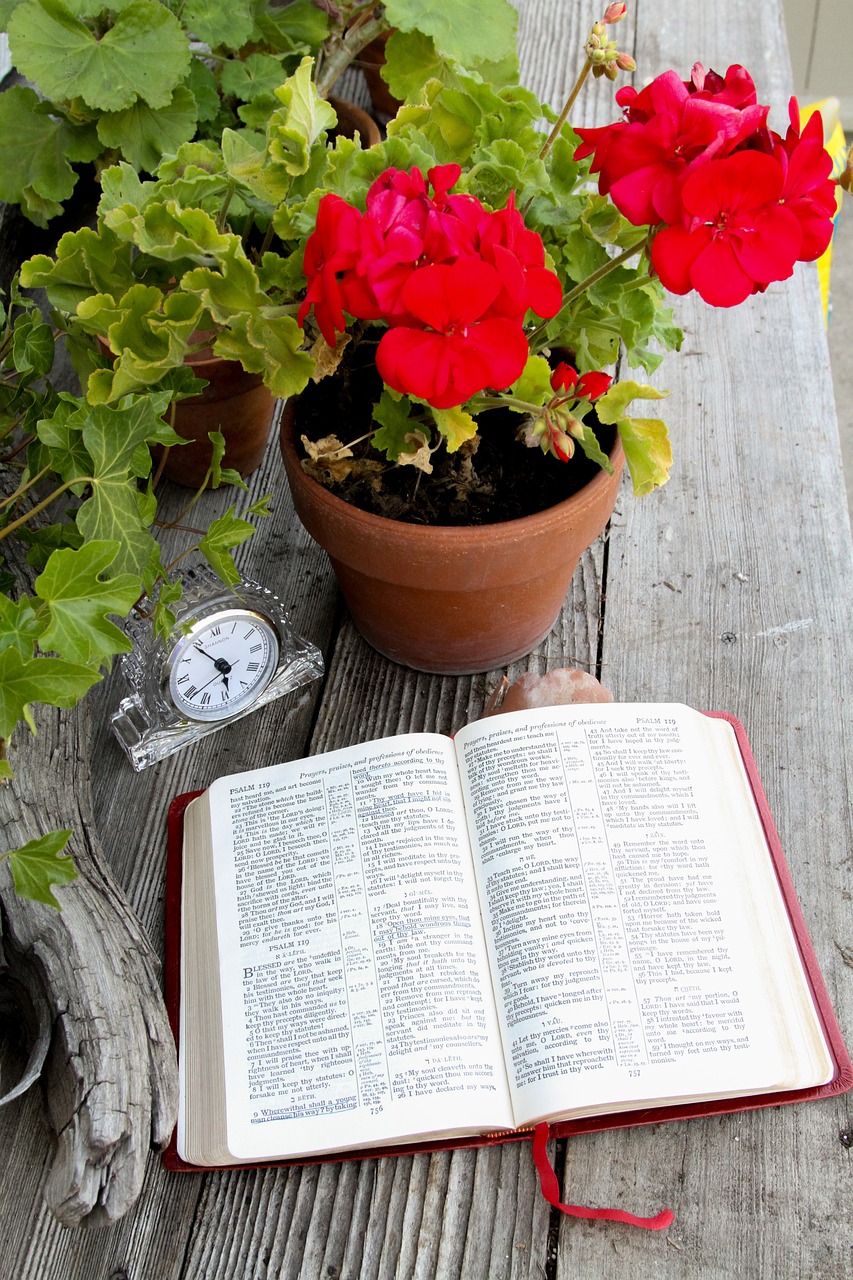
Read Today’s Scriptures.
Which proverbs made you “think”?

Proverbs 10.

The Proverbs of Solomon. The proverbs in chapters 10-15 usually offer contrasts or opposites. Look for them.  There are a few familiar phrases, such as “love covers all offenses,” reminding us of 1 Peter 4:8.

Although I have to remember that these proverbs are “general truths” and not theology or promises, I enjoyed all that this chapter says about the “righteous.” (those who fear the LORD)

  • 3. The LORD does not let the righteous go hungry…
  • 6. Blessings are on the head of the righteous…
  • 7. The memory of the righteous is a blessing…
  • 11. The mouth of the righteous is a fountain of life…
  • 20. The tongue of the righteous is choice silver…
  • 24. The desire of the righteous will be granted…
  • 28. The hope of the righteous brings joy…
  • 30. The righteous will never be removed…
  • 31. The mouth of the righteous brings forth wisdom
  • 32. The lips of the righteous know what is acceptable..

All of these are contrasted to that of the foolish, wicked, and slothful.  It’s true that the righteous often prosper, but not always.  They are frequently mocked and persecuted horribly.

.

Proverbs 11.

There are more contrasts between the righteous and the wicked, perverse, cruel, and foolish in this chapter: common truths that often play out today.  Solomon also writes about money and wealth, as well as greed and dishonesty, pride and humility in this chapter, ending with, “Whoever trusts in his riches will fall.” (29).  (Says the wealthiest man of his time!)

Humorously, right in the middle of the chapter, is this proverb (22): Like a gold ring in a pig’s snout is a beautiful woman without discretion.”  He also writes about a gracious woman getting honor” in verse 16.  (Most of chapter 31 is honoring the “virtuous woman.”)

I love the truths about generosity in verses 24-25.

  • “One gives freely, yet grows all the richer; another withholds what he should give and only suffers want.  Whoever brings blessing will be enriched, and the one who waters will himself be watered.”

This truth is reinforced in Malachi 3:10 and 2 Corinthians 9:6-9.

.

Proverbs 12.

This chapter holds more contrasts between good and evil, knowledge and stupidity, the righteous and the wicked, pride and humility, hard work and sloth, prudence and foolishness, and much about the power of the mouth and lips and what/how they speak.

Also, two other kinds of women!

  • 4.  An excellent wife is the crown of her husband, but she who brings shame is like rottenness in his bones.”

.On speech,

  • 17-19. Whoever speaks the truth gives honest evidence, but a false witness utters deceit. There is one whose rash words are like sword thrusts, but the tongue of the wise brings healing. Truthful lips endure forever, but a lying tongue is but for a moment.”
  • 22. “Lying lips are an abomination to the LORD…
  • 25. Anxiety in a man’s heart weighs him down, but a good word makes him glad.”

.

Many of these proverbs convict me, especially about women and my speech.  Father, remind me from Your Word how to be a gracious woman and an excellent wife.  And may the words of my mouth and the meditations of my heart be acceptable in Your sight, O LORD.
Journaling through the Bible Chronologically in 2025, Day 156

Day 156.  Reading Proverbs 7 – 9.

Read Today’s Scriptures.
Name some things you have learned about Wisdom.
.
Proverbs 7.

Solomon continues with his warnings about the Adulteress. He knows his son (and perhaps he, himself) needs to be repeatedly told of her sly ways.

But first, he extols the virtues of the other woman, Wisdom. “Keep my WORDS, treasure up my COMMANDMENTS, keep my TEACHING as the “apple (pupil) of your eye,” and write them on your heart.”

Let your “sister” and “intimate friend,” Wisdom, “keep you from the forbidden woman, from the adulteress with her smooth words.

  • This reminds me of David’s Psalm 119:11, “Thy Word have I hid in my heart, that I might not sin against thee.”

Then follows a scene that has happened many times. A young man is lured to the house, the arms, and the bed of either an adulterous wife or a prostitute. She is wily; she knows what he wants; she tells him what he wants to hear. She’s ritually “clean,” and her husband is far away.  Oh my!

And the fellow listens and follows “as an OX goes to the slaughter, or as a STAG is caught fast till an arrow pierces its liver, as a BIRD rushes into a snare.  He does not know that it will cost him his life.”

  • James 1:14-15 says, “Each person is tempted when he is lured and enticed by his own desire. Then desire when it has conceived gives birth to sin, and sin when it is fully grown brings forth death.”
  • James 1:5 also says, “If any of you LACK wisdom, let him ask of God, who gives generously to all without reproach, and it will be given him.”

“O sons! Listen to me.  Let not your heart turn aside to her ways.”

.

Proverbs 8.

Now Solomon praises the “other path,” that of Wisdom (sometimes personified as Christ).  Unlike the Adulteress, Wisdom’s call is faithful and righteous.

  • On the heights beside the way, at the crossroads, she takes her stand; besides the gates in front of the town, at the entrance or the portals, she cries aloud, “To you, O men, I call, and my cry is to the children of man.  O simple ones, learn prudence; O fools, learn sense. HEAR, for I will speak noble things, and from MY lips will come what is right, for the words of MY mouth are righteous.”

And then Wisdom’s worth.

  • Take my instruction instead of silver, and knowledge rather than choice gold, for wisdom is better than jewels, and all that you may desire cannot compare with her.  My fruit is better than gold, even fine gold, and my yield is better than choice silver.

Christ used His eternal Wisdom in creation.

  • The LORD possessed me at the beginning of His work, the first of His acts of old. Ages ago I was set up, at the first, before the beginning of the earth. 
  • When He established the heavens, I was there; when He drew a circle on the face of the deep… when He made firm the skies above… when He established the fountains of the deep… when He assigned to the sea its limit… when He marked out the foundations of the earth, then I was beside Him, like a master workman.
  • I was daily His delight, rejoicing before Him always, rejoicing in His inhabited world and delighting in the children of man.”

Blessed are those who keep my ways.

Blessed is the one who listens to me

Whoever finds me finds life and obtains favor from the LORD.

.

Proverbs 9.

Solid truth: “The fear of the LORD is the beginning of wisdom, and the knowledge of the Holy One is insight.”

The pleasant, abundant, long-lasting ways of Wisdom are contrasted now with the ways of “Folly.”

  • The woman Folly is loud; she is seductive and knows NOTHING.
  • She sits at the door of her house; she takes a seat in the highest places of the town and calls to those who pass by.  “Stolen water is sweet, and bread eaten in secret is pleasant.”
  • But the listener does not know that the DEAD are there, that her guests are in the depths of Sheol.

And so, Solomon ends his warnings there.  Does his son(s) hear and respond?  Does he “get” Wisdom? Does he learn to fear the LORD above all?

.

Do I heed the sweet words of Wisdom?  Do I shun the blatant, off-key untruths of Folly? 

O, LORD, the Holy One, please keep me on the narrow way. May I not be tricked and seduced by my own desires but seek You and Your face always!   

Remind me constantly to keep Your Word in my heart as a guardrail against Folly.” 

Journaling through the Bible Chronologically in 2025, Day 155

Day 155.  Reading Proverbs 4 – 6.

Read Today’s Scriptures.
What truth about God’s instruction stays in your mind?

Remember:  The Book of Proverbs contains Biblical theology, helpful hints, funny illustrations, wise sayings … and a few contradictions. The verses are meant to be general truths, not promises to “claim” in particular life situations.  God wants us to live godly and gain discernment. How?  In “fearing (reverencing, obeying, loving) the LORD.”

Proverbs 4.

Solomon continues to instruct his son in the benefits of loving, cleaving to, prizing, and seeking “wisdom.” He tells his son how to do that.

  • take heed to your wise father’s words
  • don’t enter or walk in the path of the wicked, but keep to the path of righteousness
  • keep your heart with vigilance
  • put away crooked speech and devious talk
  • keep your eyes looking forward, watch your feet, and don’t swerve to the right or left.

Proverbs 5.

Next, Solomon warns his son (and all sons and daughters) about the danger of Adultery.

The “forbidden woman” has lips that drip honey and are smoother than oil … but the end of involvement with her is as bitter as wormwood.  SHE does not watch the path.  HER feet wander and follow the way of death.

The son is given ways to resist her temptation —

  • keep your way FAR from her
  • do not go near the door of her house

Solomon reminds him of the TRUE WAY, the way God planned from the beginning.  Keep to the wife of his youth and rejoice in her, be satisfied in her, delight in her.

‘For a man’s ways are before the eyes of the LORD, and He ponders all his paths.”

.

Proverbs 6.

Solomon gives his son wise words on practical living.

  • if you find yourself caught in snares of your own making, stop, go to the person, confess, and plead mercy. Do it before the sun sets, and you go to bed.
  • Look to the creatures of God’s creation – you might learn some things.  The ants do their work without being told. They labor all summer and put away for the future.  Then, in winter, they have no worries.  So, don’t be a late-sleeping, afternoon-napping sluggard!
  • Don’t be a bragging blow-hard, tricking people, winking at them, waggy fingers.  His end is quick and sure.

Then Solomon lists seven “detestable” things that the LORD hates.  HATES!  Yikes! This is serious. We should read and contemplate our own lives…

  1. haughty eyes (pride)
  2. a lying tongue,
  3. hands that shed innocent blood,
  4. a heart that devises wicked plans,
  5. feet that make haste to run to evil,
  6. a false witness who breathes out lies,
  7. one who sows discord among brothers (a trouble-maker)

This reminds me of the children’s rhyme.

Be careful, little eyes, what you see,

little tongue what you say,

little hands what you do,

little feet where you go,

little heart, what you plan …

for there’s a Father up above, looking down in tender love, so be careful, little ones, what you do.

.

Then, again, Solomon cautions his son about Adultery and the Adulteress. KEEP HIS WORDS!  The commandment, the teaching, and the discipline (the Word of God) lead to safety away from the “evil woman.”

Then Solomon describes how the prostitute woos, tricks, lures, and captures her victims through her beauty, her eyelashes, and her smooth tongue.

BEWARE!  BEWARE!  “Can a man carry fire next to his chest and his clothes not be burned?”  Can one walk on hot coals and his feet not be scorched?”   He who commits adultery lacks sense. He destroys himself!  Dishonor and disgrace are his wages.

(And more tomorrow.)

.

I wonder when Solomon wrote these words. Probably early in his life.  For eventually he would have a thousand wives and concubines.  He became foolish and did not take his own words seriously.  He forsook the command, the teaching, and the discipline of the LORD in Moses’ books of the law.

Oh, my heart, be not like Solomon!  O LORD, keep me in Your word and make my heart tender to obey You. For heeding Your teaching will keep me safe from my sinful ways!

Journaling through the Bible Chronologically in 2025, Day 154

Day 154.  Reading Proverbs 1 – 3.

Read Today’s Scriptures.
What truth about God stays in your mind?

Everyone loves reading the Book of Proverbs. It contains Biblical theology, helpful hints, funny illustrations, wise sayings, truth … and a few contradictions.

The verses are meant to be general truths, not ones to “claim” in particular life situations.

(Example: “Train up a child in the way he should go and when he is old, he will not depart from it” (22:6), is certainly great advice for parenting, and it will help to keep a child on the “straight and narrow” to teach him the principals of God.  But it is not an absolute guarantee or promise of what WILL happen.)

Proverbs 1.

This chapter announces —

  • the author – Solomon, son of David, king of Israel.
  • the purpose – to become wise in godly living and learn discernment.  (Remember Solomon’s great gift of WISDOM from God.)
  • the theme – “The fear of the LORD.”

He speaks as a wise father to a son about many things in this chapter: Caution about sinners enticing him to sin and mischief.  The example is vivid. “Come with us, let us lie in wait for blood, let us ambush the innocent without reason…”  “we’ll find precious goods…”  “Throw in your lot with us: we will all have one purse.”

The wise father sternly advises against these miscreants. “Do not walk in the way with them; hold back your foot from their paths.”

Then, “wisdom” speaks in the first person, “How long, O simple ones, will you love being simple.”  And there are dire results for ignoring or rejecting “wisdom” as well as rewards. “Whoever listens to me will dwell secure, and will be at ease, without dread of disaster.”

,

Proverbs 2.

Notice the “IF” and “THEN” statements in these words from Solomon to his son.

  • IF you receive my words and treasure up my commandments with you…
  • IF you call out for insight and raise your voice for understanding…
  • IF you seek it like silver and search for it as for hidden treasures…
  • THEN you will understand the fear of the LORD and find the knowledge of God.
  • THEN you will understand righteousness and justice and equity.

Verses10-22 gives all the blessings and protections of possessing this wisdom.

.

Proverbs 3.

This chapter contains some very well known and loved verses and blessings.

  • Trust in the LORD with all your heart, and do not lean on your own understanding. In all your ways, acknowledge Him, and He will make straight (direct) your paths.”
  • Honor the LORD with your wealth and with the first fruits of all your produce; then your barns will be filled with plenty and your vats will be bursting with wine.”  (See also Malachi 5:10-11 about this.)
  • Blessed us the one who finds wisdom, and the one who gets understanding, for the gain from her is better than silver and her profit better than gold. She is more precious that jewels, and NOTHING you desire can compare with her.”

There even a few “commandment.”

  • Do not be afraid…
  • Do not withhold good…
  • Do not plan evil…
  • Do not contend with a man…
  • Do not envy a man…

Journaling through the Bible Chronologically in 2025, Day 151

Read Today’s Scriptures.
What do you see of God’s heart in these chapters?
1 Kings 3.

What??  Marry the daughter of Pharaoh!!  Where God had delivered His people from slavery??? Seriously??  Bad boy, Solomon!  What was he thinking?  Political alliances and stature in the world, that’s what.

Note verse 3.  “Solomon loved the LORD, walking in the statutes of David, his father …  ONLY (except), he sacrificed and made offerings at the high places.” Already, you see Solomon’s heart dividing, using those pagan places to “worship God.”

God is SO gracious to him (and to us). He came to Solomon in a dream, and asked what He could give to the new king.

  • Wow, what would I ask of God if given that opportunity?  Search your heart with me, and let’s see our priorities. What is important to us?

Solomon lists the kindnesses and love God had shown to his father, how David had walked in God’s ways, and how God had chosen

Solomon to rule. (Was he stalling, thinking of what he wanted?)  And then he thinks of his inexperience and the hugeness of his responsibility to God’s chosen people.

Give your servant an understanding mind to govern Your people, that I may discern between good and evil, for who is able to govern this Your great people?”  (In my mind, he should have asked to discern between good and evil IN HIS OWN HEART!)

But God was pleased that he hadn’t asked for a long life, riches, or victory over enemies.  And God gave him a “wise and discerning mind like none other.”  God also gave him what he didn’t ask for: riches and honor greater than any other king.

“And if you will walk in My ways, keeping My statutes and My commandments, as your father David walked, then I will lengthen your days.”

Right after that, Solomon went to the Ark of the Covenant of the LORD, offered sacrifices to God, and gave a feast to the people.  His heart is right NOW. Will he continue on?

  • As if to confirm to the people (and maybe Solomon himself) a situation arose that tested and highlighted the extensive WISDOM God had given him.  Two prostitutes (living together, perhaps even with others) came to Solomon, both claiming the baby boy they brought was THEIRS.  They’d both given birth, but in the night, one baby got suffocated when one of them rolled over onto him.

How do you tell the true mother?

  • Solomon quickly identified her by exposing the women’s hearts.  “Get a sword and cut the baby in half. Give a half to each woman.”  YIKES!  The un-mother agreed (the boy wasn’t hers, after all.)  But the true mother cried out to keep him alive, even if it meant giving him away. Solomon saw her love and settled the dilemma.

And all Israel heard of the judgment that the king had rendered, and they stood in awe of the king, because they perceived that the wisdom of God was in him to do justice.”

.

1 Kings 4.

This chapter is loaded with statistics and praise for King Solomon.  It gives a glowing overview of his kingdom and rule. (The next chapter begins the construction of the Temple,)

Much like David, Solomon appointed high officials, including the priests, secretaries, recorder, army commanders, other officers, governors over other lands, people in charge of the palace, and the … forced labor.  He also appointed leaders around the country who would provide his food for himself and his palace, month by month.  Judah and Israel ate and drank and were happy.

  • Solomon ruled (eventually) over all the kingdoms from the Euphrates to the land of the Philistines and to the border of Egypt.  They brought tribute and served him all his days.”

He had peace on all sides around him. And Judah and Israel lived in safety from Dan to Beersheba (north to south), with every man under his vine and under his fig tree, all the days of Solomon.

Ah-oh! Wait!  “Solomon also had 40,000 stalls of horses for his chariots and 12,000 horsemen!!!

  • Didn’t we read in Deuteronomy 17:16 God’s rules and cautions about future kings… “He must not acquire many horses for himself or return to Egypt to acquire many horses.”  And… don’t we also read there in verse 17, “He shall not acquire many wives for himself, lest his heart turn away.  NOR shall he acquire for himself excessive silver and gold ….”

And again, this chapter tells of Solomon’s wisdom (in ruling others, it seems).  “God gave Solomon wisdom and understanding beyond measure, and breadth of mind like the sand of the seashore, so that Solomon’s wisdom surpassed the wisdom of the people of the East and all Egypt.

“Solomon also spoke 3,000 proverbs!   He wrote 1,005 songs. (We will read some of these soon.)

People of all nations and kings of the earth came to hear the wisdom of Solomon.

.

  • Oh, LORD, how easy it is to turn from loving and serving YOU to loving the things you give us.  Help me not to value “stuff” more than my relationship with You. Solomon had everything in abundance … and it did turn his heart away.  In Ecclesiastes, he said (late in his life) that all he experienced, and possessed,  and was honored for … was vanity … futility.  ONLY YOU are worth my adoration!

Journaling through the Bible Chronologically in 2025, Day 112


Read today’s scripture.

How do you love in these Psalms?

Psalm 6.

Perhaps this was written after David rescued his family from the Amalekites, only to come home and learn King Saul and his “Best Friend Forever” Jonathan had been killed in battle and Israel had been soundly defeated. He mourns and laments the losses.

  • I am weary with my moaning, every night I flood my bed with weeping.
  • My eye wastes away because of my grief; it grows weak because of all my foes.
  • Depart from me, all you workers of evil, for the LORD has heard the sound of my weeping.
  • The LORD has heard my plea; the LORD accepts my prayer.

Psalm 8,

(I love this psalm!)

  • O LORD, our Lord, how excellent is Your Name in all the earth! You have set Your glory above the heavens.
  • Out of the mouths of babies and infants, You have established strength because of your foes, to still the enemy and the avenger.
  • When I look at your heavens, the work of your fingers, the moon, and the stars, which You have set in place, what is MAN than You are mindful of him, and the son of man that You care for him?

Psalm 9.

  • I will give thanks to the LORD with my whole heart; I will recount all of Your wonderful deeds.
  • I  will be glad and exult in you; I will sing praise to Your name, O Most High.
  • The LORD is a stronghold for the oppressed, a stronghold in times of trouble.
  • And those who know Your Name, put their trust in You, for You, O LORD, have not forsaken those who seek You.
  • Sing praises to the LORD, who sits enthroned in Zion! Tell among the peoples His deeds!
  • For He who avenges blood is mindful of them; He does not forget the cry of the afflicted.

Psalm 10.

  • Why, O LORD, do You stand far away?
  • Why do you hide Yourself in times of trouble?
  • In arrogance the wicked hotly pursue the poor; let them be caught in the schemes that they have devised
  • In the pride of his face, the wicked does not seek Him; all his thoughts are, “There is no God.”
  • The helpless are crushed, sink down, and fall by his might.
  • He (the wicked) says in his heart, “God has forgotten, He has hidden His face, He will never see it.”
  • Arise, O LORD: O God, lift up your hand; forget not the afflicted.
  • O LORD, You hear the desires of the afflicted; You will strengthen their heart; You will incline your ear to do justice to the fatherless and the oppressed, so that man who is of the earth may strike terror no more. 

Psalm 14.

  • The FOOL has said in his heart, “There is no God.”  They are corrupt, they do abominable deeds; there is NONE who does good.
  • The LORD looks down from heaven on the children of man, to see IF there are any who understand, who seek after God.
  • THEY HAVE ALL TURNED ASIDE; together they have become corrupt; there is NONE who does good, not even ONE.
  • Oh, that salvation for Israel would come out of Zion!  When the LORD restores the fortunes of His people, let Jacob rejoice, let Israel be glad.

Psalm 16.

  • I say to the LORD, You are my Lord; I have no good apart from you.
  • I bless the LORD who gives me counsel; in the night also my heart instructs me.
  • I have set the LORD always before me; because He is at my right hand, I shall not be shaken.
  • Therefore my heart is glad, and my whole being rejoices; my flesh who dwells secure.
  • You make known to me the path of life; in your presence, there is fullness of joy; at your right hand are pleasures forevermore.

Psalm 19.

  • MAY THE LORD answer you in the day of trouble,
  • MAY THE NAME of the God of Jacob protect you!
  • MAY HE grant you your heart’s desires and fulfill all your plans!
  • MAY THE LORD fulfill all your petitions!
  • O LORD save the king!
  • MAY HE answer us when we call.

Psalm 21.

(I love reading this psalm pointing to David’s love for and closeness to the LORD … before his fall.)

  • O LORD, in Your strength the KING rejoices, and in Your salvation how greatly he exalts!
  • You have given him his heart’s desire and have not withheld the request of his lips.
  • For You meet him with rich blessings; you set a crown of fine gold upon his head.
  • He asked life of You, and You gave it to him, length of days forever and ever.
  • HIS glory is great through Your salvation; splendor and majesty You bestow on HIM.
  • For You make him most blessed forever; You make him glad with the joy of Your presence.
  • For the KING trusts in the LORD, and through the mercy of the Most High he shall not be moved.

.

Yes, David will fail God horribly, but he was always “a man after God’s own heart.”


Journaling through the Bible Chronologically in 2025, Day 35

Day 35. Reading in Exodus 16 – 18. 

Read the scripture for today. What do you learn about God? Share what you learn with others.

Exodus 16.

.Wow!  Walking through a Sea, seeing their enemies destroyed, experiencing joy, celebration, and worship, a miracle of sweet water from bitter water, receiving a glorious promise of health from God, and an oasis in the desert.   What more could Israel desire?

Food.

Grumble, grumble, grumble, (eight times it’s mentioned that the people grumbled against their situation, Moses, and even the LORD.) What a grumpy lot!! I guess hunger will do that to you. (Think of diets and fasts.)

Anyway, Moses goes to God, and God answers his prayer and their grumbling.  He promises to send them meat for dinner and bread in the morning for the whole day. And He does.  Quail came and covered the camp at sundown. The people caught them, stewed or roasted them, and ate the meat until they were … satisfied? (It doesn’t say.) The next morning, their 40-year daily food supply began to arrive.  “What IS it??? (The meaning of the word “manna.”) 

Quite a novelty – light, sweet, nutritious, and absolutely free. They did not LABOR for it.  They only had to gather it and prepare it into cakes, bread, porridge, or…?? Their choice.  Yummy and two quarts per person was all they needed to fill every tummy.  They loved it. They called it “bread/grain from heaven” and the “bread of angels.” (Psalm 78:25, 105:40

The Jews in Jesus’ time remembered it fondly. Jesus said it “pictured” HIM, the true bread of life. (John 6:31-35)

But it wouldn’t be long before these grumblers said they were “tired of THIS manna” and longed for the onions and leeks of Egypt.

  • Oh, LORD, what do I grumble about? (Lots of things!!) Please help me to have a grateful and contented heart!  You are so kind to supply my “daily bread.”

The people had to follow some instructions about Manna, such as eating it all the same day as gathered, except on the 6th day. That day they were to gather double because there wouldn’t be any on the 7th day. But it wouldn’t get stinky and wormy as on other days if “hoarded.”  They had to learn from experience, as WE do. 

This “day of resting” was established for Israel even before God gave Moses the Ten Commandments. By His example, God had shown them in creation how to rest after six days of work.  Rest and worship/fellowship with Him.

This daily bread supply fed Israel for 40+ years until they crossed into the Promised Land and could begin eating the foods of the land.  How faithful our God is! (A memorial jar of Manna was later kept in the Ark of the Covenant in the Tabernacle/Temple.)

Exodus 17.

With food established, the congregation of Israel moved on in stages as the Pillar led them to the wilderness of Sin (Shin) and camped at Rephidim.  There, they QUARRELED and grumbled again. Their water skins filled at the oasis were once again empty. “Moses! Give us water! Why did you bring us up out of Egypt to kill us and our children and livestock with thirst!?”

God told Moses what to do. It took faith to do this. He once again was to take “the rod of God” (that he used to bring plagues on Egypt at God’s command) along with some elders of Israel to witness it and go to the rock at Horeb. “Strike the rock that I will show you and water will come out of it, and the people will drink.” Whoa!

Moses did that and God supplied enough continuous water to quench the thirst of the people and animals while they were camped there.  Moses called that place “Massa” and “Meribah, because the people quarreled and tested the Lord.

THEN!!! (Another test.) The hoard of Amalek came and attacked Israel at Rephidim. Yikes!! (The Amalekites descended from Esau and were nomadic.)  

Moses told Joshua to choose men and go out and fight them.  The plan was that Moses (with Aaron and Hur) would stand up on the hill overlooking the battleground and wage spiritual war. Whenever Moses held up his arms (with his staff), the fighting men of Israel would prevail.  When his arms were tired and drooped, Amalek would prevail.  (Eventually, Aaron and Hur had Moses sit on a rock, and they held up his arms. And so war was waged physically and spiritually till the sun went down.  

And Joshua (with God’s help) overwhelmed Amalek with the sword.

Then, God had Moses tell Joshua (and put into writing) His vow. I will utterly blot out the memory of Amalek from under heaven.”  Moses built an altar there, claiming, “The Lord is My Banner,” confirming God’s total war on Amalek.

(It would take Joshua, King Saul/Samuel, and finally, Queen Ester & Mordecai to kill the very last of them. But God’s word stood until it was accomplished. Amen.)

Exodus 18.

Whoa!  Guess who came for a visit?  Jethro (Moses’ father-in-law, the priest of Midian), came and brought to Moses, his wife Zipporah, and his two sons, Gershom and Eliezer. (Rephidim wasn’t too far from where Moses had lived in Midian.)

Moses went out to meet them and honored his father-in-law by bowing. They hugged and kissed and caught up with everything that God had done for Moses and Israel since he left. Jethro rejoiced with Moses and gave praise to God. “Blessed be the LORD, who has delivered you out of the hand of the Egyptians and out of the hand of Pharaoh, and has delivered the people from under the hand of the Egyptians. Now I KNOW that the LORD is greater than all gods!”

Then, the older, wise Jethro watched as Moses dealt with the problems of the people in the camp.  Both petty and serious problems took all of Moses’ time as he interceded before God and made judgments.

“What are you doing, son?” asked Jethro. “This is not good. You are going to wear yourself out!” And he gave Moses some advice. “YOU bring the weighty things before God concerning his statutes and laws.  But, choose able men to judge over the petty grievances.”

Moses took his advice. He chose men as local judges. He was then free to judge the hard cases they brought to him.  Wow, what an opportune visit.  Moses had his family now and a way to relieve the tremendous load of the people that he carried.  God was so gracious to provide Jethro at that perfect time.

  • Thank you, Father, for caring for me, seeing my wrong choices, and sending others to lovingly correct me.


Journaling through the Bible Chronologically in 2025, Day 14

Day 14. Reading in Job 38 – 39. 

I invite you to read the scripture for the day and write “in the comments” what was meaningful to YOU. We can encourage each other in Him.


Job 38.

.The LORD answers Job. 

This is both a relief and a fear.  It’s a relief because I’m tired of Job’s pompous friends spouting so-called truths about God and Job when they don’t even know what they are talking about.  I’m not sure they are doing it out of concern for Job, or to make themselves look good.

And it’s a fear because wouldn’t YOU be afraid if God showed up in the middle of a heated conversation/argument you were having with a group of friends?  Even if you had repeatedly asked (demanded?) that God come and answer you, wouldn’t His actual voice scare you to death? Notice that everyone is silent now. 

A mighty whirlwind blows between the men, and Yaweh’s voice speaks. “WHO IS THIS who darkens counsel by words without knowledge?”  Gulp!  “Dress for action like a man,” God says to Job. “I will question YOU, and you make it known to ME.” 

Court is in session, and the prosecutor is questioning the man in the witness chair. But the accused has no voice. He cannot answer God’s questions. 

“Where were YOU when I laid the foundation of the earth?”  

Did you separate the land from the waters and make borders for them? Did you cause the earth to rotate and establish dawn and darkness? Do you know where I keep the snow, the hail, or the rain?  Can you make lightning or ice?  Can you move the constellations around in the night sky? 

Do you know who has put intelligence in a man’s mind?”

“Did you teach the lion to hunt?  Or the raven?”

Job 39.

(It’s just a chapter break, but I can imagine a moment or two of silence in the courtroom while Job remains mute. 

Like an attorney, God then presents items to be entered as evidence.  He lists the unique skills and characteristics He has given to various animals; the mountain goat, the wild donkey, the wild ox, the ostrich, the horse, and the hawk. (All are fearfully and wonderfully made and adapted.)

To the Ostrich God has given a tiny brain (she lays her eggs on the open ground, then forgets about them). But He’s given her beautiful feathers and legs swifter than a horse’s (When she rouses herself to flee, she laughs at the horse and rider.)   Who would have thought to create such a creature?

Could Job ever have created the intelligence, strength, and fierce eye-sight of the hawk or eagle, and trained them where to build their nests so their young would be safe? 

  • I can’t imagine being on the stand in any court, let alone where God is the prosecutor AND judge. I would be scared to speak too.  I am SO thankful that the Lord Jesus Christ is my Advocate, my Defense Attorney. He speaks for me. He intercedes and pleads my case. Though I am guilty, He holds out the evidence of His own blood to show my crimes have been paid for.  My sentence has been served. Oh, Hallelujah!


Journaling through the Bible Chronologically in 2025, Day 12 & 13

Days 12 & 13. Reading in Job 32 – 34 and 35 – 37. (Posted on Monday.)

I invite you to read the scripture for the day and write “in the comments” what you found meaningful. We can encourage each other.

.Job 32.

There’s a new guy on the block. Elihu has been there the whole time, but as the youngest, he’s kept quiet until now. His views differ from the three “wise” old men who spoke before him.

I am young in years, and you are aged. Therefore, I was timid and afraid to declare my opinion to you.”  “It is not the old who are wise, nor the aged who understand what is right.  Therefore, listen to ME. Let ME also declare my opinion.

He says he’s about to burst from waiting to answer! “I MUST speak, that I may find relief; I MUST open my lips and answer. I will not use flattery toward ANY person.”

Oh, dear. I’m not sure I want to hear what this young whippersnapper will say.

  • Lord, help me remember that wisdom comes from YOU. You are the only wise God. Help me not to disdain either the aged or the young enthusiast or to center my whole life on the words of one person/group. May I always look to You and your Word with help from the Holy Spirit.

Job 33. 

Right off, Elihu puts Job at ease, identifying with him as one also is “pinched off from the piece of clay.”  He’s human, fallible. He assures Job he has no need to fear him as his words will not be heavy on him. But he tells Job he’s wrong in saying God does not answer him.

Elihu lists two ways that God speaks to man. 1) in dreams or visions, God warns man. 2) in pain, God rebukes man.  Hmmm.

He tells Job that God allows suffering to bring a person to Himself and for spiritual benefit. (This seems true, at least in my own life.) Then Elihu offers Job a chance to speak. If not, Elihu tells Job to listen, “for I will teach you wisdom.”

Job 34.

Elihu then goes on with HIS speech to both Job and the other three men.  He gets a lot correct, but there are some parts he mis-remembers, attributing to Job what his other “comforters” said. (For example, Job said he was sinless, which he did not claim.)  However, Elihu does mention some pretty awesome truths about God in his speech, saying He is just, holy, impartial, and omniscient.

Sadly, Elihu starts to echo the three who went before him, “Job speaks without knowledge; his words are without insight. I would that Job was tried to the end because he answers like a wicked man. He adds rebellion to his sin; he claps his hands among us and multiplies his words against God.”  (Sigh.)

(Three more chapters of Elihu tomorrow.)

.

Job 35.

“Shame on you, Job.” is basically what Elihu says (in his wisdom). He tells Job that it doesn’t matter if he sinned or not because God is ‘too high’ to be affected by them. “If you have sinned, what do you accomplish against Him? And if your transgressions are multiplied, what do you do to Him?”

He tells Job why God does not answer his prayers and questions. It’s because of pride (vs. 35:12), a wrong motive, and he’s not patient enough.  Oh, Elihu, you are not so wise as you say. YOU don’t know much about Job’s condition either. It’s your own “human” understanding. 

  • Lord, I am like Elihu sometimes, if only in my thoughts. I think I can figure out “the mind of God” by my own human reasoning. “SURLY, this must mean that!” I say.  Humble me, Lord. Your ways and thoughts are so much higher than mine.  Teach me not to judge. Teach me to wait. Help me see my own needs.

Job 36.

Now that Elihu has leveled Job to the ground, he presumes to instruct Job about God’s opinion. (“I have yet something to say on God’s behalf.”) He now seems no different from the three older gentlemen before him. THEN he adds the words that make me choke. “For truly, my words are not false; one who is perfect in knowledge is with you.”   What???  Poor Job.

But Elihu does say something new in verse 15. “He (God) delivers the afflicted by their affliction and opens their ear by adversity.” 

  • Suffering, trials, and persecution do make us more open to God’s words. Sometimes, that’s the only time I will listen. A gentle tap on the shoulder will go unnoticed, but a “slap up alongside my head” will get my attention.  Illness, sorrow, or a rebuke from a loved one will undoubtedly send me to prayer and His word. Why is this so? Oh, Lord, soften my heart!

Job 37.

Elihu then “waxes eloquent” about the majesty of God in creation. This is wonderful to read. All creation does reveal God like Psalm 8 says,  “O LORD, our Lord, how majestic is your name in all the earth! You have set Your glory above the heavens.” (vss. 1-2)  “When I look at Your heavens the work of Your fingers, the moon, and stars, which You have ordained, what is man that you are mindful of him, and the son of man that you care for him?” (vss.3-4)  

Elihu reminded Job (and us) that all the mighty things God does in the heavens and with weather are for a purpose. “Whether for correction or for His land, or for love, He causes it to happen.” (vs. 13)

  • Wow. I had to stop and think about this. Yes, I believe God is totally sovereign in all things. Yes, there is always a purpose to what He does (His glory and our good, according to Romans 8:28), although, like Job, we may never know (can’t even begin to comprehend) what that is. 
  • Just now (January 2025), I’m thinking of the total disasters that wind and fires have brought to Los Angeles County in the last week.  God is sovereign. This fiery “apocalypse” was NOT out of His control. Many do and will ask, “Why?” (And many will gladly place the “blame” on anyone.) It is a “wake-up” call, whether to the hearts of believers and unbelievers or merely to earthly officials and their responsibilities.
  • Job didn’t know the reason for his suffering (or for his friends’ badgering, for that matter). But we get a glimpse of the purpose in the first chapters. That in Heaven, before the evil one, GOD GETS GLORY for Job’s faith in his suffering. 

Thank you, God, for using Elihu to say this one thing, if nothing else. 

And it’s good that this young, wise “kid” ends his speech by pointing Job (and us) to God and His Majesty because God stands ready to speak in the next four chapters.  ARE WE READY TO HEAR?


Journaling through the Bible Chronologically in 2025, Day 10

Day 10. Reading in Job 24 – 28. 

I invite you to read the scripture for the day and write “in the comments” what was meaningful to YOU. We can encourage each other in Him.

.

Job 24.

Job continues to refute Eliphaz’s statement that the wicked are punished for their sins and suffer (i.e. himself).

LOOK at the rich, he says, they do NOT suffer! They prosper, even though they do the very things God hates (mistreatment of the poor, widows, and orphans as well as freely committing murder, theft, and adultery). They grow richer, more powerful, and successful. 

Job’s accusation to God is quite bitter in verse 12. “…God charges no one with wrong.” But in verse 24 he seems to renege. “They (wicked) are exalted a little while, and then they are gone; they are brought low and gathered up like all others.”

  • I often vacillate like Job, thinking all the millionaires and billionaires of the world just keep getting richer and do not suffer for the way they cheat and treat others.  But, when I study Revelation, I also see God’s wrath.  He will judge, we can be sure of that!  But right now, he is “patient, not willing that any perish.” 
  • And who am I that I should escape judgment. ONLY BY HIS MERCY and GRACE in “His looking at Jesus and forgiving me” do I have hope.

Job 25.

Bildad’s third comeback is brief. “Dominion and fear are with God. He has might. He is Light.”   “How can man, who is a maggot, and the son of man, who is a worm.” …be right before God?

Job 26.

A brief reply by Job magnifies the Lord God, showing His power and wisdom in creation. Job even states two modern truths 1) the earth “hangs” in space. It’s not held up by an elephant or the shoulders of Atlas, and 2) the earth is a circular globe and NOT FLAT. (vss. 7, 10)

 (This chapter is only a portion of his reply to Bildad (and the others) that covers chapters 26-31.)

Job 27.

Curiously, Job here defends his own integrity. He says nothing he has done has caused this great calamity to come on him. (And he is correct.)  Not bragging in himself, nevertheless he says “I hold fast my righteousness and will not let it go: my heart does not reproach me for any of my days.”

  • This is actually how we should resist the devil when he comes to us with accusations. If we have confessed and repented of our sin, his accusations are not valid. We should “resist him.” The Holy Spirit will “convict” us of sin and send us to the cross of Christ. But Satan “accuses” us of sin and offers no hope.

In contrast, Job asks, “What is the hope of the godless when God cuts him off, when God takes away his life?” 

  •   Job 27:19-23 says, “He goes to bed rich, but will do so no more; he opens his eyes, and his wealth is gone. Terrors overtake him like a flood; in the night a whirlwind carries him off. The east wind lifts him up and he is gone; it sweeps him out of his place. It hurls at him without pity; he flees from its power in headlong flight. It claps its hands at him and hisses at him from its place.” 

WHOA!   These verses emphasize to me to speed with which our “stuff” can be gone.  These remind me so much of the catastrophe which has hit the Los Angeles area just this week, where, in just hours, thousands of people have lost all they have in wind-blown fires.  The Palisades Fire completely burned up a very high-end, wealthy neighborhood over night with 100 MPH winds whipping flames out of control.

  • Father, give me compassion for all these people!  And keep me from holding my “stuff” tight and depending on it.  May I look ALONE to You, God, from where everything comes, even my life,

Job 28.

Job now tells his “friends” about wisdom. (His is no less that what they claim theirs to be.)  Their advanced ages do not automatically produce wisdom.  In verses 12-18, he asks twice, “Where shall wisdom be found? From where does wisdom come?

In these verses, he sounds like Solomon in Proverbs 1:7 – 2:9.  Wisdom is worth more than silver and gold. It’s more precious than onyx, sapphire, and other precious jewels. It’s price is above pearls, crystal, coral, and topaz.

So where can one get such a precious commodity? Job tells us in verse 29. “Behold, the FEAR OF THE LORD, that is wisdom, and to turn away from evil is understanding.”  (See Psalm 111:10, Proverbs 1:7, 9:10, Ecclesiastes 12:13-14